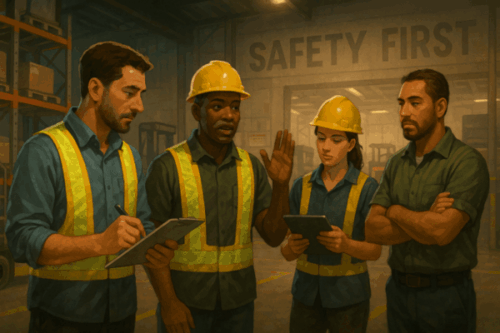
The Software Scaries: How to Choose, Deploy, and Actually Succeed with EHS Technology

Why picking the right safety software feels daunting—and how the right rollout plan makes all the difference.


The Fear Is Real: Why EHS Software Feels So Daunting

If you’ve ever been tasked with selecting new EHS software, you know the feeling in your gut. It’s part excitement, part anxiety—and part déjà vu. You’ve been here before, perhaps with another vendor promising a seamless solution that ended up delivering something… well, less than seamless.

EHS leaders don’t go into their careers to become IT project managers. They care about safety, people, and compliance—not configuration tables, data migration, and onboarding workflows. Yet when organizations decide to modernize, safety professionals often find themselves leading massive software transitions with limited time, resources, and internal tech support.

And let’s be honest: software purchasing is intimidating. Between endless demos, slick dashboards, and AI-powered promises, it can be difficult to tell what’s real. Choosing wrong can mean years of frustration, lost time, and sunk costs.

“Selecting new safety software feels a bit like changing engines mid-flight. You know it needs to happen—but one bad move, and everything can stall.”

The fear isn’t irrational—it’s earned. Over the past decade, organizations have seen countless technology deployments fail, not because the software was bad, but because the deployment plan was nonexistent. Vendors complete the sale, provide the login credentials, and direct customers to a help desk when challenges arise.

That’s not partnership—that’s abandonment.


Why Software Deployments Go Wrong (and It’s Not the Buyer’s Fault)


Let’s start with the truth: most software rollouts don’t fail because of the customer. They fail because vendors treat implementation as an afterthought.

Across industries, analysts have been tracking a troubling pattern:

According to Gartner (2024), 67% of enterprise software deployments fail to meet ROI expectations within the first 18 months.

Forrester (2023) found that only 14% of organizations felt their software vendors provided meaningful support post-purchase.

A 2023 McKinsey study indicated that companies that lacked structured onboarding were 3x more likely to abandon software within the first year.

In other words, most organizations don’t have a software problem—they have a support problem.


💻 The “Buy-and-Bye” Model

Here’s how it typically goes: you sit through several demos. Every vendor promises intuitive design, AI automation, and “white-glove” support. You narrow down the options, negotiate the pricing, finalize the contract, and… that’s the conclusion.

Now it’s on you.

Support tickets replace human contact. The “account manager” becomes a shared inbox. When adoption lags or new users get frustrated, you’re told to “submit a ticket.” You don’t have a partner—you have a platform.

The industry calls this SaaS enablement. EHS professionals refer to this situation as being left alone to deal with the mess.


🧩 Complexity Masquerading as Customization

Another trap: systems built for every possible use case are often too complex for any single company’s actual needs. Flexibility becomes a liability.

“You can configure anything,” the vendor says. But what they don’t mention is that you will be the one configuring it.

This is where great intentions turn into burnout. The safety manager now has to translate safety procedures into logic tables, field names, and permissions. What should be empowering becomes overwhelming.


⏳ The Contract Trap

Then there’s the pressure of commitment. Multi-year contracts are common in software sales, and vendors use them to ensure revenue predictability—not client success. Once you’ve signed, you’re locked in, whether or not the software fits your needs.

That’s the opposite of partnership. It’s a gamble on blind faith.

Real-world example: A mid-sized construction firm purchased an enterprise-grade EHS suite at $150K annually. They were promised easy setup. In reality, implementation required six months of IT involvement, ten administrative licenses, and an additional “consulting package” just to configure workflows. They never made it past the second month. The contract, unfortunately, lasted three years.

The result? The safety team went back to Excel by month four—and the software became an expensive ghost on the company’s balance sheet.


What You Should Be Asking Before You Buy


So how do you protect yourself—and your organization—from software regret? You ask better questions.

Software demos are designed to impress, but the best buyers are the ones who look past the polish and dig into the process. Here’s what you should ask before signing any contract:


1️⃣ “What does success look like by Day 30, Day 60, and Day 90?”

If the vendor can’t articulate clear milestones for implementation and adoption, that’s a red flag. Good partners have roadmaps. They know how long it should take to see traction and what “success” actually looks like.


2️⃣ “Who will I talk to after we sign?”

This one’s critical. You’re not just buying software—you’re buying a relationship. Ask if there’s a dedicated customer success manager or if you’ll be routed to a generic support queue. If it’s the latter, prepare for frustration.


3️⃣ “How do you measure adoption and engagement?”

Don’t just ask about uptime or server speed. Ask how they’ll help you know if the system is being used effectively. Will they show you who’s logging in? Completing training? Submitting reports? Visibility drives improvement.


4️⃣ “What happens if it doesn’t work for us?”

Flexibility is the mark of a confident vendor. Beware of anyone pushing long-term commitments without proving value first. Pilots, phased rollouts, and modular contracts are signs of a partner who’s confident you’ll stay because it works—not because you’re trapped.


5️⃣ “What’s the total cost of ownership?”

Hidden costs sink more projects than software bugs. Ask about configuration, integration, admin licenses, and training fees. A cheap system that demands 200 hours of setup time isn’t cheap at all.


⚠️ Red Flags to Watch For:

  • They focus on features, not outcomes.
  • They use “AI” as a selling point but can’t explain its impact.
  • They talk more about dashboards than about your daily reality.
  • They avoid questions about what happens after go-live.

“The best vendors don’t sell you software—they teach you how to succeed with it.”


Section IV – Deployment: The Most Overlooked Risk in EHS Software


Software implementation isn’t a switch—it’s a process. The best systems can still fail if the rollout is rushed, unclear, or unsupported.


⚙️ The Two Ingredients of Success: Clarity and Cadence

Clarity means every stakeholder knows what’s expected in the first 90 days. Who’s responsible for data import? Who owns training? Who’s testing workflows?

Cadence means there’s a rhythm—regular check-ins, progress reviews, and updates. Software success isn’t a one-time event; it’s a series of small, well-managed wins.

According to McKinsey (2023), projects with defined 90-day deployment plans are 2.8x more likely to achieve ROI than those without structured onboarding.


🧠 Change Management Is a Human Problem

Even the best tools will fail if people don’t understand or believe in them. When software changes daily habits—like how incidents are logged or training is tracked—it’s not a technical shift; it’s a cultural one.

Real-world example: A manufacturing plant launched an inspection app but didn’t train supervisors on data interpretation. Inspections went up 40%, but corrective actions dropped 60%. The system worked—the rollout didn’t.


Measuring Success: Turning Optimization Into ROI

The moment software goes live, measurement begins. But too many organizations stop after installation. Optimization is where value is proven.


Key early indicators of success:

  • Increase in engagement metrics (logins, form submissions, completion rates)
  • Reduction in manual reporting or redundant spreadsheets
  • Faster response and corrective action times

Key long-term indicators:

  • Audit readiness (retrieving data instantly, not manually)
  • Lower incident frequency and higher near-miss reporting
  • Tangible time savings for safety managers


Organizations that hold structured optimization reviews every 30 days see a 35% improvement in data accuracy and 4x faster ROI realization compared to those that don’t. (Aberdeen Group, 2024)


Optimization is the multiplier—it’s where insights become efficiency and efficiency becomes culture.

Why a 90-Day Pilot Changes Everything

For many EHS teams, the idea of a pilot program feels like a luxury. But in reality, it’s the most practical risk-reduction tool you have.


A 90-day pilot lets you:

Test real-world workflows with your actual data

Assess ease of use for field and admin staff

Identify configuration gaps before full deployment

Build user trust through early success


 “A pilot doesn’t just test software—it tests the partnership.”


A structured 90-day pilot gives both sides a chance to learn, adapt, and optimize. It’s a trial run for the relationship as much as the tool.

The White-Glove Difference: Real Support vs. Help Desks

Many vendors promise “support.” Few deliver real partnership.

In traditional models, you log a ticket and wait for a response. In reality, you’re not looking for troubleshooting—you’re looking for guidance.

True white-glove service means:

  • A dedicated implementation specialist
  • Regular onboarding calls and milestone reviews
  • Live configuration support—not just email threads
  • A shared goal: helping you succeed, not survive

When onboarding feels supported, adoption follows. When adoption follows, ROI becomes inevitable.

“White-glove support isn’t about fixing bugs—it’s about building confidence.”


Section VIII – Fear Less, Deploy Better

Choosing and deploying software will always feel like a big leap. But it doesn’t have to be a blind one.

When you ask the right questions, demand transparency, and choose a partner who’s willing to learn with you, the risk becomes manageable—and the payoff enormous.

The right technology doesn’t just digitize safety—it humanizes it. It helps people stay organized, informed, and empowered.

“Software should make safety simpler, not scarier. And the best way to prove that is one pilot, one plan, and one partnership at a time.”

What OSHA Requires Isn’t Always What Workers Remember

And that’s where most safety programs quietly fail.

If you walk into most industrial or manufacturing sites across the U.S. and ask the safety manager, “Are you compliant with OSHA training requirements?” the answer is usually an assured yes. There are binders filled with sign-in sheets, digital folders holding certificates of completion, and spreadsheets documenting who took what, when.

But ask that same safety manager a different question—“If something goes wrong, are you confident your workers know what to do?” —and you’ll often get a pause.

That pause is the space where incidents happen.

This article is about that space. The gap exists between documented compliance and actual preparedness. It’s where too many safety programs quietly—and dangerously—fail. This failure is not due to negligence, but rather because the structure of regulatory training requirements often fails to align with the realities of human learning, workplace turnover, and operational pressure.

OSHA mandates training. But OSHA doesn’t test whether your team remembers anything once they leave the classroom. And that’s the real risk.


What OSHA Actually Requires (CFR Snapshot)

The Code of Federal Regulations (CFR) contains over 40 specific OSHA standards that explicitly require employee training. These regulations aim to equip workers with the necessary knowledge and skills to safeguard themselves against recognized workplace hazards.

But most of these rules focus on training delivery, not knowledge retention. You can be 100% compliant by checking the box—but still fail when it matters most.

🔒 Lockout/Tagout (29 CFR 1910.147)

  • Requires training for “authorized,” “affected,” and “other” employees.
  • Retraining is mandated with job/equipment changes.
  • Certification of completion is required.

Case Example: A temp worker was fatally electrocuted in Ohio (2020). The investigation revealed no LOTO training had been provided. [Source: OSHA News Release, 2020]

🧯 Forklift Safety (29 CFR 1910.178)

  • Requires formal, practical training and operator evaluation.
  • A refresher is required every 3 years or after an incident.

Data Point: Forklift-related incidents cause ~85 deaths and 34,900 serious injuries annually in the U.S. [Source: OSHA, 2023]

🧪 HAZWOPER (29 CFR 1910.120)

  • Requires 24–40 hours of training plus annual 8-hour refreshers.
  • Applies to workers at hazardous waste sites or chemical spill responses.

Note: Subcontractors often claim HAZWOPER compliance but lack valid or updated documentation.

🦠 Bloodborne Pathogens (29 CFR 1910.1030)

  • This training is required for workers who are exposed to blood or other potentially infectious materials (OPIM).
  • Annual retraining is mandated.

Observation: Non-clinical roles (e.g., janitors, laundry workers) are often overlooked despite exposure risk.

🚧 Confined Spaces (29 CFR 1910.146)

  • Workers must complete training before being assigned to permit-required confined spaces.
  • Retraining is required for procedural or hazard changes.

Case Example: In 2021, two workers in Texas lost consciousness due to oxygen deprivation in a confined space. Training records were incomplete.
[Source: OSHA Region 6 Case Files]

📌 Bottom Line: OSHA tells you what to train and when. But it doesn’t verify how well the message sticks.

Compliance ≠ Competency

Let’s say a new hire watches a fall protection video, signs a form, and starts work the next day. Three weeks later, they’re standing on a shaky ladder, one hand bracing a beam while reaching for a tool.

Technically trained. Functionally unprepared.

🧠 The Science of Forgetting

  • People forget 50% of information within 1 hour.
  • 70% within 24 hours,
  • 90% in a week without reinforcement.
    [Source: Ebbinghaus Forgetting Curve, Psychonomic Bulletin & Review, 2015]

And it’s worse in safety-critical roles:

  • High turnover
  • ESL barriers
  • Fatigue from long shifts
  • Training delivered in formats workers don’t relate to

For example, after a fall-related fatality in Florida in 2022, half of the job crew admitted that they believed harnesses were optional for short jobs. Training was “complete.” Behavior said otherwise.


The Hidden Costs of the ‘Check-the-Box’ Approach

💥 1. Preventable Incidents

Workplace injuries cost U.S. employers over $58 billion/year in direct costs alone. [Source: Liberty Mutual Workplace Safety Index, 2023]

Even well-intentioned training becomes worthless if workers forget, misinterpret, or never internalize it.

⚖️ 2. Legal Exposure

Signed sheets won’t protect you from legal scrutiny if your documentation is weak or incomplete.

Example: A subcontractor fell through a skylight in California. Training documents were unsigned and lacked detail. The jury awarded $11.3 million.  [Source: CA Civil Court Records, 2021]

🛑 3. Operational Drag

Poor training leads to:

  • Constant supervision
  • Repeat errors
  • Missed productivity goals
  • Lost morale and engagement

😒 4. Culture Breakdown

When workers view training as a formality, they treat safety as a formality. That’s when near misses become normalized.

Example: In one warehouse, workers admitted to clicking through digital modules without watching them. “It’s about checking boxes,” one said. That’s not training—it’s theater.

How Smart Companies Go Beyond the Bare Minimum

🔁 1. Continuous Training

Safety leaders use:

  • Daily toolbox talks
  • Microlearning (3–5 minutes/day)
  • On-the-job mentoring and peer reviews

Practice Highlight: A manufacturer in Indiana saw a 35% drop in safety incidents after launching “safety spotlight” themes embedded into shift meetings.

🤝 2. Supervisor Engagement

Supervisors aren’t just enforcers—they’re coaches:

  • They observe
  • Ask probing questions
  • Reinforce habits daily

🌐 3. Risk-Based Customization

  • High-risk roles require high-frequency refreshers.
  • Training is delivered in the workers’ first language.
  • Materials are adapted based on literacy and comprehension.

Example: A Texas utility contractor switched to bilingual live instruction and saw test scores and jobsite safety behaviors improve immediately.

👀 4. Behavior-Based Observations

Training isn’t assumed. It’s verified in the field:

  • Observations
  • Peer-to-peer feedback
  • “What if…” scenario drills

Data Point: Companies that use behavior-based safety observations see 40–60% fewer injuries. [Source: National Safety Council]

📚 5. Meaningful Documentation

Effective recordkeeping includes:

  • Content taught
  • Delivery method
  • Language of delivery
  • Trainer credentials
  • Pass/fail outcomes

Example: A global manufacturer avoided a six-figure fine by producing a time-stamped training video showing a temp receiving (and ignored) proper instruction.


Redefining What ‘Good Training’ Really Means

OSHA asks, “Did you train your workers?”

But the more important question is:

Did the training work?

Training becomes significant only when it equips workers to react immediately, rather than merely watching a video.

If your safety culture is built on comprehension, accountability, and repetition—not checklists—then you’re not just meeting a standard.

You’re protecting people.

And that’s the only metric that matters.

The Power of Training

The Illusion of Speed — Why Companies Skip Training in the First Place

In fast-paced industries like manufacturing, logistics, construction, and energy, the pressure to produce, ship, build, or complete is constant. Margins are tight. Schedules are even tighter. And in that kind of environment, training often becomes the first thing to go—not because it isn’t valued, but because it’s perceived as a drag on output.

A new hire shows up on Monday. By Tuesday, they’re shadowing someone on the line. By Friday, they’re expected to work independently. Maybe they got a few binders to flip through. Maybe they watched a couple of safety videos or filled out a checklist. But was that training? Or was it just exposure?

The Misguided Logic of “Time is Money”

Many employers adopt a “just-in-time” approach to workforce development—believing that the sooner someone is physically working, the better. But that logic is short-sighted. It equates movement with productivity and ignores the steep, slow-burning costs of putting an untrained employee into a complex or hazardous environment.

Consider this: according to the National Safety Council, the average cost of a single workplace injury in the U.S. is more than $42,000 in direct costs alone. That doesn’t account for the time spent investigating incidents, the morale impact on teams, or the potential reputational damage. Suddenly, saving a few hours on onboarding doesn’t look like such a smart move.

What’s more, research published in the Journal of Occupational and Environmental Medicine shows that new employees are three times more likely to be injured on the job within their first month. Not because they’re reckless—but because they’re unprepared.

Culture of Expediency

This pressure to rush can stem from several sources:

  • Short-term productivity pressures: If orders are backlogged, the instinct is to get hands on deck immediately.
  • High turnover environments: “Why train them? They’re going to leave in six months anyway.” It’s a common refrain in warehouses and seasonal workforces.
  • Poorly defined onboarding: Some companies don’t skip training intentionally—they simply never built a system for it in the first place.
  • Supervisor culture: Even when policies require training, floor-level leadership often pressures new hires to skip steps to “learn by doing.”

This culture of expediency sends a subtle but powerful message to workers: Speed matters more than safety. And that message, once internalized, is hard to undo.

Training as a “Soft” Priority

Another key reason training is skipped or shortened is perception. Training is often seen as a “soft” task—less measurable, less critical than hitting a production number. Leadership talks about it in HR or compliance terms, not as a driver of business outcomes.

But that thinking misses the bigger picture. Companies that invest in structured training report better retention, higher employee engagement, and stronger safety records. According to a 2023 Gallup Workplace study, employees who receive consistent training and development opportunities are 2.9 times more likely to say they are engaged at work.

Engaged employees don’t just stay—they perform better, communicate more openly, and take safety more seriously.

False Sense of Competence

There’s also a tendency—especially among experienced workers and supervisors—to assume that “common sense” will fill the gaps. If someone has used a forklift before, they don’t need to be retrained. If they’ve worked in a warehouse, they must know what PPE is required.

But common sense isn’t a compliance strategy. It’s an assumption. And in environments where tools, materials, and hazards change frequently, assumptions get people hurt.

Without standardized, job-specific training, companies aren’t building knowledge—they’re relying on chance. On tribal wisdom. On “doing it like the last guy did.” And that’s not good enough.

The Hidden Message Behind Skipped Training

When training is treated as optional, it tells workers something deeper: You’re on your own here. That message erodes psychological safety before a single shift begins. It discourages questions. It discourages pause. And it encourages workers to fake it until they make it.

But “faking it” in a high-risk environment has consequences. It’s not just about the new employee. It’s about the ripple effects—on teammates, supervisors, production lines, and company liability.

Training isn’t a cost. It’s an investment. And skipping it doesn’t save money—it transfers risk.


The False Economy of Speed

There’s an all-too-familiar phrase uttered across factories, warehouses, and job sites: “We don’t have time for training.” It usually comes from a place of urgency, when production deadlines are looming and labor is stretched thin. The pressure to get new hires “on the floor” and “up to speed” quickly feels justified—because after all, idle hands don’t move product. But beneath this logic lies a dangerous misconception: that skipping or minimizing training somehow saves time and money.

In reality, this shortcut is anything but efficient. It’s the equivalent of flooring the gas pedal with bald tires—sooner or later, you’ll skid out, crash, or break down entirely. What appears to be a gain in speed is actually a trade-off in safety, quality, retention, and long-term productivity.

The Productivity Mirage

At first glance, dropping a new hire directly into operations may feel like the fastest way to recoup recruiting costs. You need bodies to hit targets. And in industries like logistics and manufacturing, where turnover can exceed 30% annually, getting people moving quickly feels like common sense.

But research paints a different picture. According to a study by the Association for Talent Development (ATD), organizations that invest in structured onboarding and training see 60% higher productivity among new hires and stronger retention within the first 12 months. Why? Because people perform better when they know what’s expected, how to do it safely, and why it matters.

The so-called “lost time” in training is actually recovered many times over in reduced rework, fewer accidents, and stronger performance consistency. Speed doesn’t come from skipping steps—it comes from mastering them.

The Cost of Chaos

When workers are rushed into tasks without adequate training, two things happen:

  1. They improvise based on what others are doing, often replicating bad habits.

  2. They make mistakes—some minor, some catastrophic.

A new forklift operator who doesn’t know the proper turning radius in a tight warehouse aisle could damage inventory or equipment. A line worker unsure of a lockout/tagout procedure may expose themselves—or a teammate—to fatal energy release. These aren’t hypothetical scenarios. OSHA logs and news reports are filled with real-world examples of preventable incidents that stemmed from rushed or incomplete onboarding.

One notable case occurred in a Midwestern meatpacking facility where a newly hired maintenance worker—on the job for less than a week—was tasked with repairing a piece of machinery still energized. The LOTO training had been “covered” verbally during a chaotic first-day orientation but never practiced. Within hours, he suffered a severe electrocution. OSHA later cited the company for lack of formalized training and inadequate supervision.

Was that hour saved on training worth a life-altering injury and a six-figure fine?

Short-Term Thinking, Long-Term Losses

Here’s the hidden irony: When companies under-train to save time, they often end up spending more time cleaning up the fallout.

Consider these ripple effects:

  • Supervisors spend more time correcting errors.
  • Production teams slow down to accommodate injured or inexperienced coworkers.
  • HR and Safety teams scramble to fill out incident reports, file claims, or manage disciplinary action.
  • Legal and compliance departments jump in when OSHA gets involved.

The initial “shortcut” is now a detour full of potholes. And it doesn’t end there. Workers who feel unsupported or unsafe in their roles are significantly more likely to quit. The Work Institute’s 2023 Retention Report found that lack of career development and poor onboarding were among the top reasons employees left jobs—particularly in frontline roles.

In industries where labor shortages are the norm, can you really afford that?

Training as a Strategic Investment

Smart organizations flip the script. They treat training not as a time sink but as a time multiplier—an investment in capability, stability, and resilience.

They understand that:

  • A well-trained worker completes tasks faster and more accurately.
  • Trained teams are more adaptable when conditions change or new systems are introduced.
  • Training reduces risk, which reduces cost, downtime, and liability.

Training isn’t overhead. It’s insurance. It’s infrastructure. And just like you wouldn’t skimp on welding gear, scaffolding, or truck brakes—you shouldn’t skimp on the thing that keeps your people safe and effective.

The Cultural Message

There’s also a subtler, more powerful message embedded in good training: We value you enough to prepare you.

That message builds trust. It creates a sense of professionalism and shared responsibility. And it lays the foundation for something that can’t be bought—a culture of safety.

When training is rushed or skipped, the message received is very different: “You’re on your own.”

One cultivates engagement. The other breeds detachment.

Training Delays ≠ Productivity Gains

Let’s bust a myth.

The idea that skipping safety training gets workers “productive” faster is simply false. According to a National Safety Council report, 70% of companies that experienced a serious workplace injury said it could have been prevented with better training. And yet, in environments driven by output—manufacturing lines, construction crews, warehouse teams—training is often treated as a luxury. Something to get to “when there’s time.”

But time is never there. And so the loop continues: undertrained workers make mistakes, accidents happen, experienced team members are pulled from work to patch gaps or respond to incidents, and productivity stalls. Again.

When onboarding is rushed and safety training is sidelined, the damage isn’t always immediate—but it’s cumulative. It shows up in:

  • Higher incident rates
  • Greater equipment misuse
  • Slower ramp-up time
  • Increased worker stress and turnover
  • Risk of fines or regulatory violations

It’s not that these outcomes are surprising—it’s that we see them again and again, yet continue to prioritize speed over preparation.

Real-World Ripple Effects

Let’s break it down with a familiar example.

In a mid-sized logistics facility in the Midwest, a new hire was brought in during peak season. Instead of completing the full three-hour hazard communication and equipment safety training, they were sent to shadow a seasoned forklift operator for just 30 minutes. Within a week, the new employee accidentally reversed into a pallet stack, damaging $15,000 worth of inventory and knocking a coworker off balance, leading to a workers’ comp claim.

The company didn’t just face repair and insurance costs—they lost productivity as internal safety investigations were conducted, employee morale dipped, and the entire team was pulled into retraining. Ironically, the “saved time” of skipping training cost them more than two full weeks of normal operations.

This isn’t rare—it’s representative. Undertraining creates unseen drag across operations that grows until it becomes visible through loss.

“We’ll Train Later” Is a Lie We Tell Ourselves

Let’s call it what it is.

When companies say, “We’ll get them trained later,” it’s not a strategy—it’s procrastination disguised as pragmatism.

Why? Because “later” rarely comes. Or if it does, it’s too late—after a close call, or worse, an actual injury. The reason often boils down to short-termism: leadership or line supervisors are under pressure to meet demand, and training is seen as an inconvenience.

But this mindset is not only dangerous—it’s expensive.

In 2023, the U.S. Bureau of Labor Statistics reported an average direct cost of $42,000 per medically consulted workplace injury. That number doesn’t account for indirect costs like lost time, morale erosion, or the reputational damage from OSHA citations.

Now ask: would that same company have balked at spending $300 on proactive digital training and 3 hours of structured time?

It’s not a matter of affordability—it’s a matter of mindset.

Shifting the Paradigm: Training as Enablement, Not Expense

Safety training must be reframed—not as a regulatory requirement or sunk cost, but as a performance enabler.

Here’s the truth: trained workers are confident workers. Confident workers are faster, more precise, and less likely to make dangerous mistakes.

And when people feel the company has invested in their development—not just thrown them to the wolves—they’re more likely to stick around. They’re more likely to ask questions. They’re more likely to speak up when something seems off.

This creates a cycle of shared vigilance and accountability—what safety culture should be in the first place.


The Right Way to Train: Structuring Safety Programs for Retention, Readiness, and Regulatory Compliance

If we accept that skipping safety training is costly—and that half-hearted training is equally dangerous—the next logical question is: What should good safety training look like?

The answer isn’t as simple as “more hours” or “better content.” Effective safety training is built on three pillars: retention, readiness, and regulatory alignment. These three dimensions are mutually reinforcing: training that sticks improves on-the-job readiness, which in turn reduces compliance gaps and drives a safer, more efficient workplace.

But let’s be clear: you can’t YouTube your way to safety. Nor can you drop a 50-slide PowerPoint into someone’s inbox and call it a day. Structuring safety training requires intention, relevance, and, increasingly, digital tools that support how people actually learn and apply knowledge.

1. Training for Retention: Making Safety Stick

The human brain is wired to forget. Studies show that within just one week, people forget 90% of what they learn in a traditional lecture-style setting. In high-risk workplaces, that forgetting curve isn’t just inefficient—it’s dangerous.

So how do you overcome it?

  • Repetition and Reinforcement: Learning science tells us that spaced repetition dramatically improves retention. This means safety content shouldn’t be delivered once a year—it should be revisited regularly in bite-sized, engaging formats. Think microlearning modules, weekly toolbox talks, quick video refreshers.

  • Contextual Learning: Adults learn best when they understand why the training matters to their job. A new forklift operator doesn’t need a generic “safety in the workplace” course—they need hands-on guidance for their role, in their language, on their equipment.

  • Mixed Modalities: Not every learner thrives on the same format. Some need visuals, others benefit from hands-on demos, others want checklists. Great training combines visual, auditory, and kinesthetic learning—especially in blue-collar environments.

  • Real-Time Feedback: The best way to know if someone has learned something? Ask them to do it. Quizzes, spot checks, simulations, and peer demos are far more effective than a signature on a sign-in sheet.

2. Training for Readiness: From Knowledge to Action

Too often, companies stop at knowing. But safety isn’t just about what you know—it’s about what you do in a split-second moment.

That’s why we must shift our goal from “training completion” to operational readiness.

What does readiness look like?

  • A new employee correctly donning PPE without prompting
  • A contractor identifying a hazard and stopping work before escalation
  • A line worker knowing when and how to initiate a Lockout/Tagout
  • A supervisor confidently coaching a team on confined space entry protocols

These behaviors only happen when training is integrated into real work. In practice, this means:

  • Shadowing and mentorship during the first weeks of work
  • Scenario-based exercises that mirror actual hazards
  • Daily safety huddles that revisit key themes
  • Simulations and drills for rare but high-risk situations

It also means tracking readiness—not just training hours. Does your new hire feel ready to enter the field? Can they walk through the emergency shutdown procedure without coaching? These are far better indicators than a checkbox that says “training complete.”

3. Training for Regulatory Compliance: Covering Your Bases Without Losing the Plot

Let’s not ignore the elephant in the room: OSHA, MSHA, DOT, and other regulatory bodies require certain trainings. Annual refreshers, orientation modules, site-specific briefings—they all matter, and they all carry legal weight.

But here’s the trap: when compliance is the only lens, training becomes a paperwork game. The purpose of training isn’t to protect the company from fines—it’s to protect the people doing the work.

That said, you still need to cover your bases. The best safety programs:

  • Map every role to required trainings by regulation, exposure, and task
  • Track completion in real time, with timestamps and records to prove it
  • Auto-renew and re-assign required courses at regular intervals
  • Log all attendance and completions for audits or inspections

Smart systems make this easy. But smart leadership ensures that even mandatory training doesn’t feel like a burden. By tying each module to real-world consequences—and reinforcing it on the floor—compliance becomes a byproduct of good culture, not a stand-alone box to check.

The Bottom Line: Intentionality Beats Volume

Too often, companies mistake volume for value when it comes to training. Just because someone sits through 40 hours of modules doesn’t mean they’re safer. In fact, poorly structured training can create complacency, resentment, or confusion.

The best safety training programs are:

  • Strategic
  • Adaptive
  • Human-centered
  • Tied to real tasks and risks
  • Measured by behavior change, not completion rates

You want your people to walk into a situation and know what to do. That’s the real return on training—not a certificate on a wall, but a decision in the moment that saves a life, prevents an injury, or keeps production running safely.

World Consequences of Skipping or Rushing Safety Training

When companies choose to shortcut training—whether by skipping it altogether or rushing workers through a condensed version—they’re not just taking a risk. They are rolling a loaded die. The consequences of these choices are not theoretical. They are real, measurable, and—tragically—often preventable. From catastrophic injuries to legal penalties and cultural damage, the fallout from undertraining ripples far beyond the immediate incident.

The Human Toll: Preventable Accidents and Lifelong Impact

Take the case of a 19-year-old temporary worker in a metal stamping plant in Ohio. On his first day, with only a brief safety orientation and no hands-on walkthrough, he was tasked with operating a hydraulic press. Less than two hours into his shift, he lost three fingers. The press had a known malfunction, and proper lockout/tagout (LOTO) training could have prevented the incident. But the company had prioritized keeping the line moving over taking the time to onboard new staff safely.

This is not an isolated case. According to OSHA, over 60% of workplace injuries occur within the first year of employment—and the lack of effective safety training is consistently listed as a root cause. In sectors like construction, warehousing, and manufacturing, the risks are amplified. Heavy machinery, hazardous materials, and fast-paced environments demand precision and awareness—skills that can’t be built in a 10-minute video or a forgotten PowerPoint deck.

Regulatory Exposure: When Shortcuts Backfire

Beyond the human impact, there’s the regulatory cost. In 2023, a major U.S. food processing company was fined $1.8 million by OSHA after a chemical exposure incident hospitalized multiple employees. The investigation found that several workers hadn’t been properly trained on PPE protocols or chemical handling procedures. The required HAZCOM (Hazard Communication Standard) training was outdated, and refresher sessions hadn’t been documented.

This lack of compliance opened the door not just to OSHA fines, but also to lawsuits, insurance hikes, and reputational damage. When regulators find gaps in training documentation or inconsistencies in how workers understand safety protocols, companies can quickly find themselves under scrutiny—not just for the incident, but for their entire training and compliance system.

Cultural Degradation: When the Message Doesn’t Match the Mission

The silent cost of poor training is cultural erosion. Imagine you’re a new hire at a logistics warehouse. You’re excited about the job, eager to learn, and a supervisor hands you a laminated checklist and says, “Just sign this and get started—we don’t have time for the whole orientation today.” What message does that send?

Over time, workers internalize what’s important based on what gets prioritized. If training is rushed or skipped, safety quickly becomes a side note rather than a shared value. Even the most beautifully worded safety mission statement can’t survive this type of lived contradiction.

Teams begin to see training as a formality—something you “get through” instead of something you grow from. The ripple effect? Increased shortcuts, normalization of risk, and disengaged employees who no longer feel protected or invested.

Cost of Turnover: Undertrained Workers Don’t Stay

Studies by the Bureau of Labor Statistics show that workplaces with high injury rates also tend to have high employee turnover. The connection isn’t hard to see. If workers feel unsafe, ill-prepared, or unsupported, they are less likely to stay—and when they leave, they take institutional knowledge with them.

Moreover, replacing an hourly worker in industrial roles can cost employers anywhere from $3,000 to $10,000 per employee, depending on the role and required certifications. That number doesn’t include the productivity lag that occurs while onboarding new staff, nor the morale dip that often accompanies the departure of a team member due to injury or frustration.

Undertraining isn’t just a safety issue. It’s a financial liability.

Real Examples, Real Lessons

  • In a 2022 NIOSH study, one transportation firm found that after implementing a comprehensive, interactive training program that included scenario-based learning and multilingual access, its injury rate dropped 43% over 18 months—and employee retention improved by 27%.
  • Conversely, a mid-sized construction company that skipped scaffold safety refreshers saw two workers fall from improperly assembled scaffolds within six weeks. OSHA investigations revealed neither worker had taken the required annual retraining, and documentation was incomplete. Fines, delays, and reputational loss followed.

The data is clear: skipping training or phoning it in is not a time-saver. It is a risk multiplier.

How to Build Training That Actually Sticks

By now, it’s clear: safety training isn’t a one-time task. It’s not something you check off a list and hope for the best. And yet, that’s exactly how many companies still treat it. Slide deck? Check. Sign-in sheet? Check. Everyone understands and retains what they learned? Not even close.

In this section, we shift from the “why” to the “how.” Specifically, how can organizations create safety training programs that truly stick—training that transforms behavior, builds competency, and becomes part of the culture rather than a compliance ritual?

Understand the Psychology of Learning

To build sticky training, we need to think like psychologists as much as educators. Adult learners—especially those in high-risk environments—don’t absorb information the same way as students in a classroom. They’re skeptical, experienced, and most importantly, time-starved.

According to Malcolm Knowles’ Adult Learning Theory, adults learn best when training is:

  • Relevant to their immediate work
  • Problem-centered rather than content-centered
  • Self-directed, allowing some autonomy
  • Experience-based, connecting new ideas to existing knowledge

In practice, this means safety training must be timely, contextual, and directly applicable. Workers don’t want theory—they want to know how not to get hurt today.

Make It Multi-Modal

Relying on a single format—whether that’s classroom lectures, PowerPoint decks, or eLearning videos—is a recipe for disengagement.

To boost retention, companies should adopt a multi-modal training strategy, including:

  • Hands-on simulations (lockout/tagout drills, spill response demos)
  • Microlearning modules (short, mobile-friendly refresher courses)
  • Peer-led toolbox talks (where workers discuss real-world issues)
  • Scenario-based learning (decision-making under pressure)

A construction firm in Illinois, for example, reduced musculoskeletal injuries by 43% in one year after shifting from annual slide-deck training to weekly 15-minute stretch-and-learn sessions led by field supervisors. It wasn’t just about information—it was about routine, culture, and real-world practice.

Use Spaced Repetition and Just-in-Time Learning

Research from the Ebbinghaus Forgetting Curve shows that people forget up to 90% of what they learn within a week—unless the information is reinforced.

To counter this, high-performing companies use spaced repetition: short bursts of content revisited regularly over time. This is especially powerful when paired with just-in-time learning—providing the right training right before it’s needed.

Example: Before entering a confined space, workers might be required to complete a quick 3-minute refresher via tablet or mobile device—reinforcing the key hazards and controls. It’s short, it’s relevant, and it’s contextual.

This approach not only increases retention but also boosts compliance because workers understand why it matters in the moment they need it.

Make Training Social and Self-Directed

The most effective safety cultures are those where people feel like they own safety—not that it’s being done to them.

Encourage peer-led training, mentorships, or cross-department safety huddles. When workers teach each other, they reinforce their own understanding—and trust builds between teams.

Also, empower workers to track their own progress. Many digital systems allow for individual learning dashboards where employees can see their completed modules, upcoming certifications, and skill gaps. This creates accountability and pride—not just obligation.

Close the Loop: Assess, Certify, and Follow Up

Training that isn’t assessed isn’t retained. But assessment doesn’t mean a generic multiple-choice test. High-quality programs include:

  • Knowledge checks embedded into the material
  • Performance assessments in the field
  • Supervisor observations post-training

Follow-up is equally critical. Did the worker apply the training? Were they coached when they made a mistake? Was the feedback loop closed?

In one manufacturing company, a near miss involving improper use of a hoist prompted a review of lifting safety training. The solution wasn’t just retraining—it was adding a field verification step where supervisors observed and signed off on the proper procedure weekly for a month. Incident rates dropped, but more importantly, trust in the system increased.

Build Safety Habits, Not Just Knowledge

In the end, knowledge without action is useless. The goal of any safety training should be to create habits—automatic, reflexive behaviors that prevent incidents even when people are tired, distracted, or under pressure.

This is why consistency and frequency matter more than volume. A five-minute daily safety moment might have more lasting impact than an hour-long quarterly seminar.

To build those habits:

  • Integrate training into daily workflows
  • Reinforce behaviors with recognition (not just penalties)
  • Create visible cues in the environment (like checklist stations, signage, and peer reminders)

When workers see safety not as an interruption but as part of how the job gets done—it sticks.

Training Isn’t Overhead, It’s Infrastructure

Let’s end where we began: safety training isn’t optional, and it isn’t overhead. It’s infrastructure—every bit as critical to your operation as a conveyor belt, a forklift, or a functioning emergency shut-off valve. Without it, everything else in your system is at risk.

And yet, so many organizations still treat training as a burden. A line item. A once-a-year checkbox.

This mindset is not only dangerous—it’s expensive.

Training is the only investment that protects every other investment. It reduces accidents, safeguards lives, improves morale, and boosts retention. It makes your people smarter, your operations smoother, and your liability lower.

But only if it’s done right.

Let’s recap what that means.

First, you need to shift the mindset. Safety training isn’t a bureaucratic obligation. It’s a cultural commitment. You’re not training to pass an audit. You’re training to save someone’s hand, someone’s back, someone’s life.

Second, recognize that bad training costs more than no training. Confusing procedures, outdated materials, and inconsistent delivery create a false sense of preparedness. The only thing worse than an untrained worker is one who thinks they’re trained—but isn’t.

Third, embrace systems that scale. Whether that’s a digital LMS like sam® by secova or a structured peer-led onboarding process, what matters most is consistency, accessibility, and real-world applicability.

Fourth, listen to your people. Not just in exit interviews or post-incident reviews—but every day. Your workers know where the gaps are. They know which trainings feel real and which ones feel like boxes. They know who needs help and who’s quietly struggling. Training that doesn’t reflect their voice will never stick.

Finally, keep it human. Training is not content—it’s care. Every time you take the time to train someone well, you’re saying: “You matter. Your life matters. Your safety matters.”

That’s not overhead. That’s leadership.

So here’s your call to action:

  • Audit your current training program—not just on paper, but in the field.
  • Ask your frontline employees what works and what doesn’t.
  • Reinforce safety habits daily, not quarterly.
  • Make training part of your culture—not just your compliance.

And remember: The job of a safety leader isn’t just to create a safe environment.

It’s to create a place where everyone knows how to stay safe—and believes it’s worth doing.

That belief is built through training. Real training. The kind that sticks.

And that’s how the job gets done—safely, smartly, and together.

EHS Doesn’t Have to Be Hard

Why Simplicity Is the Future of Safety — and How Our New Website Proves It

Let’s be honest: managing Environmental Health and Safety (EHS) across any organization—whether you have 50 employees or 5,000—is complicated. There’s training to deliver, incidents to log, actions to track, audits to conduct, hazards to assess, equipment to inspect, and compliance to maintain. And that’s just Tuesday.

So when we say “EHS doesn’t have to be hard,” we don’t mean the responsibility is small. We mean the systems supporting it don’t need to make it harder.

That’s why we’ve redesigned the entire way you experience sam® by secova—starting with our new website: www.secova.us

This isn’t just a facelift. It’s a functional hub built to help safety professionals, operations leaders, and compliance managers quickly understand what sam® does, how it works, and why it might just be the easiest EHS platform you’ll ever use.


In this article, we’ll show you exactly what you’ll find on the new site—and how each piece connects to your everyday safety challenges.

The Homepage: Clarity Starts Here

Our homepage is your orientation to simplicity. Right away, you’ll see how we’ve structured sam® into a base system and functional modules that support your real-world workflows.

From here, you can:

  • Navigate to training, incidents, inspections, SDS management, and CAPA workflows
  • Watch brief visual overviews that simplify what each module does
  • Access our Readiness Assessment Tool to get a quick snapshot of your own EHS strengths and gaps

Everything is visual, easy to understand, and built for how EHS professionals think.

Our Solutions Pages: Each Module, Explained Simply

Our Solutions section breaks down sam®’s capabilities by function:

  • LMS – Manage learning across roles, sites, and languages with over 100+ OSHA-aligned training courses
  • Incident Management—Capture, investigate, and close the loop on accidents and near misses
  • CAPA – Create corrective and preventive actions directly from incidents, inspections, or audits
  • JHAs/JSAs & Risk Assessment—Create task-specific hazard assessments with scoring and sign-off workflows
  • SDS Management—Eliminate paper binders and enable search, version control, and QR access
  • Equipment Inspections—Schedule and track inspections for PPE, tools, vehicles, and safety gear
  • Audits & Surveys—Go beyond checklists and understand perception, culture, and compliance across your org

Each page includes not just what the tool does, but how it gets used—real workflows, real value, plain language.

Base System

Functional Modules

Culture of Safety


See It. Don’t Just Read About It.

We know not everyone wants to scroll through feature lists.

That’s why we’ve built a Videos Page that includes short, animated explainers that visually illustrate each module’s core functionality. These are not tutorials. They’re quick, easy-to-follow previews designed to give you and your leadership team a feel for the platform’s structure and simplicity.

Think of it as a self-serve preview, perfect for:

  • Introducing stakeholders to sam®
  • Aligning teams before a demo
  • Understanding what “easy to use” really looks like

When you’re ready to go deeper, our embedded LMS includes in-system tutorials and role-based onboarding.


Our Blog: Practical Insight from the Field

We’ve expanded our Blog Page to cover the human side of EHS. Here, you’ll find:

  • Weekly insights on safety culture, training best practices, and regulatory changes
  • Real stories from the field
  • Thought leadership on how to modernize outdated workflows

The tone? Informal, practical, and always grounded in what safety professionals are really facing.

Why We Built a Readiness Assessment (and Why You Should Take It)

If everything we’ve mentioned so far feels like a lot—it’s because it is.

The work of managing safety is massive. And you’re not expected to do it all perfectly.

That’s why we created the Safety Readiness Assessment: a short, accessible questionnaire that helps you:

  • See where you’re doing well
  • Identify areas that might need more support or structure
  • Get immediate feedback and recommendations

It’s free, fast, and designed to give you clarity—not judgment.

Why It’s All on the Website

  • We built our new site with one purpose in mind: to reflect how sam® actually makes safety easier.
  • It’s not sales-heavy. It’s not tech jargon. It’s not overloaded.
  • It’s clear. Configurable. Familiar.
  • Just like the system itself.
  • So if anything in this article felt familiar—
  • If you’ve struggled to track training
  • If your incidents don’t get followed through
  • If audits and inspections live in Excel
  • If SDS binders still collect dust in your breakroom
  • If your team can’t easily show they’re ready to work safely…

Then it’s time to explore sam®.

Ready to See What sam® Can Do?

Here’s where to start:

  • Explore the platform at www.secova.us
  • Take the Safety Readiness Assessment
  • Share the site with your EHS, Operations, or HR teams
  • Or just browse the videos and blog for practical value, even if you’re not ready to switch platforms


We built this site for you.

Because safety is complicated.

But your system doesn’t have to be.

sam® by secova — simple, powerful, and ready when you are.


More Than a Moment: How to Make Safety Culture Part of Everyday Work

Week 2 of National Safety Month – Small Actions. Big Impact.

We’re now into the second week of National Safety Month, and there’s something important we need to talk about.

Sure, many of us have banners up. Some companies have issued challenge coins or done a “Safety Week” giveaway. There are probably a few posters near the lunchroom with stats about slips, trips, and falls. Maybe you’ve even done a big training day or brought in donuts and safety trivia.

All of that is great. But here’s the hard truth:

Culture doesn’t grow in a week. And it doesn’t show up because a poster says it should.

It grows because safety becomes something people do—not something they’re reminded of.

This week, let’s dive deep into how small, daily behaviors—when supported by simple tools and clear expectations—build lasting safety cultures.

Let’s explore how technology, like sam® by secova, plays a role. And let’s acknowledge the reality: embedding safety in everyday work isn’t always easy… but it is always worth it.


Where Culture Lives (and Dies)

Culture doesn’t exist in a binder. It doesn’t live in a PowerPoint deck. It lives in the thousands of tiny decisions people make every day:

  • Do I report that near miss?
  • Do I stop the line because of a guard that looks loose?
  • Do I walk past a wet floor sign… or make sure it’s been properly cleaned up?


What separates strong safety cultures from reactive ones isn’t compliance. It’s consistency.

It’s the repeated, visible, reinforced behaviors that create norms—and it’s those norms that eventually create belief systems.

So how do we get there?

Why the Poster Falls Flat: Common Mistakes in Safety Messaging

Let’s take a moment to look inward. How often does this happen?

  • Safety is treated as an event—not a daily rhythm
  • Teams hear “safety is everyone’s job” without being told what that actually means
  • Trainings are pushed out on timelines, not tied to actual risk exposure
  • Frontline workers don’t get real-time feedback or reinforcement

This creates what we call the “safety drop-off.”

It starts strong with enthusiasm and effort… but within weeks or months, things taper off. Posters fade. Messages blur. Behavior returns to “normal.”

Real culture change can’t rely on enthusiasm alone.

It has to be tied to the work. Tied to behavior. Tied to systems that support and reward consistency.

The Kaizen Connection: Small Actions Build Big Shift

Kaizen, a concept born in Japanese manufacturing, means “continuous improvement.”

Not giant leaps. Not major overhauls.

Tiny, repeatable steps.

In safety culture, Kaizen might look like this:

  • Five-minute daily safety debriefs at the end of shift
  • One worker trained each week in a new safety observation skill
  • Frontline team members empowered to lead toolbox talks, rotating weekly

These micro-interventions work because they do three things well:

  1. They reinforce behavior
  2. They spread ownership
  3. They normalize safety conversations

And they do it without slowing down productivity—or overwhelming managers.

This is what we mean when we say “infusing safety into everyday work.”

It’s not about more rules. It’s about making safety an expectation, not an exception.


Why Simple Tools Drive Deeper Culture

There’s a myth in safety management that in order to be compliant, you have to be complex.

But complexity kills consistency.

If workers can’t report a hazard in under a minute, they won’t do it. If a training platform crashes or requires three logins, people will avoid it. If corrective action requires six signatures and a PDF form, it’s already too late.

What culture needs is clarity—and what clarity needs is simplicity.

Digital tools, when done right, don’t replace human interaction. They amplify it. They reinforce culture by:

  • Making safety visible to leaders and workers alike
  • Providing real-time feedback loops
  • Encouraging reporting without punishment
  • Creating trend data that drives action

When people see that what they report actually gets tracked

—and resolved—

they believe in the process.

That’s culture reinforcement.

How sam® Makes Safety Culture a Daily Practice

At sam® by secova, we didn’t build a safety platform for safety people only. We built it for real-world users—from welders to warehouse managers, forklift drivers to first-year apprentices.

Here’s how sam® supports real cultural integration:

  • Microlearning at the Moment of Need
    • Instead of hour-long sessions, sam® delivers 2-5 minute refreshers tied to actual tasks and hazards. This makes safety part of the job—not a break from it.
  • Easy, Mobile Hazard Reporting
    • See something? Snap it. Tag it. Submit it. Done. Your team doesn’t need a degree to use sam®. They need a phone and a minute.
  • Corrective Actions That Don’t Disappear
    • Every action logged has an owner, a due date, and a follow-up. Nothing gets buried in paper logs or forgotten in inboxes.
  • Engagement Dashboards That Show Progress
    • Want to know which team leads follow through? Which shifts log near misses? Which sites are trending safer? It’s all right there.

This is what “infused” looks like. 

Not one more system. Not one more burden.

Just smart, simple tools that reinforce what your culture is already trying to do.

What You Can Do This Week

If you want to move from participation to integration—this is your playbook:

  1. Identify one routine task that could include a safety behavior. Maybe it’s tagging a worn cord, inspecting a fall harness, or logging a temperature check.
  2. Build a small ritual around it. Can you tie it to a pre-shift meeting? Can a different employee lead it each week?
  3. Remove one barrier to reporting. Digitize your form. Add a QR code. Give someone 15 minutes a week to gather insights.
  4. Recognize one behavior this week publicly. Did someone speak up? Log a near miss? Fix a hazard? Celebrate it—out loud.
  5. Use your system to reinforce, not just record. If you use sam®, lean on dashboards, notifications, and training flows to prompt—not punish.


You don’t need to change everything to change something.

And something small today can shift everything tomorrow.

This Isn’t a Month—It’s a Mindset

Safety Month reminds us to stop and focus. But if all we do is focus and forget—we’ve missed the point.  The goal isn’t participation. It’s permanence.

It’s a workplace where:

  • Safety conversations aren’t scheduled—they’re second nature
  • Reporting isn’t feared—it’s expected
  • Training isn’t a task—it’s a tool

And the truth is, you don’t get there by chance.  You get there by effort. By structure.  And by tools that make it easier to stay the course. That’s what we’re building with sam® by secova.

Because safety culture isn’t a poster.

It’s a practice.

And it’s something we all have the power to shape—one task, one tool, one day at a time.


#SafetyCulture #WorkplaceSafety #EHS #SafetyIntegration #NationalSafetyMonth #ContinuousImprovement #KaizenSafety #FrontlineSafety #SafetyMindset #NearMissReporting #SafetyLeadership #SmartSafety #EmployeeEngagemen,# SafetyTraining #RealTimeReporting #HazardPrevention #DigitalSafetyTools #OperationalSafety #SafetySimplicity #SafetyEveryday #ProactiveSafety #CultureOfCare #RiskReduction #SafetyInManufacturing #WarehouseSafety #ForkliftSafety #SafetySuccess #SimpleSafety #SafetyOwnership #samBysecova