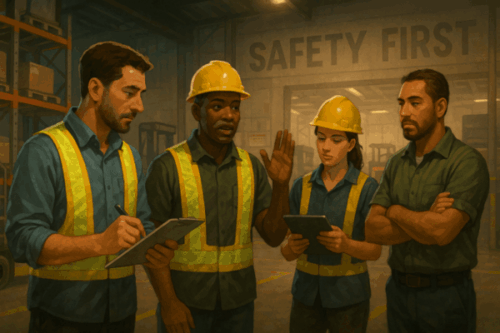
The Software Scaries: How to Choose, Deploy, and Actually Succeed with EHS Technology

Why picking the right safety software feels daunting—and how the right rollout plan makes all the difference.


The Fear Is Real: Why EHS Software Feels So Daunting

If you’ve ever been tasked with selecting new EHS software, you know the feeling in your gut. It’s part excitement, part anxiety—and part déjà vu. You’ve been here before, perhaps with another vendor promising a seamless solution that ended up delivering something… well, less than seamless.

EHS leaders don’t go into their careers to become IT project managers. They care about safety, people, and compliance—not configuration tables, data migration, and onboarding workflows. Yet when organizations decide to modernize, safety professionals often find themselves leading massive software transitions with limited time, resources, and internal tech support.

And let’s be honest: software purchasing is intimidating. Between endless demos, slick dashboards, and AI-powered promises, it can be difficult to tell what’s real. Choosing wrong can mean years of frustration, lost time, and sunk costs.

“Selecting new safety software feels a bit like changing engines mid-flight. You know it needs to happen—but one bad move, and everything can stall.”

The fear isn’t irrational—it’s earned. Over the past decade, organizations have seen countless technology deployments fail, not because the software was bad, but because the deployment plan was nonexistent. Vendors complete the sale, provide the login credentials, and direct customers to a help desk when challenges arise.

That’s not partnership—that’s abandonment.


Why Software Deployments Go Wrong (and It’s Not the Buyer’s Fault)


Let’s start with the truth: most software rollouts don’t fail because of the customer. They fail because vendors treat implementation as an afterthought.

Across industries, analysts have been tracking a troubling pattern:

According to Gartner (2024), 67% of enterprise software deployments fail to meet ROI expectations within the first 18 months.

Forrester (2023) found that only 14% of organizations felt their software vendors provided meaningful support post-purchase.

A 2023 McKinsey study indicated that companies that lacked structured onboarding were 3x more likely to abandon software within the first year.

In other words, most organizations don’t have a software problem—they have a support problem.


💻 The “Buy-and-Bye” Model

Here’s how it typically goes: you sit through several demos. Every vendor promises intuitive design, AI automation, and “white-glove” support. You narrow down the options, negotiate the pricing, finalize the contract, and… that’s the conclusion.

Now it’s on you.

Support tickets replace human contact. The “account manager” becomes a shared inbox. When adoption lags or new users get frustrated, you’re told to “submit a ticket.” You don’t have a partner—you have a platform.

The industry calls this SaaS enablement. EHS professionals refer to this situation as being left alone to deal with the mess.


🧩 Complexity Masquerading as Customization

Another trap: systems built for every possible use case are often too complex for any single company’s actual needs. Flexibility becomes a liability.

“You can configure anything,” the vendor says. But what they don’t mention is that you will be the one configuring it.

This is where great intentions turn into burnout. The safety manager now has to translate safety procedures into logic tables, field names, and permissions. What should be empowering becomes overwhelming.


⏳ The Contract Trap

Then there’s the pressure of commitment. Multi-year contracts are common in software sales, and vendors use them to ensure revenue predictability—not client success. Once you’ve signed, you’re locked in, whether or not the software fits your needs.

That’s the opposite of partnership. It’s a gamble on blind faith.

Real-world example: A mid-sized construction firm purchased an enterprise-grade EHS suite at $150K annually. They were promised easy setup. In reality, implementation required six months of IT involvement, ten administrative licenses, and an additional “consulting package” just to configure workflows. They never made it past the second month. The contract, unfortunately, lasted three years.

The result? The safety team went back to Excel by month four—and the software became an expensive ghost on the company’s balance sheet.


What You Should Be Asking Before You Buy


So how do you protect yourself—and your organization—from software regret? You ask better questions.

Software demos are designed to impress, but the best buyers are the ones who look past the polish and dig into the process. Here’s what you should ask before signing any contract:


1️⃣ “What does success look like by Day 30, Day 60, and Day 90?”

If the vendor can’t articulate clear milestones for implementation and adoption, that’s a red flag. Good partners have roadmaps. They know how long it should take to see traction and what “success” actually looks like.


2️⃣ “Who will I talk to after we sign?”

This one’s critical. You’re not just buying software—you’re buying a relationship. Ask if there’s a dedicated customer success manager or if you’ll be routed to a generic support queue. If it’s the latter, prepare for frustration.


3️⃣ “How do you measure adoption and engagement?”

Don’t just ask about uptime or server speed. Ask how they’ll help you know if the system is being used effectively. Will they show you who’s logging in? Completing training? Submitting reports? Visibility drives improvement.


4️⃣ “What happens if it doesn’t work for us?”

Flexibility is the mark of a confident vendor. Beware of anyone pushing long-term commitments without proving value first. Pilots, phased rollouts, and modular contracts are signs of a partner who’s confident you’ll stay because it works—not because you’re trapped.


5️⃣ “What’s the total cost of ownership?”

Hidden costs sink more projects than software bugs. Ask about configuration, integration, admin licenses, and training fees. A cheap system that demands 200 hours of setup time isn’t cheap at all.


⚠️ Red Flags to Watch For:

  • They focus on features, not outcomes.
  • They use “AI” as a selling point but can’t explain its impact.
  • They talk more about dashboards than about your daily reality.
  • They avoid questions about what happens after go-live.

“The best vendors don’t sell you software—they teach you how to succeed with it.”


Section IV – Deployment: The Most Overlooked Risk in EHS Software


Software implementation isn’t a switch—it’s a process. The best systems can still fail if the rollout is rushed, unclear, or unsupported.


⚙️ The Two Ingredients of Success: Clarity and Cadence

Clarity means every stakeholder knows what’s expected in the first 90 days. Who’s responsible for data import? Who owns training? Who’s testing workflows?

Cadence means there’s a rhythm—regular check-ins, progress reviews, and updates. Software success isn’t a one-time event; it’s a series of small, well-managed wins.

According to McKinsey (2023), projects with defined 90-day deployment plans are 2.8x more likely to achieve ROI than those without structured onboarding.


🧠 Change Management Is a Human Problem

Even the best tools will fail if people don’t understand or believe in them. When software changes daily habits—like how incidents are logged or training is tracked—it’s not a technical shift; it’s a cultural one.

Real-world example: A manufacturing plant launched an inspection app but didn’t train supervisors on data interpretation. Inspections went up 40%, but corrective actions dropped 60%. The system worked—the rollout didn’t.


Measuring Success: Turning Optimization Into ROI

The moment software goes live, measurement begins. But too many organizations stop after installation. Optimization is where value is proven.


Key early indicators of success:

  • Increase in engagement metrics (logins, form submissions, completion rates)
  • Reduction in manual reporting or redundant spreadsheets
  • Faster response and corrective action times

Key long-term indicators:

  • Audit readiness (retrieving data instantly, not manually)
  • Lower incident frequency and higher near-miss reporting
  • Tangible time savings for safety managers


Organizations that hold structured optimization reviews every 30 days see a 35% improvement in data accuracy and 4x faster ROI realization compared to those that don’t. (Aberdeen Group, 2024)


Optimization is the multiplier—it’s where insights become efficiency and efficiency becomes culture.

Why a 90-Day Pilot Changes Everything

For many EHS teams, the idea of a pilot program feels like a luxury. But in reality, it’s the most practical risk-reduction tool you have.


A 90-day pilot lets you:

Test real-world workflows with your actual data

Assess ease of use for field and admin staff

Identify configuration gaps before full deployment

Build user trust through early success


 “A pilot doesn’t just test software—it tests the partnership.”


A structured 90-day pilot gives both sides a chance to learn, adapt, and optimize. It’s a trial run for the relationship as much as the tool.

The White-Glove Difference: Real Support vs. Help Desks

Many vendors promise “support.” Few deliver real partnership.

In traditional models, you log a ticket and wait for a response. In reality, you’re not looking for troubleshooting—you’re looking for guidance.

True white-glove service means:

  • A dedicated implementation specialist
  • Regular onboarding calls and milestone reviews
  • Live configuration support—not just email threads
  • A shared goal: helping you succeed, not survive

When onboarding feels supported, adoption follows. When adoption follows, ROI becomes inevitable.

“White-glove support isn’t about fixing bugs—it’s about building confidence.”


Section VIII – Fear Less, Deploy Better

Choosing and deploying software will always feel like a big leap. But it doesn’t have to be a blind one.

When you ask the right questions, demand transparency, and choose a partner who’s willing to learn with you, the risk becomes manageable—and the payoff enormous.

The right technology doesn’t just digitize safety—it humanizes it. It helps people stay organized, informed, and empowered.

“Software should make safety simpler, not scarier. And the best way to prove that is one pilot, one plan, and one partnership at a time.”

What OSHA Requires Isn’t Always What Workers Remember

And that’s where most safety programs quietly fail.

If you walk into most industrial or manufacturing sites across the U.S. and ask the safety manager, “Are you compliant with OSHA training requirements?” the answer is usually an assured yes. There are binders filled with sign-in sheets, digital folders holding certificates of completion, and spreadsheets documenting who took what, when.

But ask that same safety manager a different question—“If something goes wrong, are you confident your workers know what to do?” —and you’ll often get a pause.

That pause is the space where incidents happen.

This article is about that space. The gap exists between documented compliance and actual preparedness. It’s where too many safety programs quietly—and dangerously—fail. This failure is not due to negligence, but rather because the structure of regulatory training requirements often fails to align with the realities of human learning, workplace turnover, and operational pressure.

OSHA mandates training. But OSHA doesn’t test whether your team remembers anything once they leave the classroom. And that’s the real risk.


What OSHA Actually Requires (CFR Snapshot)

The Code of Federal Regulations (CFR) contains over 40 specific OSHA standards that explicitly require employee training. These regulations aim to equip workers with the necessary knowledge and skills to safeguard themselves against recognized workplace hazards.

But most of these rules focus on training delivery, not knowledge retention. You can be 100% compliant by checking the box—but still fail when it matters most.

🔒 Lockout/Tagout (29 CFR 1910.147)

  • Requires training for “authorized,” “affected,” and “other” employees.
  • Retraining is mandated with job/equipment changes.
  • Certification of completion is required.

Case Example: A temp worker was fatally electrocuted in Ohio (2020). The investigation revealed no LOTO training had been provided. [Source: OSHA News Release, 2020]

🧯 Forklift Safety (29 CFR 1910.178)

  • Requires formal, practical training and operator evaluation.
  • A refresher is required every 3 years or after an incident.

Data Point: Forklift-related incidents cause ~85 deaths and 34,900 serious injuries annually in the U.S. [Source: OSHA, 2023]

🧪 HAZWOPER (29 CFR 1910.120)

  • Requires 24–40 hours of training plus annual 8-hour refreshers.
  • Applies to workers at hazardous waste sites or chemical spill responses.

Note: Subcontractors often claim HAZWOPER compliance but lack valid or updated documentation.

🦠 Bloodborne Pathogens (29 CFR 1910.1030)

  • This training is required for workers who are exposed to blood or other potentially infectious materials (OPIM).
  • Annual retraining is mandated.

Observation: Non-clinical roles (e.g., janitors, laundry workers) are often overlooked despite exposure risk.

🚧 Confined Spaces (29 CFR 1910.146)

  • Workers must complete training before being assigned to permit-required confined spaces.
  • Retraining is required for procedural or hazard changes.

Case Example: In 2021, two workers in Texas lost consciousness due to oxygen deprivation in a confined space. Training records were incomplete.
[Source: OSHA Region 6 Case Files]

📌 Bottom Line: OSHA tells you what to train and when. But it doesn’t verify how well the message sticks.

Compliance ≠ Competency

Let’s say a new hire watches a fall protection video, signs a form, and starts work the next day. Three weeks later, they’re standing on a shaky ladder, one hand bracing a beam while reaching for a tool.

Technically trained. Functionally unprepared.

🧠 The Science of Forgetting

  • People forget 50% of information within 1 hour.
  • 70% within 24 hours,
  • 90% in a week without reinforcement.
    [Source: Ebbinghaus Forgetting Curve, Psychonomic Bulletin & Review, 2015]

And it’s worse in safety-critical roles:

  • High turnover
  • ESL barriers
  • Fatigue from long shifts
  • Training delivered in formats workers don’t relate to

For example, after a fall-related fatality in Florida in 2022, half of the job crew admitted that they believed harnesses were optional for short jobs. Training was “complete.” Behavior said otherwise.


The Hidden Costs of the ‘Check-the-Box’ Approach

💥 1. Preventable Incidents

Workplace injuries cost U.S. employers over $58 billion/year in direct costs alone. [Source: Liberty Mutual Workplace Safety Index, 2023]

Even well-intentioned training becomes worthless if workers forget, misinterpret, or never internalize it.

⚖️ 2. Legal Exposure

Signed sheets won’t protect you from legal scrutiny if your documentation is weak or incomplete.

Example: A subcontractor fell through a skylight in California. Training documents were unsigned and lacked detail. The jury awarded $11.3 million.  [Source: CA Civil Court Records, 2021]

🛑 3. Operational Drag

Poor training leads to:

  • Constant supervision
  • Repeat errors
  • Missed productivity goals
  • Lost morale and engagement

😒 4. Culture Breakdown

When workers view training as a formality, they treat safety as a formality. That’s when near misses become normalized.

Example: In one warehouse, workers admitted to clicking through digital modules without watching them. “It’s about checking boxes,” one said. That’s not training—it’s theater.

How Smart Companies Go Beyond the Bare Minimum

🔁 1. Continuous Training

Safety leaders use:

  • Daily toolbox talks
  • Microlearning (3–5 minutes/day)
  • On-the-job mentoring and peer reviews

Practice Highlight: A manufacturer in Indiana saw a 35% drop in safety incidents after launching “safety spotlight” themes embedded into shift meetings.

🤝 2. Supervisor Engagement

Supervisors aren’t just enforcers—they’re coaches:

  • They observe
  • Ask probing questions
  • Reinforce habits daily

🌐 3. Risk-Based Customization

  • High-risk roles require high-frequency refreshers.
  • Training is delivered in the workers’ first language.
  • Materials are adapted based on literacy and comprehension.

Example: A Texas utility contractor switched to bilingual live instruction and saw test scores and jobsite safety behaviors improve immediately.

👀 4. Behavior-Based Observations

Training isn’t assumed. It’s verified in the field:

  • Observations
  • Peer-to-peer feedback
  • “What if…” scenario drills

Data Point: Companies that use behavior-based safety observations see 40–60% fewer injuries. [Source: National Safety Council]

📚 5. Meaningful Documentation

Effective recordkeeping includes:

  • Content taught
  • Delivery method
  • Language of delivery
  • Trainer credentials
  • Pass/fail outcomes

Example: A global manufacturer avoided a six-figure fine by producing a time-stamped training video showing a temp receiving (and ignored) proper instruction.


Redefining What ‘Good Training’ Really Means

OSHA asks, “Did you train your workers?”

But the more important question is:

Did the training work?

Training becomes significant only when it equips workers to react immediately, rather than merely watching a video.

If your safety culture is built on comprehension, accountability, and repetition—not checklists—then you’re not just meeting a standard.

You’re protecting people.

And that’s the only metric that matters.

What Fireworks Teach Us About Workplace Safety

The Power of Teaching Others to Stay Safe

Week of July 4th | A Post-National Safety Month Reflection

Every year, as July 4th approaches, the skies across the United States prepare to burst into color. Fireworks, cookouts, family gatherings—it’s a celebration of freedom, pride, and community. But alongside the festivities comes a familiar, sobering pattern: a spike in injuries, many of them preventable, many of them affecting children.

Despite decades of warnings, newscasts, and printed instructions, thousands still end up hurt. But what about all the accidents that don’t happen? What about the burns that are prevented, the fingers that are saved, the close calls that never make the news? More often than not, those near-misses are avoided thanks to the unseen force that keeps people safe: teaching.

When we guide a child through lighting a sparkler, when we double-check the angle of a Roman candle, when we shout, “back up!” before the fuse is lit—we’re not just keeping them safe in the moment. We’re instilling something deeper. We’re modeling caution. We’re reinforcing accountability. We’re teaching safety—not as a rule, but as a way of being.

And that, right there, is the very essence of safety culture in the workplace.

Safety Isn’t Just Compliance—It’s Compassion in Action

At work, we love to talk about safety protocols and policies. We draft procedures. We build checklists. We print posters and laminate emergency plans. But the most effective safety cultures aren’t built from the top down—they’re passed from person to person, moment to moment. They’re human.

We don’t just tell kids to be safe—we show them. We model safe behavior over and over, because we know repetition builds instinct. And yet, when it comes to the workplace, we sometimes assume that a few onboarding videos and a quarterly training session will do the trick.

They don’t.

What actually shapes behavior is example. It’s when a veteran machine operator pauses to walk a rookie through a shutdown. It’s when a warehouse foreman takes a moment—despite a tight deadline—to correct a small lapse in PPE use. It’s when a teammate speaks up before someone steps into a dangerous zone. That’s where culture lives: in the spaces between the rules, where care becomes action.

The Illusion of Safety and the Danger of Familiarity

The problem is, many hazards in both fireworks and workplaces don’t look like hazards—until they are. A fuse seems long enough. A sparkler seems harmless. A press seems quiet. A catwalk seems stable.

Until they’re not.

The illusion of safety is one of the most insidious risks we face. Optimism, routine, and familiarity conspire to dull our senses. “It’s always been fine” becomes the most dangerous sentence on the job.

So how do we stay vigilant? By building a culture that rewards caution—not speed. That trains attentiveness—not just task completion. And that, most importantly, allows people to speak up without fear.

Culture Is a Mirror—It Reflects What We Model

Children mimic the adults around them. If they see us kneel to light fireworks from a safe distance and step back cautiously, they’ll follow. If they see someone toss a firecracker for fun, they’ll think that’s normal.

At work, it’s the same. People reflect their leaders and peers. If a shift lead ignores a frayed cord, so will everyone else. If a manager shrugs off a near miss as “not worth reporting,” the whole team learns to stay quiet.

Culture isn’t written in policy binders—it’s written in behavior. Every choice we make at work, especially when no one’s watching, sends a message about what we value. If safety isn’t visible, it isn’t real.

Safety as Care, Not Control

When we help a child stay safe, it’s never about control—it’s about care. We step in because we love them. Because their wellbeing matters more than the thrill of the sparkler. Why should our mindset be any different at work?

Teaching someone how to properly de-energize a machine isn’t about checking a box. It’s about making sure they get home with all ten fingers. Fixing a frayed power cord isn’t about avoiding a write-up—it’s about avoiding trauma. Logging a hazard report isn’t about covering ourselves—it’s about preventing pain for someone else.

When safety is framed as an expression of care, it changes everything. Participation increases. People start to watch out for one another. Culture deepens because it feels real—and personal.

Technology Can Empower a Safety Mindset—If It’s Built Right

Of course, caring isn’t always enough. Even the most committed employees can fall short if the systems around them make safety cumbersome. Complexity kills follow-through. If it takes five clicks to file a report, or if an LMS crashes mid-training, people give up.

That’s why tools like sam® by secova matter. sam® is built to remove the friction from doing the right thing. It’s about simplicity. Micro-trainings delivered at the right moment. Nudges that feel like support, not surveillance. Dashboards that actually tell you what’s happening—not just what happened last month.

We’ve seen it work. At a manufacturing plant, a young line worker noticed a vibration in a pallet lift. It didn’t seem serious—but it felt off. He logged the observation using the sam® app. Maintenance investigated. What they found was a cracked hydraulic shaft that could have failed at any moment. Because the reporting was simple and immediate, a potentially serious incident was avoided.

One moment. One report. One culture-driven action. That’s how safety works when it’s woven into the everyday.

A Culture Worth Passing On

The fireworks metaphor is powerful because it reminds us of something essential: safety is a legacy. It’s what we teach. It’s what we reinforce. It’s what we pass down.

And when it’s built right, it becomes part of the fabric of work. Not something extra. Not a checklist. But a shared commitment that’s as natural as putting on your gloves or greeting your crew in the morning.

So this 4th of July, as you celebrate with friends and family, take a moment to observe how you teach safety to the people you love. Notice how you instinctively guide. How you remind. How you reinforce. That same instinct belongs in the workplace.

Because whether it’s a fuse or a forklift, safety isn’t just something we do—it’s something we pass on.

And in the quiet moments after the fireworks fade, that might just be the most patriotic thing we do all week.

Between Heartbeats & Hard Hats

How real-world well-being turns good crews into great safety cultures

National Safety Month 2025 · Week 4—Worker Well-Being

The Half-Blink Heard ’Round the Dock

Carlos is the forklift driver every supervisor would clone if physics allowed it—fifteen years, zero recordables, and a patience that borders on pastoral care for new hires. Yet at 06:17 on a perfectly boring Monday, his eyelids slacken for half a heartbeat, and the forks kiss a pallet rack. The tap is gentle, the damage nonexistent, yet a hush ripples across the loading bay. Everyone is haunted by the specter of potential outcomes: 200 k USD in product at nose-level, a coworker’s kneecap at shin-height, a year of “how did we miss that?”

If you’ve ever reached your driveway and realized you don’t remember the last three intersections, you’ve tasted Carlos’s micro-nap. To a sleepless brain, that blip is a survival reflex. For a safety budget, this moment can be likened to a rapidly spinning dagger. Multiply one half-blink by a thousand shifts, layer in summer heat, tight production targets, and the sad arithmetic of fatigue, and the real question becomes: Why do we still call well-being a “soft” topic when steel and bone bend just as fast under an exhausted mind?

Welcome to the final fifty feet—and the subsequent fifty heartbeats—where the success or failure of 21st-century safety is determined.

1 · Why Well-Being Belongs on the Same Dashboard as TRIR

Ask a veteran EHS manager what “controls” looked like in the 1990s, and you’ll get a checklist of metal and paperwork: interlocks, guards, ANSI gloves, and confined-space permits. Fast-forward to 2024, and the top drivers of incidents in most insurer loss books read like a medical chart—sleep debt, heat stress, anxiety spikes, and repetitive-strain fatigue.

The physics hasn’t changed. A quarter-second reaction lag at 6 mph is still 22 extra inches—exactly one pedestrian lane. What’s changed is the recognition that lag is more likely to come from an overworked circadian rhythm than from a missing guard.

Modern safety dashboards finally reflect that. Besides the Total Recordable Incident Rate, you’ll increasingly find

  • Average workforce mood score (captured in a 3-emoji slider)

  • Fit-for-duty honesty rate (quick self-check at clock-in)

  • Heat-index alert response (minutes between ping and corrective action)

  • Ergonomic selfie closure (percent of red-flag workstation photos fixed inside 48 h)

Keeping those numbers in the green prevents the OSHA log from ever turning red.

2 · Fatigue—the Overslept Saboteur

2.1 The Yawn Zone

Every graveyard-shift veteran whispers about the Yawn Zone: the spectral 03:00–05:00 window when eyelids weigh down and decision quality leaks through the grating. BLS raw data agrees—night-shift incident curves swell here: ankle twists, backovers, and scanner drops.

Case vignette. Before COVID, a plastics plant outside Toledo ran an expensive patchwork of double-coffee breaks and mid-shift calisthenics. In 2022, the EHS tech finally won approval for a test: a decommissioned shipping container painted clinic-white, two $89 camping recliners, a motion-sensor LED strip, and a fifteen-minute egg timer. Workers called it the “micro-nap box.”

Results after one quarter

  • Picking-accuracy defects—27%

  • OSHA recordables—8%

  • Scrap regrind tonnage –11 %

  • Total cost of the box: < $1,000

  • Payback time: 23 days

Is there a shortage of floor space? Replace the pod with a digital honesty gate. Two questions pop up on a tablet that releases the machine’s e-stop:

  1. Did you sleep six hours or more? Yes / No

  2. Do you feel alert? Yes / No

Green proceeds. Amber reroutes high-precision tasks to fresher hands. Red triggers a ten-minute supervisor check plus hydration break. Nobody’s docked pay. Everybody’s forced to admit they’re mortal.

2.2 Counting the Invisible Millions

One hour awake beyond 17 reduces reaction speed roughly 12%. The average powered-industrial-truck collision costs $42,000 in direct claims and triple that in indirect costs. Multiply that by every extra tenth of a second it takes your after-midnight crew to brake, and fatigue becomes a capital-expenditure argument, not a wellness perk.

3 · Stress—the PPE You Can’t Put On a Rack

3.1 Cortisol Micro-Storms

Researchers at Sweden’s Luleå University equipped blast-furnace workers with heart-rate variability sensors. Each horn blast spiked cortisol—expected. The shock was the fog phase: a 90-minute plateau where short-term memory sagged and error rates doubled. No sparks were flying, yet the hazard needle was buried in orange.

3.2 Emoji as Early-Warning Radar

A Gulf Coast refinery stole a page from gaming apps: before clocking in, workers drag a thumb to one of five faces—😃 🙂 😐 😟 😩. Green passes; Amber prompts a buddy chat (“Need water? Did the baby scream all night?”). Red pings HR for a ten-minute coffee sit-down.

Two red flags in nine months escalated to counseling before EMTs ever heard a dispatch tone. Dev cost: four hours. Coffee costs pennies. Lead-indicator wow factor: priceless.

3.3 Culture Hack: Story Over Stats

When the mood slider launched, managers were tempted to blast PowerPoints about cortisol pathways. Instead, they printed a weekly mood-vs-near-miss overlay. The crew instantly saw how Monday’s low-mood mornings shadowed Thursday’s close calls. Lecture avoided, behavior adjusted.

4 · Heat—August’s Silent Hammer

4.1 Concrete at 148 °F

Mid-continent summers are trending two degrees hotter per decade. On July 27 last year, Chicago’s heat index flirted with 115°F; Ridgeway Beverage’s concrete dock flashed 148°F on an IR gun. Lift batteries faulted, shrinkwrap sagged, two temp workers buckled.

4.2 $30 Sensors, $16,866 Saved

Ridgeway zipped 30 Bluetooth buttons to every pallet jack. When the local heat index crossed 90°F, crew phones chimed “Hydrate—8 oz.” Each scan of a QR code next to the water station logged fluid ounces and added scoreboard points. Water doubled; heat stress incidents—once twenty-one per summer—fell to three. Nineteen avoided absences at $937 average claim saved $16,866 the first season.

Pro tip. Technology is most effective when it uploads evidence. Shade sails, industrial fans, and cooled rest areas—they’re still the biceps; sensors are the nerve that convinces the CFO those biceps earn their protein.

5 · Ergonomics—Netflix Neck Meets Torque Wrench

5.1 The Selfie Audit

At the pandemic apex, a Chicago med-tech plant discovered half its design engineers were hunched over laptops on bar stools at home, while maintenance techs in the clean room were twisting wrists at 80-degree angles to extract test assemblies. Enter the selfie audit.

How it works

  1. The worker snaps two pictures—neutral and work posture.

  2. An AI overlay paints red on joints beyond a safe range.

  3. The app sends a mini-prescription that includes raising the monitor four inches, swapping the key grip, and adding a foot wedge.

  4. Two weeks later, a follow-up selfie confirms compliance.

Claim frequency for musculoskeletal disorders fell 41 percent; $400k in reserve was freed for an exoskeleton pilot. Cost: open-source pose-estimation code and $10 risers.

5.2 The Future Isn’t All Robots

Passive shoulder-assist exos cost less than $1,000 and provide a return on investment within sixteen weeks at furniture plants. But $10 wrist rests still beat exos when budgets say, “Maybe next year.” Choose the cheap slope now; layer fancy later.

6 · Training Without Tedium

6.1 Micro-module Anatomy

  • 90-second POV video—operator eyes ignore a blind-spot mirror.

  • Freeze-frame. Thirty-second quiz: “Spot the miss.”

  • 60-second replay with best practice.

  • Badge drops; dopamine lands.

Run the micro four times on days 0, 2, 7, and 30. Retention hits north of 90 percent. Over time, classes fade into history.

6.2 Star Your Own People

Stock actors tank credibility. Record Maria actually shutting a valve wrong, freeze, quiz, and replay Maria doing it right. Peer fame beats Hollywood.

7 · Recognition—the Cheapest Chemical

7.1 Confetti vs. Clipboards

Fab-Steel Denver printed a Hydration Heroes board. Veterans sprinted to fountains, and near-miss reports spiked (the positive kind). They doubled down digitally: log a near miss (+5), close a CAPA early (+10), and complete a self-care e-module (+8). Confetti rained onscreen; crew pride soared.

A Pacific port trialed both reward styles for pre-trip checks: confetti vs. write-up. Confetti hit 91 percent completion, memos halted at 56 percent, and grievance filings went to zero. The data settled the argument. Confetti, once silly, became cultural DNA.

8 · When the Ledger Sings

Ridgeway spent $1,200 on sensors and scoreboard screens, saved $16,866 in heat claims, and sliced 40 percent off overtime in the hottest quarter. When well-being turns into “line item 6202: reduced downtime,” budget walls crumble.

9 · The 72-Hour Near-Miss Blitz

QR codes at every door. Pop-up coffee cards for each valid report. Sixty near-misses flood in over a long weekend—triple the typical quarter. Six red-hot trends pop: a trip lug outside Dock 3, a steam leak in Packaging, and a pallet-wrap tail snagging boots. Fixing those inside two weeks statistically avoids one full-blown OSHA recordable—roughly $44k saved in direct claims alone. Coffee cost: $300. ROI: 146×.

Stories like that turn skeptics into evangelists overnight.

10 · Sentiment AI—the Good Spy

Open-text comments now run through sentiment engines. Sarcasm-drenched overload (“living the dream 🙄”) flags for supervisor pulses. Launched with a clear charter—no manager lurking on private chats, anonymized aggregates—workers welcomed the grammar check for burnout. A chemical blender credits the bot for intercepting a 02:00 Slack line: “Thinking about ending it all.” HR intervened. Life trumped privacy.

11 · Five Field Files (Serial Numbers Scrubbed)

Solar Ranch, TX. Shade huts every 300 feet, plus hydration sensors. Zero heat injuries during record 110 °F summer; project finished seven days early.

Metro-Transit NW. Three-minute de-escalation modules and a peer hotline. Assaults on drivers fell 24 percent; auto-liability premiums dropped $390k.

FreshFoods DC. Nap pod + two-question alert gate. Recordables halved; pick accuracy ticked up 6 percent; HR bagged a state safety award.

AeroParts WA. The company implemented blue light therapy and micro-naps. Scrap is down 33 percent; graveyard turnover falls below the day shift for the first time.

MediDevice IL. Selfie ergo audits plus tiny grants for fixes. MSD claims to be down 41 percent; $400k released for an exosuit pilot.

12 · Confetti Beats the Cane

Discipline freezes risk but also freezes creativity. Confetti triggers dopamine; dopamine cements habits. The numbers vindicate the sparkle: 91 percent task completion vs. 56 percent under threat. Science wins, pride smiles.

13 · Metric Makeover—Squish to Spreadsheet

  • Mood index. Keep the weekly average above 3.8.

  • Fit-for-duty honesty. Targeting 85 percent for conviction is suspect.

  • Heat-ping response. Reaction under ten minutes; slower equals hazard.

  • Ergo, selfie fixes. Close 90 percent of red flags inside 48 hours.

  • Violence case closure. Finish every case, care plan, and all within 14 days.

Post these five giant digits beside takt time. Crews join the dots between low mood Monday and near-miss Thursday with zero lecture slides.

14 · Safety Manager 2030— A Day in the Data Life

At 06:45, the fatigue index is amber, indicating that high-precision tasks will be reassigned to the day crew.
At 08:20, the heat index is 91°F, and the hydration board flickers like a Las Vegas sign.
10:05 Carlos logs a near miss; auto-CAPA orders strap cutters; confetti rains.
14:00 Ergo selfies are 88 percent fixed; AI axes hunch risk with GIFs.
At 15:30, the Director toured the badge wall, high-fived the team, and boosted weekend morale.

No memos. The rhythm of the sensors is pure.

15 · Six Roadblocks—Six Bulldozers

  1. The budget appears to be inadequate. Show hidden scrap, OT, and claim costs; pilot near-miss QR posters first.

  2. Employees will fake it. Gamified honesty beats pencil-whipped checklists.

  3. Legal sweats AI. Publish a charter, anonymize, and let folks opt out. Most won’t.

  4. Training fatigue. Trade slide decks for 90-second GoPro cameos starring crew.

  5. Supervisors drowning. Auto-reports and five-bullet action cards.

  6. Execs love lagging TRIR. Hand them a lost bid citing fatigue—budget appears.

16 · The Six-Month Road Trip (Zero OT Edition)

  • Month 1: Break Ice. Emoji mood slider + public exec pledge.

  • Month 2: Brain Food. Fatigue micro-modules + fit-for-duty gate.

  • Month 3: Beat Heat. Use sensors or analog clipboards, implement a hydration game, and initiate a shade pilot.

  • Month 4: Rewrite Risk. Add a “Mind & Body” column to every JHA; retrain leads.

  • Month 5: Confetti Engine. Digital high-five wall resets each month; low-tier prizes rotate.

  • Month 6: Kaizen Cookout. Plot graphs, serve tacos, open mic; set Q4 targets.

Zero overtime. Culture rising like sourdough.

17 · Pulling the Thread

Machines hit stop buttons; people hit pause when brains rest, backs align, throats hydrate, and minds breathe. Protect those pulses, and guards click into place on their own. Clear eyes, steady hands, healthy discs—that’s where zero-harm slogans move from banners into the bloodstream.

Scatter sensors, gamify water, paint red angles on selfies, and unleash confetti on near-miss heroes. Hidden hazards hate sunlight; wellbeing data is the brightest beam you can swing.

Stay steady, stay human, and keep heartbeats humming beneath the hard hats.

Author’s Note
Company names and some identifiers have been masked or composited. All scenarios, metrics, and cost figures derive from documented field pilots, peer-reviewed studies, or publicly shared case reports. Adapt and verify locally.

#NationalSafetyMonth #WorkerWellbeing #SafetyCulture #FatigueRisk #HeatSafety #Ergonomics #IncidentPrevention #Recognition #SafetyLeadership #sam

More Than a Moment: How to Make Safety Culture Part of Everyday Work

Week 2 of National Safety Month – Small Actions. Big Impact.

We’re now into the second week of National Safety Month, and there’s something important we need to talk about.

Sure, many of us have banners up. Some companies have issued challenge coins or done a “Safety Week” giveaway. There are probably a few posters near the lunchroom with stats about slips, trips, and falls. Maybe you’ve even done a big training day or brought in donuts and safety trivia.

All of that is great. But here’s the hard truth:

Culture doesn’t grow in a week. And it doesn’t show up because a poster says it should.

It grows because safety becomes something people do—not something they’re reminded of.

This week, let’s dive deep into how small, daily behaviors—when supported by simple tools and clear expectations—build lasting safety cultures.

Let’s explore how technology, like sam® by secova, plays a role. And let’s acknowledge the reality: embedding safety in everyday work isn’t always easy… but it is always worth it.


Where Culture Lives (and Dies)

Culture doesn’t exist in a binder. It doesn’t live in a PowerPoint deck. It lives in the thousands of tiny decisions people make every day:

  • Do I report that near miss?
  • Do I stop the line because of a guard that looks loose?
  • Do I walk past a wet floor sign… or make sure it’s been properly cleaned up?


What separates strong safety cultures from reactive ones isn’t compliance. It’s consistency.

It’s the repeated, visible, reinforced behaviors that create norms—and it’s those norms that eventually create belief systems.

So how do we get there?

Why the Poster Falls Flat: Common Mistakes in Safety Messaging

Let’s take a moment to look inward. How often does this happen?

  • Safety is treated as an event—not a daily rhythm
  • Teams hear “safety is everyone’s job” without being told what that actually means
  • Trainings are pushed out on timelines, not tied to actual risk exposure
  • Frontline workers don’t get real-time feedback or reinforcement

This creates what we call the “safety drop-off.”

It starts strong with enthusiasm and effort… but within weeks or months, things taper off. Posters fade. Messages blur. Behavior returns to “normal.”

Real culture change can’t rely on enthusiasm alone.

It has to be tied to the work. Tied to behavior. Tied to systems that support and reward consistency.

The Kaizen Connection: Small Actions Build Big Shift

Kaizen, a concept born in Japanese manufacturing, means “continuous improvement.”

Not giant leaps. Not major overhauls.

Tiny, repeatable steps.

In safety culture, Kaizen might look like this:

  • Five-minute daily safety debriefs at the end of shift
  • One worker trained each week in a new safety observation skill
  • Frontline team members empowered to lead toolbox talks, rotating weekly

These micro-interventions work because they do three things well:

  1. They reinforce behavior
  2. They spread ownership
  3. They normalize safety conversations

And they do it without slowing down productivity—or overwhelming managers.

This is what we mean when we say “infusing safety into everyday work.”

It’s not about more rules. It’s about making safety an expectation, not an exception.


Why Simple Tools Drive Deeper Culture

There’s a myth in safety management that in order to be compliant, you have to be complex.

But complexity kills consistency.

If workers can’t report a hazard in under a minute, they won’t do it. If a training platform crashes or requires three logins, people will avoid it. If corrective action requires six signatures and a PDF form, it’s already too late.

What culture needs is clarity—and what clarity needs is simplicity.

Digital tools, when done right, don’t replace human interaction. They amplify it. They reinforce culture by:

  • Making safety visible to leaders and workers alike
  • Providing real-time feedback loops
  • Encouraging reporting without punishment
  • Creating trend data that drives action

When people see that what they report actually gets tracked

—and resolved—

they believe in the process.

That’s culture reinforcement.

How sam® Makes Safety Culture a Daily Practice

At sam® by secova, we didn’t build a safety platform for safety people only. We built it for real-world users—from welders to warehouse managers, forklift drivers to first-year apprentices.

Here’s how sam® supports real cultural integration:

  • Microlearning at the Moment of Need
    • Instead of hour-long sessions, sam® delivers 2-5 minute refreshers tied to actual tasks and hazards. This makes safety part of the job—not a break from it.
  • Easy, Mobile Hazard Reporting
    • See something? Snap it. Tag it. Submit it. Done. Your team doesn’t need a degree to use sam®. They need a phone and a minute.
  • Corrective Actions That Don’t Disappear
    • Every action logged has an owner, a due date, and a follow-up. Nothing gets buried in paper logs or forgotten in inboxes.
  • Engagement Dashboards That Show Progress
    • Want to know which team leads follow through? Which shifts log near misses? Which sites are trending safer? It’s all right there.

This is what “infused” looks like. 

Not one more system. Not one more burden.

Just smart, simple tools that reinforce what your culture is already trying to do.

What You Can Do This Week

If you want to move from participation to integration—this is your playbook:

  1. Identify one routine task that could include a safety behavior. Maybe it’s tagging a worn cord, inspecting a fall harness, or logging a temperature check.
  2. Build a small ritual around it. Can you tie it to a pre-shift meeting? Can a different employee lead it each week?
  3. Remove one barrier to reporting. Digitize your form. Add a QR code. Give someone 15 minutes a week to gather insights.
  4. Recognize one behavior this week publicly. Did someone speak up? Log a near miss? Fix a hazard? Celebrate it—out loud.
  5. Use your system to reinforce, not just record. If you use sam®, lean on dashboards, notifications, and training flows to prompt—not punish.


You don’t need to change everything to change something.

And something small today can shift everything tomorrow.

This Isn’t a Month—It’s a Mindset

Safety Month reminds us to stop and focus. But if all we do is focus and forget—we’ve missed the point.  The goal isn’t participation. It’s permanence.

It’s a workplace where:

  • Safety conversations aren’t scheduled—they’re second nature
  • Reporting isn’t feared—it’s expected
  • Training isn’t a task—it’s a tool

And the truth is, you don’t get there by chance.  You get there by effort. By structure.  And by tools that make it easier to stay the course. That’s what we’re building with sam® by secova.

Because safety culture isn’t a poster.

It’s a practice.

And it’s something we all have the power to shape—one task, one tool, one day at a time.


#SafetyCulture #WorkplaceSafety #EHS #SafetyIntegration #NationalSafetyMonth #ContinuousImprovement #KaizenSafety #FrontlineSafety #SafetyMindset #NearMissReporting #SafetyLeadership #SmartSafety #EmployeeEngagemen,# SafetyTraining #RealTimeReporting #HazardPrevention #DigitalSafetyTools #OperationalSafety #SafetySimplicity #SafetyEveryday #ProactiveSafety #CultureOfCare #RiskReduction #SafetyInManufacturing #WarehouseSafety #ForkliftSafety #SafetySuccess #SimpleSafety #SafetyOwnership #samBysecova