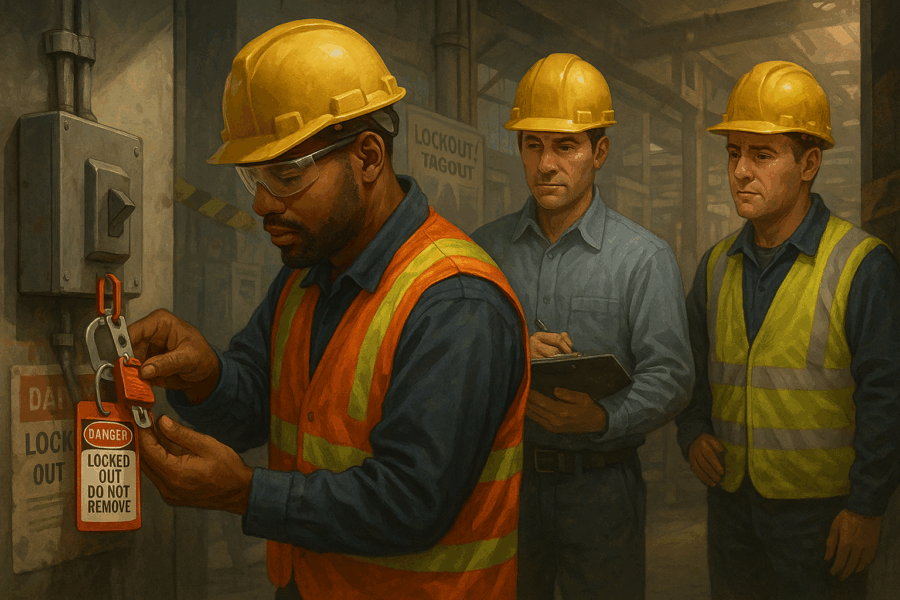
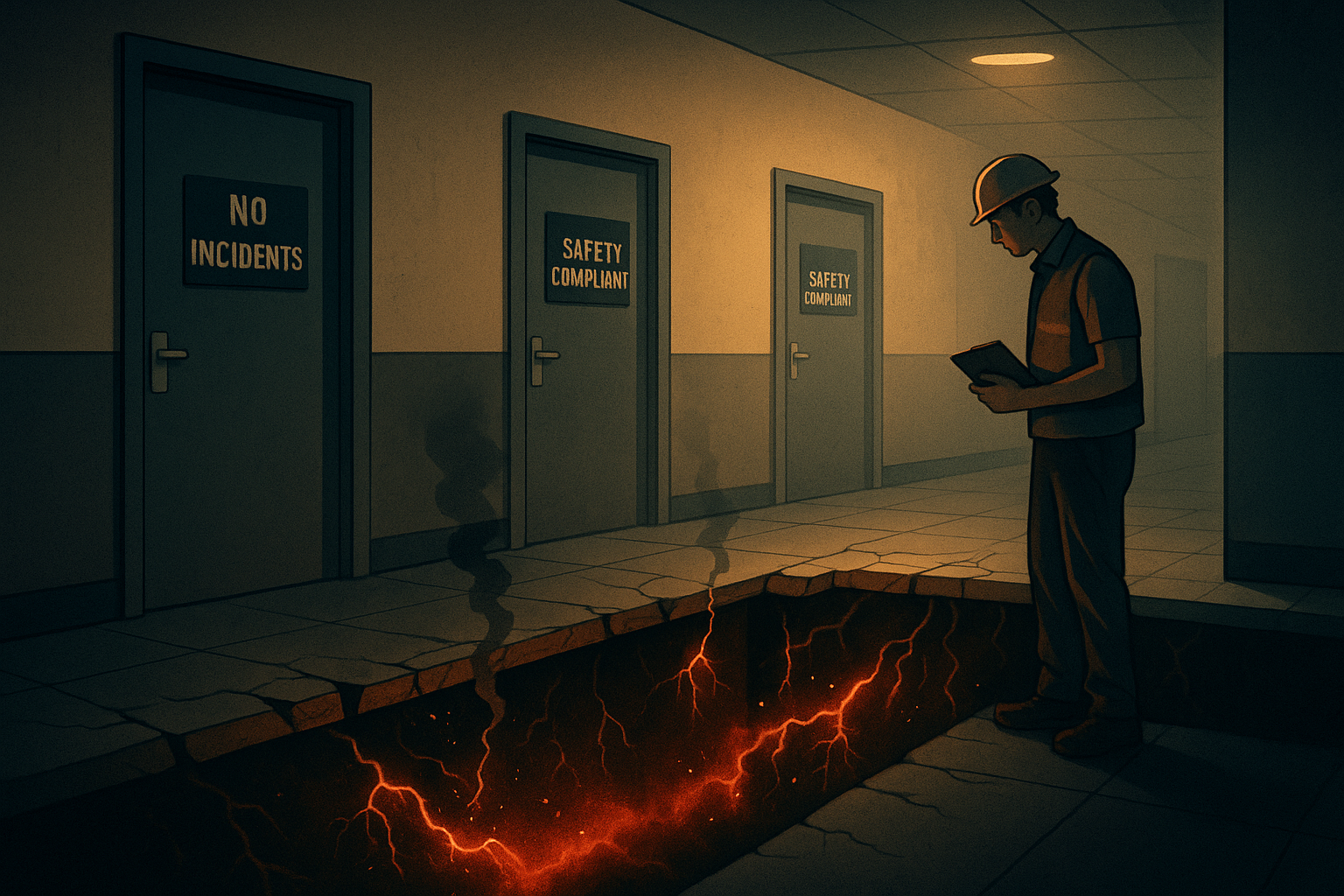
The Software Scaries: How to Choose, Deploy, and Actually Succeed with EHS Technology

Why picking the right safety software feels daunting—and how the right rollout plan makes all the difference.


The Fear Is Real: Why EHS Software Feels So Daunting

If you’ve ever been tasked with selecting new EHS software, you know the feeling in your gut. It’s part excitement, part anxiety—and part déjà vu. You’ve been here before, perhaps with another vendor promising a seamless solution that ended up delivering something… well, less than seamless.

EHS leaders don’t go into their careers to become IT project managers. They care about safety, people, and compliance—not configuration tables, data migration, and onboarding workflows. Yet when organizations decide to modernize, safety professionals often find themselves leading massive software transitions with limited time, resources, and internal tech support.

And let’s be honest: software purchasing is intimidating. Between endless demos, slick dashboards, and AI-powered promises, it can be difficult to tell what’s real. Choosing wrong can mean years of frustration, lost time, and sunk costs.

“Selecting new safety software feels a bit like changing engines mid-flight. You know it needs to happen—but one bad move, and everything can stall.”

The fear isn’t irrational—it’s earned. Over the past decade, organizations have seen countless technology deployments fail, not because the software was bad, but because the deployment plan was nonexistent. Vendors complete the sale, provide the login credentials, and direct customers to a help desk when challenges arise.

That’s not partnership—that’s abandonment.


Why Software Deployments Go Wrong (and It’s Not the Buyer’s Fault)


Let’s start with the truth: most software rollouts don’t fail because of the customer. They fail because vendors treat implementation as an afterthought.

Across industries, analysts have been tracking a troubling pattern:

According to Gartner (2024), 67% of enterprise software deployments fail to meet ROI expectations within the first 18 months.

Forrester (2023) found that only 14% of organizations felt their software vendors provided meaningful support post-purchase.

A 2023 McKinsey study indicated that companies that lacked structured onboarding were 3x more likely to abandon software within the first year.

In other words, most organizations don’t have a software problem—they have a support problem.


💻 The “Buy-and-Bye” Model

Here’s how it typically goes: you sit through several demos. Every vendor promises intuitive design, AI automation, and “white-glove” support. You narrow down the options, negotiate the pricing, finalize the contract, and… that’s the conclusion.

Now it’s on you.

Support tickets replace human contact. The “account manager” becomes a shared inbox. When adoption lags or new users get frustrated, you’re told to “submit a ticket.” You don’t have a partner—you have a platform.

The industry calls this SaaS enablement. EHS professionals refer to this situation as being left alone to deal with the mess.


🧩 Complexity Masquerading as Customization

Another trap: systems built for every possible use case are often too complex for any single company’s actual needs. Flexibility becomes a liability.

“You can configure anything,” the vendor says. But what they don’t mention is that you will be the one configuring it.

This is where great intentions turn into burnout. The safety manager now has to translate safety procedures into logic tables, field names, and permissions. What should be empowering becomes overwhelming.


⏳ The Contract Trap

Then there’s the pressure of commitment. Multi-year contracts are common in software sales, and vendors use them to ensure revenue predictability—not client success. Once you’ve signed, you’re locked in, whether or not the software fits your needs.

That’s the opposite of partnership. It’s a gamble on blind faith.

Real-world example: A mid-sized construction firm purchased an enterprise-grade EHS suite at $150K annually. They were promised easy setup. In reality, implementation required six months of IT involvement, ten administrative licenses, and an additional “consulting package” just to configure workflows. They never made it past the second month. The contract, unfortunately, lasted three years.

The result? The safety team went back to Excel by month four—and the software became an expensive ghost on the company’s balance sheet.


What You Should Be Asking Before You Buy


So how do you protect yourself—and your organization—from software regret? You ask better questions.

Software demos are designed to impress, but the best buyers are the ones who look past the polish and dig into the process. Here’s what you should ask before signing any contract:


1️⃣ “What does success look like by Day 30, Day 60, and Day 90?”

If the vendor can’t articulate clear milestones for implementation and adoption, that’s a red flag. Good partners have roadmaps. They know how long it should take to see traction and what “success” actually looks like.


2️⃣ “Who will I talk to after we sign?”

This one’s critical. You’re not just buying software—you’re buying a relationship. Ask if there’s a dedicated customer success manager or if you’ll be routed to a generic support queue. If it’s the latter, prepare for frustration.


3️⃣ “How do you measure adoption and engagement?”

Don’t just ask about uptime or server speed. Ask how they’ll help you know if the system is being used effectively. Will they show you who’s logging in? Completing training? Submitting reports? Visibility drives improvement.


4️⃣ “What happens if it doesn’t work for us?”

Flexibility is the mark of a confident vendor. Beware of anyone pushing long-term commitments without proving value first. Pilots, phased rollouts, and modular contracts are signs of a partner who’s confident you’ll stay because it works—not because you’re trapped.


5️⃣ “What’s the total cost of ownership?”

Hidden costs sink more projects than software bugs. Ask about configuration, integration, admin licenses, and training fees. A cheap system that demands 200 hours of setup time isn’t cheap at all.


⚠️ Red Flags to Watch For:

  • They focus on features, not outcomes.
  • They use “AI” as a selling point but can’t explain its impact.
  • They talk more about dashboards than about your daily reality.
  • They avoid questions about what happens after go-live.

“The best vendors don’t sell you software—they teach you how to succeed with it.”


Section IV – Deployment: The Most Overlooked Risk in EHS Software


Software implementation isn’t a switch—it’s a process. The best systems can still fail if the rollout is rushed, unclear, or unsupported.


⚙️ The Two Ingredients of Success: Clarity and Cadence

Clarity means every stakeholder knows what’s expected in the first 90 days. Who’s responsible for data import? Who owns training? Who’s testing workflows?

Cadence means there’s a rhythm—regular check-ins, progress reviews, and updates. Software success isn’t a one-time event; it’s a series of small, well-managed wins.

According to McKinsey (2023), projects with defined 90-day deployment plans are 2.8x more likely to achieve ROI than those without structured onboarding.


🧠 Change Management Is a Human Problem

Even the best tools will fail if people don’t understand or believe in them. When software changes daily habits—like how incidents are logged or training is tracked—it’s not a technical shift; it’s a cultural one.

Real-world example: A manufacturing plant launched an inspection app but didn’t train supervisors on data interpretation. Inspections went up 40%, but corrective actions dropped 60%. The system worked—the rollout didn’t.


Measuring Success: Turning Optimization Into ROI

The moment software goes live, measurement begins. But too many organizations stop after installation. Optimization is where value is proven.


Key early indicators of success:

  • Increase in engagement metrics (logins, form submissions, completion rates)
  • Reduction in manual reporting or redundant spreadsheets
  • Faster response and corrective action times

Key long-term indicators:

  • Audit readiness (retrieving data instantly, not manually)
  • Lower incident frequency and higher near-miss reporting
  • Tangible time savings for safety managers


Organizations that hold structured optimization reviews every 30 days see a 35% improvement in data accuracy and 4x faster ROI realization compared to those that don’t. (Aberdeen Group, 2024)


Optimization is the multiplier—it’s where insights become efficiency and efficiency becomes culture.

Why a 90-Day Pilot Changes Everything

For many EHS teams, the idea of a pilot program feels like a luxury. But in reality, it’s the most practical risk-reduction tool you have.


A 90-day pilot lets you:

Test real-world workflows with your actual data

Assess ease of use for field and admin staff

Identify configuration gaps before full deployment

Build user trust through early success


 “A pilot doesn’t just test software—it tests the partnership.”


A structured 90-day pilot gives both sides a chance to learn, adapt, and optimize. It’s a trial run for the relationship as much as the tool.

The White-Glove Difference: Real Support vs. Help Desks

Many vendors promise “support.” Few deliver real partnership.

In traditional models, you log a ticket and wait for a response. In reality, you’re not looking for troubleshooting—you’re looking for guidance.

True white-glove service means:

  • A dedicated implementation specialist
  • Regular onboarding calls and milestone reviews
  • Live configuration support—not just email threads
  • A shared goal: helping you succeed, not survive

When onboarding feels supported, adoption follows. When adoption follows, ROI becomes inevitable.

“White-glove support isn’t about fixing bugs—it’s about building confidence.”


Section VIII – Fear Less, Deploy Better

Choosing and deploying software will always feel like a big leap. But it doesn’t have to be a blind one.

When you ask the right questions, demand transparency, and choose a partner who’s willing to learn with you, the risk becomes manageable—and the payoff enormous.

The right technology doesn’t just digitize safety—it humanizes it. It helps people stay organized, informed, and empowered.

“Software should make safety simpler, not scarier. And the best way to prove that is one pilot, one plan, and one partnership at a time.”

No Bars, No Safety

Why Connectivity is the Invisible Backbone of Safe Remote Work

A Practical Guide to Enabling Safety and Compliance in Remote, Industrial, and Field Environments

Section 1: The New Frontier of Safety is Connectivity

Out on a wind farm in West Texas. Deep in the corridors of a wastewater treatment plant. High atop scaffolding in a rural tower install. In these places, safety can’t rely on laminated checklists or workers’ memory. Today’s safety demands real-time access, digital documentation, and immediate visibility—even hundreds of miles from the corporate office.

And yet, most organizations still treat digital connectivity as a “nice-to-have” instead of what it actually is: a frontline safety requirement.

If your workforce can’t get a signal, they can’t:

  • Complete digital pre-job safety briefings
  • Submit near-miss or incident reports in real time
  • Access critical documents like SDSs or site-specific safety plans
  • Confirm training compliance or verify contractor qualifications
  • Receive hazard alerts or severe weather warnings
  • Sync inspections, audits, or observations with the broader EHS team

Connectivity is no longer just an IT issue. It’s a safety imperative.

Section 2: Safety Software Doesn’t Work Without Signal

You’ve invested in an EHS platform—perhaps sam® by secova, or others like SafetyCulture, Cority, or Benchmark Gensuite. But if your foreman on a trench crew can’t submit a stop work notice until they return to the trailer—then you’re not operating in real time. And if real-time isn’t possible, responsiveness and accountability break down.

Common failure points from the field:

  • Apps freezing or crashing due to poor signal
  • Training verification or qualifications inaccessible on-site
  • Safety observations captured—but not transmitted for days
  • Supervisors blind to in-progress jobs and exposure risks
  • SDS retrieval delayed during chemical exposure or leaks

This isn’t theoretical. These are the real limitations organizations face every day. And they expose your teams to greater risk—not because your safety program is weak, but because your connectivity infrastructure wasn’t built with field realities in mind.

Section 3: Building the Digital Infrastructure for Safety

Implementation Ideas & Vendor Playbook

To ensure your safety program functions at remote and rugged job sites, you need a layered, resilient connectivity strategy. Below are the four primary infrastructure components safety leaders should consider, along with practical steps and vendor references.

1. Cellular Hotspots & Mobile Gateways

Best for: Mobile crews, vehicle-based teams, utility and telecom operations

How to implement:

  • Install LTE/5G routers in crew trucks, trailers, or site office.
  • Pair with rugged tablets or smartphones that auto-connect
  • Choose dual-SIM devices for automatic network switching
  • Conduct site signal mapping before deployment

🔧 Vendors to consider:

  • Cradlepoint IBR Series (rugged, built for industrial fleets)
  • Peplink MAX Transit Duo (dual LTE modems with failover)
  • Verizon Jetpack, AT&T Nighthawk, T-Mobile Inseego (for fast, small-scale deployment)

💡 Best Practice: Choose hardware that supports multi-SIM redundancy, so if AT&T coverage fails, Verizon or T-Mobile picks up automatically.

2. Private Mesh Wi-Fi Networks

Best for: Fixed infrastructure sites like oil & gas terminals, power plants, fabrication yards, shipbuilding, or mining zones

How to implement:

  • Deploy outdoor access points on poles, rooftops, or jobsite trailers
  • Use mesh-enabled hardware to cover wide areas with consistent signal
  • Segment access by zone (Zone A, B, C) or user role (admin vs. contractor)
  • Provide site-specific SSIDs with password management for security

🔧 Vendors to consider:

  • Cisco Meraki MR Series (cloud-managed, enterprise-ready)
  • Ubiquiti UniFi Mesh Pro (cost-effective and scalable)
  • Rajant Kinetic Mesh (highly dynamic, used in mining and defense)

💡 Best Practice: For remote zones, pair mesh units with solar + battery power systems to maintain uptime without relying on grid access.

3. Satellite Internet for Ultra-Remote or Rural Sites

Best for: Wilderness projects, oil & gas drilling, emergency response, offshore work

How to implement:

  • Set up satellite terminals at mobile trailers or command tents
  • Connect a Wi-Fi router to distribute access across field teams
  • Prioritize bandwidth for critical safety systems and documentation
  • Use scheduling to conserve data bandwidth (e.g., auto-sync every hour)

🔧 Vendors to consider:

  • Starlink for Business (broad coverage, high-speed, increasingly affordable)
  • HughesNet Enterprise
  • Viasat Mobility Services

💡 Best Practice: Don’t rely solely on satellite—use it in combination with LTE when possible for redundancy and lower latency in populated areas.

4. Mobile Device Management (MDM)

Best for: Ensuring devices stay secure, connected, and configured correctly

How to implement:

  • Provision rugged tablets or smartphones with pre-loaded EHS tools
  • Lock down devices to approved apps (kiosk mode)
  • Push software and content updates automatically
  • Remotely disable or wipe devices if lost or compromised

🔧 Vendors to consider:

  • SOTI MobiControl (strong reputation in field environments)
  • Microsoft Intune (if you use Microsoft 365 or Azure)
  • IBM MaaS360 (cross-platform and policy-flexible)

💡 Best Practice: Use MDM dashboards to flag devices that haven’t synced or accessed the network recently—these may indicate risks in your data pipeline.

Section 4: Connectivity is a Safety Investment—Not an IT Line Item

Let’s talk cost. Leaders often hesitate when they hear about deploying cellular gateways or satellite systems. But what is the real cost of doing nothing?

If we consider PPE mandatory, then connectivity is digital PPE. It allows us to access the system. To get trained. To report danger. To react fast.

Section 5: Real-World Scenarios Where Connectivity Drives Safety

Here’s what safety looks like when your job site is digitally connected:


Section 6: Questions to Guide Your Connectivity Strategy

Use these prompts to self-assess your readiness:

  • Do all our critical safety apps work reliably in the field?
  • Have we mapped cellular coverage at each job site?
  • Are supervisors trained to troubleshoot hotspot or tablet connectivity?
  • Who owns our connectivity rollout—Safety? Ops? IT?
  • Do we review sync failures, access delays, or offline issues as part of our incident reviews?

Final Thought: Connectivity Is the Next Layer of Protection

This isn’t about bandwidth. This is about equity of safety. About making sure that every worker—whether 10 feet from the office or 10 miles from cell service—has the tools, visibility, and protection they need to stay safe.

If your EHS system doesn’t function in the field, it doesn’t function at all.

Start treating connectivity like what it is: the invisible infrastructure that holds your safety culture together.

The Power of Training

The Illusion of Speed — Why Companies Skip Training in the First Place

In fast-paced industries like manufacturing, logistics, construction, and energy, the pressure to produce, ship, build, or complete is constant. Margins are tight. Schedules are even tighter. And in that kind of environment, training often becomes the first thing to go—not because it isn’t valued, but because it’s perceived as a drag on output.

A new hire shows up on Monday. By Tuesday, they’re shadowing someone on the line. By Friday, they’re expected to work independently. Maybe they got a few binders to flip through. Maybe they watched a couple of safety videos or filled out a checklist. But was that training? Or was it just exposure?

The Misguided Logic of “Time is Money”

Many employers adopt a “just-in-time” approach to workforce development—believing that the sooner someone is physically working, the better. But that logic is short-sighted. It equates movement with productivity and ignores the steep, slow-burning costs of putting an untrained employee into a complex or hazardous environment.

Consider this: according to the National Safety Council, the average cost of a single workplace injury in the U.S. is more than $42,000 in direct costs alone. That doesn’t account for the time spent investigating incidents, the morale impact on teams, or the potential reputational damage. Suddenly, saving a few hours on onboarding doesn’t look like such a smart move.

What’s more, research published in the Journal of Occupational and Environmental Medicine shows that new employees are three times more likely to be injured on the job within their first month. Not because they’re reckless—but because they’re unprepared.

Culture of Expediency

This pressure to rush can stem from several sources:

  • Short-term productivity pressures: If orders are backlogged, the instinct is to get hands on deck immediately.
  • High turnover environments: “Why train them? They’re going to leave in six months anyway.” It’s a common refrain in warehouses and seasonal workforces.
  • Poorly defined onboarding: Some companies don’t skip training intentionally—they simply never built a system for it in the first place.
  • Supervisor culture: Even when policies require training, floor-level leadership often pressures new hires to skip steps to “learn by doing.”

This culture of expediency sends a subtle but powerful message to workers: Speed matters more than safety. And that message, once internalized, is hard to undo.

Training as a “Soft” Priority

Another key reason training is skipped or shortened is perception. Training is often seen as a “soft” task—less measurable, less critical than hitting a production number. Leadership talks about it in HR or compliance terms, not as a driver of business outcomes.

But that thinking misses the bigger picture. Companies that invest in structured training report better retention, higher employee engagement, and stronger safety records. According to a 2023 Gallup Workplace study, employees who receive consistent training and development opportunities are 2.9 times more likely to say they are engaged at work.

Engaged employees don’t just stay—they perform better, communicate more openly, and take safety more seriously.

False Sense of Competence

There’s also a tendency—especially among experienced workers and supervisors—to assume that “common sense” will fill the gaps. If someone has used a forklift before, they don’t need to be retrained. If they’ve worked in a warehouse, they must know what PPE is required.

But common sense isn’t a compliance strategy. It’s an assumption. And in environments where tools, materials, and hazards change frequently, assumptions get people hurt.

Without standardized, job-specific training, companies aren’t building knowledge—they’re relying on chance. On tribal wisdom. On “doing it like the last guy did.” And that’s not good enough.

The Hidden Message Behind Skipped Training

When training is treated as optional, it tells workers something deeper: You’re on your own here. That message erodes psychological safety before a single shift begins. It discourages questions. It discourages pause. And it encourages workers to fake it until they make it.

But “faking it” in a high-risk environment has consequences. It’s not just about the new employee. It’s about the ripple effects—on teammates, supervisors, production lines, and company liability.

Training isn’t a cost. It’s an investment. And skipping it doesn’t save money—it transfers risk.


The False Economy of Speed

There’s an all-too-familiar phrase uttered across factories, warehouses, and job sites: “We don’t have time for training.” It usually comes from a place of urgency, when production deadlines are looming and labor is stretched thin. The pressure to get new hires “on the floor” and “up to speed” quickly feels justified—because after all, idle hands don’t move product. But beneath this logic lies a dangerous misconception: that skipping or minimizing training somehow saves time and money.

In reality, this shortcut is anything but efficient. It’s the equivalent of flooring the gas pedal with bald tires—sooner or later, you’ll skid out, crash, or break down entirely. What appears to be a gain in speed is actually a trade-off in safety, quality, retention, and long-term productivity.

The Productivity Mirage

At first glance, dropping a new hire directly into operations may feel like the fastest way to recoup recruiting costs. You need bodies to hit targets. And in industries like logistics and manufacturing, where turnover can exceed 30% annually, getting people moving quickly feels like common sense.

But research paints a different picture. According to a study by the Association for Talent Development (ATD), organizations that invest in structured onboarding and training see 60% higher productivity among new hires and stronger retention within the first 12 months. Why? Because people perform better when they know what’s expected, how to do it safely, and why it matters.

The so-called “lost time” in training is actually recovered many times over in reduced rework, fewer accidents, and stronger performance consistency. Speed doesn’t come from skipping steps—it comes from mastering them.

The Cost of Chaos

When workers are rushed into tasks without adequate training, two things happen:

  1. They improvise based on what others are doing, often replicating bad habits.

  2. They make mistakes—some minor, some catastrophic.

A new forklift operator who doesn’t know the proper turning radius in a tight warehouse aisle could damage inventory or equipment. A line worker unsure of a lockout/tagout procedure may expose themselves—or a teammate—to fatal energy release. These aren’t hypothetical scenarios. OSHA logs and news reports are filled with real-world examples of preventable incidents that stemmed from rushed or incomplete onboarding.

One notable case occurred in a Midwestern meatpacking facility where a newly hired maintenance worker—on the job for less than a week—was tasked with repairing a piece of machinery still energized. The LOTO training had been “covered” verbally during a chaotic first-day orientation but never practiced. Within hours, he suffered a severe electrocution. OSHA later cited the company for lack of formalized training and inadequate supervision.

Was that hour saved on training worth a life-altering injury and a six-figure fine?

Short-Term Thinking, Long-Term Losses

Here’s the hidden irony: When companies under-train to save time, they often end up spending more time cleaning up the fallout.

Consider these ripple effects:

  • Supervisors spend more time correcting errors.
  • Production teams slow down to accommodate injured or inexperienced coworkers.
  • HR and Safety teams scramble to fill out incident reports, file claims, or manage disciplinary action.
  • Legal and compliance departments jump in when OSHA gets involved.

The initial “shortcut” is now a detour full of potholes. And it doesn’t end there. Workers who feel unsupported or unsafe in their roles are significantly more likely to quit. The Work Institute’s 2023 Retention Report found that lack of career development and poor onboarding were among the top reasons employees left jobs—particularly in frontline roles.

In industries where labor shortages are the norm, can you really afford that?

Training as a Strategic Investment

Smart organizations flip the script. They treat training not as a time sink but as a time multiplier—an investment in capability, stability, and resilience.

They understand that:

  • A well-trained worker completes tasks faster and more accurately.
  • Trained teams are more adaptable when conditions change or new systems are introduced.
  • Training reduces risk, which reduces cost, downtime, and liability.

Training isn’t overhead. It’s insurance. It’s infrastructure. And just like you wouldn’t skimp on welding gear, scaffolding, or truck brakes—you shouldn’t skimp on the thing that keeps your people safe and effective.

The Cultural Message

There’s also a subtler, more powerful message embedded in good training: We value you enough to prepare you.

That message builds trust. It creates a sense of professionalism and shared responsibility. And it lays the foundation for something that can’t be bought—a culture of safety.

When training is rushed or skipped, the message received is very different: “You’re on your own.”

One cultivates engagement. The other breeds detachment.

Training Delays ≠ Productivity Gains

Let’s bust a myth.

The idea that skipping safety training gets workers “productive” faster is simply false. According to a National Safety Council report, 70% of companies that experienced a serious workplace injury said it could have been prevented with better training. And yet, in environments driven by output—manufacturing lines, construction crews, warehouse teams—training is often treated as a luxury. Something to get to “when there’s time.”

But time is never there. And so the loop continues: undertrained workers make mistakes, accidents happen, experienced team members are pulled from work to patch gaps or respond to incidents, and productivity stalls. Again.

When onboarding is rushed and safety training is sidelined, the damage isn’t always immediate—but it’s cumulative. It shows up in:

  • Higher incident rates
  • Greater equipment misuse
  • Slower ramp-up time
  • Increased worker stress and turnover
  • Risk of fines or regulatory violations

It’s not that these outcomes are surprising—it’s that we see them again and again, yet continue to prioritize speed over preparation.

Real-World Ripple Effects

Let’s break it down with a familiar example.

In a mid-sized logistics facility in the Midwest, a new hire was brought in during peak season. Instead of completing the full three-hour hazard communication and equipment safety training, they were sent to shadow a seasoned forklift operator for just 30 minutes. Within a week, the new employee accidentally reversed into a pallet stack, damaging $15,000 worth of inventory and knocking a coworker off balance, leading to a workers’ comp claim.

The company didn’t just face repair and insurance costs—they lost productivity as internal safety investigations were conducted, employee morale dipped, and the entire team was pulled into retraining. Ironically, the “saved time” of skipping training cost them more than two full weeks of normal operations.

This isn’t rare—it’s representative. Undertraining creates unseen drag across operations that grows until it becomes visible through loss.

“We’ll Train Later” Is a Lie We Tell Ourselves

Let’s call it what it is.

When companies say, “We’ll get them trained later,” it’s not a strategy—it’s procrastination disguised as pragmatism.

Why? Because “later” rarely comes. Or if it does, it’s too late—after a close call, or worse, an actual injury. The reason often boils down to short-termism: leadership or line supervisors are under pressure to meet demand, and training is seen as an inconvenience.

But this mindset is not only dangerous—it’s expensive.

In 2023, the U.S. Bureau of Labor Statistics reported an average direct cost of $42,000 per medically consulted workplace injury. That number doesn’t account for indirect costs like lost time, morale erosion, or the reputational damage from OSHA citations.

Now ask: would that same company have balked at spending $300 on proactive digital training and 3 hours of structured time?

It’s not a matter of affordability—it’s a matter of mindset.

Shifting the Paradigm: Training as Enablement, Not Expense

Safety training must be reframed—not as a regulatory requirement or sunk cost, but as a performance enabler.

Here’s the truth: trained workers are confident workers. Confident workers are faster, more precise, and less likely to make dangerous mistakes.

And when people feel the company has invested in their development—not just thrown them to the wolves—they’re more likely to stick around. They’re more likely to ask questions. They’re more likely to speak up when something seems off.

This creates a cycle of shared vigilance and accountability—what safety culture should be in the first place.


The Right Way to Train: Structuring Safety Programs for Retention, Readiness, and Regulatory Compliance

If we accept that skipping safety training is costly—and that half-hearted training is equally dangerous—the next logical question is: What should good safety training look like?

The answer isn’t as simple as “more hours” or “better content.” Effective safety training is built on three pillars: retention, readiness, and regulatory alignment. These three dimensions are mutually reinforcing: training that sticks improves on-the-job readiness, which in turn reduces compliance gaps and drives a safer, more efficient workplace.

But let’s be clear: you can’t YouTube your way to safety. Nor can you drop a 50-slide PowerPoint into someone’s inbox and call it a day. Structuring safety training requires intention, relevance, and, increasingly, digital tools that support how people actually learn and apply knowledge.

1. Training for Retention: Making Safety Stick

The human brain is wired to forget. Studies show that within just one week, people forget 90% of what they learn in a traditional lecture-style setting. In high-risk workplaces, that forgetting curve isn’t just inefficient—it’s dangerous.

So how do you overcome it?

  • Repetition and Reinforcement: Learning science tells us that spaced repetition dramatically improves retention. This means safety content shouldn’t be delivered once a year—it should be revisited regularly in bite-sized, engaging formats. Think microlearning modules, weekly toolbox talks, quick video refreshers.

  • Contextual Learning: Adults learn best when they understand why the training matters to their job. A new forklift operator doesn’t need a generic “safety in the workplace” course—they need hands-on guidance for their role, in their language, on their equipment.

  • Mixed Modalities: Not every learner thrives on the same format. Some need visuals, others benefit from hands-on demos, others want checklists. Great training combines visual, auditory, and kinesthetic learning—especially in blue-collar environments.

  • Real-Time Feedback: The best way to know if someone has learned something? Ask them to do it. Quizzes, spot checks, simulations, and peer demos are far more effective than a signature on a sign-in sheet.

2. Training for Readiness: From Knowledge to Action

Too often, companies stop at knowing. But safety isn’t just about what you know—it’s about what you do in a split-second moment.

That’s why we must shift our goal from “training completion” to operational readiness.

What does readiness look like?

  • A new employee correctly donning PPE without prompting
  • A contractor identifying a hazard and stopping work before escalation
  • A line worker knowing when and how to initiate a Lockout/Tagout
  • A supervisor confidently coaching a team on confined space entry protocols

These behaviors only happen when training is integrated into real work. In practice, this means:

  • Shadowing and mentorship during the first weeks of work
  • Scenario-based exercises that mirror actual hazards
  • Daily safety huddles that revisit key themes
  • Simulations and drills for rare but high-risk situations

It also means tracking readiness—not just training hours. Does your new hire feel ready to enter the field? Can they walk through the emergency shutdown procedure without coaching? These are far better indicators than a checkbox that says “training complete.”

3. Training for Regulatory Compliance: Covering Your Bases Without Losing the Plot

Let’s not ignore the elephant in the room: OSHA, MSHA, DOT, and other regulatory bodies require certain trainings. Annual refreshers, orientation modules, site-specific briefings—they all matter, and they all carry legal weight.

But here’s the trap: when compliance is the only lens, training becomes a paperwork game. The purpose of training isn’t to protect the company from fines—it’s to protect the people doing the work.

That said, you still need to cover your bases. The best safety programs:

  • Map every role to required trainings by regulation, exposure, and task
  • Track completion in real time, with timestamps and records to prove it
  • Auto-renew and re-assign required courses at regular intervals
  • Log all attendance and completions for audits or inspections

Smart systems make this easy. But smart leadership ensures that even mandatory training doesn’t feel like a burden. By tying each module to real-world consequences—and reinforcing it on the floor—compliance becomes a byproduct of good culture, not a stand-alone box to check.

The Bottom Line: Intentionality Beats Volume

Too often, companies mistake volume for value when it comes to training. Just because someone sits through 40 hours of modules doesn’t mean they’re safer. In fact, poorly structured training can create complacency, resentment, or confusion.

The best safety training programs are:

  • Strategic
  • Adaptive
  • Human-centered
  • Tied to real tasks and risks
  • Measured by behavior change, not completion rates

You want your people to walk into a situation and know what to do. That’s the real return on training—not a certificate on a wall, but a decision in the moment that saves a life, prevents an injury, or keeps production running safely.

World Consequences of Skipping or Rushing Safety Training

When companies choose to shortcut training—whether by skipping it altogether or rushing workers through a condensed version—they’re not just taking a risk. They are rolling a loaded die. The consequences of these choices are not theoretical. They are real, measurable, and—tragically—often preventable. From catastrophic injuries to legal penalties and cultural damage, the fallout from undertraining ripples far beyond the immediate incident.

The Human Toll: Preventable Accidents and Lifelong Impact

Take the case of a 19-year-old temporary worker in a metal stamping plant in Ohio. On his first day, with only a brief safety orientation and no hands-on walkthrough, he was tasked with operating a hydraulic press. Less than two hours into his shift, he lost three fingers. The press had a known malfunction, and proper lockout/tagout (LOTO) training could have prevented the incident. But the company had prioritized keeping the line moving over taking the time to onboard new staff safely.

This is not an isolated case. According to OSHA, over 60% of workplace injuries occur within the first year of employment—and the lack of effective safety training is consistently listed as a root cause. In sectors like construction, warehousing, and manufacturing, the risks are amplified. Heavy machinery, hazardous materials, and fast-paced environments demand precision and awareness—skills that can’t be built in a 10-minute video or a forgotten PowerPoint deck.

Regulatory Exposure: When Shortcuts Backfire

Beyond the human impact, there’s the regulatory cost. In 2023, a major U.S. food processing company was fined $1.8 million by OSHA after a chemical exposure incident hospitalized multiple employees. The investigation found that several workers hadn’t been properly trained on PPE protocols or chemical handling procedures. The required HAZCOM (Hazard Communication Standard) training was outdated, and refresher sessions hadn’t been documented.

This lack of compliance opened the door not just to OSHA fines, but also to lawsuits, insurance hikes, and reputational damage. When regulators find gaps in training documentation or inconsistencies in how workers understand safety protocols, companies can quickly find themselves under scrutiny—not just for the incident, but for their entire training and compliance system.

Cultural Degradation: When the Message Doesn’t Match the Mission

The silent cost of poor training is cultural erosion. Imagine you’re a new hire at a logistics warehouse. You’re excited about the job, eager to learn, and a supervisor hands you a laminated checklist and says, “Just sign this and get started—we don’t have time for the whole orientation today.” What message does that send?

Over time, workers internalize what’s important based on what gets prioritized. If training is rushed or skipped, safety quickly becomes a side note rather than a shared value. Even the most beautifully worded safety mission statement can’t survive this type of lived contradiction.

Teams begin to see training as a formality—something you “get through” instead of something you grow from. The ripple effect? Increased shortcuts, normalization of risk, and disengaged employees who no longer feel protected or invested.

Cost of Turnover: Undertrained Workers Don’t Stay

Studies by the Bureau of Labor Statistics show that workplaces with high injury rates also tend to have high employee turnover. The connection isn’t hard to see. If workers feel unsafe, ill-prepared, or unsupported, they are less likely to stay—and when they leave, they take institutional knowledge with them.

Moreover, replacing an hourly worker in industrial roles can cost employers anywhere from $3,000 to $10,000 per employee, depending on the role and required certifications. That number doesn’t include the productivity lag that occurs while onboarding new staff, nor the morale dip that often accompanies the departure of a team member due to injury or frustration.

Undertraining isn’t just a safety issue. It’s a financial liability.

Real Examples, Real Lessons

  • In a 2022 NIOSH study, one transportation firm found that after implementing a comprehensive, interactive training program that included scenario-based learning and multilingual access, its injury rate dropped 43% over 18 months—and employee retention improved by 27%.
  • Conversely, a mid-sized construction company that skipped scaffold safety refreshers saw two workers fall from improperly assembled scaffolds within six weeks. OSHA investigations revealed neither worker had taken the required annual retraining, and documentation was incomplete. Fines, delays, and reputational loss followed.

The data is clear: skipping training or phoning it in is not a time-saver. It is a risk multiplier.

How to Build Training That Actually Sticks

By now, it’s clear: safety training isn’t a one-time task. It’s not something you check off a list and hope for the best. And yet, that’s exactly how many companies still treat it. Slide deck? Check. Sign-in sheet? Check. Everyone understands and retains what they learned? Not even close.

In this section, we shift from the “why” to the “how.” Specifically, how can organizations create safety training programs that truly stick—training that transforms behavior, builds competency, and becomes part of the culture rather than a compliance ritual?

Understand the Psychology of Learning

To build sticky training, we need to think like psychologists as much as educators. Adult learners—especially those in high-risk environments—don’t absorb information the same way as students in a classroom. They’re skeptical, experienced, and most importantly, time-starved.

According to Malcolm Knowles’ Adult Learning Theory, adults learn best when training is:

  • Relevant to their immediate work
  • Problem-centered rather than content-centered
  • Self-directed, allowing some autonomy
  • Experience-based, connecting new ideas to existing knowledge

In practice, this means safety training must be timely, contextual, and directly applicable. Workers don’t want theory—they want to know how not to get hurt today.

Make It Multi-Modal

Relying on a single format—whether that’s classroom lectures, PowerPoint decks, or eLearning videos—is a recipe for disengagement.

To boost retention, companies should adopt a multi-modal training strategy, including:

  • Hands-on simulations (lockout/tagout drills, spill response demos)
  • Microlearning modules (short, mobile-friendly refresher courses)
  • Peer-led toolbox talks (where workers discuss real-world issues)
  • Scenario-based learning (decision-making under pressure)

A construction firm in Illinois, for example, reduced musculoskeletal injuries by 43% in one year after shifting from annual slide-deck training to weekly 15-minute stretch-and-learn sessions led by field supervisors. It wasn’t just about information—it was about routine, culture, and real-world practice.

Use Spaced Repetition and Just-in-Time Learning

Research from the Ebbinghaus Forgetting Curve shows that people forget up to 90% of what they learn within a week—unless the information is reinforced.

To counter this, high-performing companies use spaced repetition: short bursts of content revisited regularly over time. This is especially powerful when paired with just-in-time learning—providing the right training right before it’s needed.

Example: Before entering a confined space, workers might be required to complete a quick 3-minute refresher via tablet or mobile device—reinforcing the key hazards and controls. It’s short, it’s relevant, and it’s contextual.

This approach not only increases retention but also boosts compliance because workers understand why it matters in the moment they need it.

Make Training Social and Self-Directed

The most effective safety cultures are those where people feel like they own safety—not that it’s being done to them.

Encourage peer-led training, mentorships, or cross-department safety huddles. When workers teach each other, they reinforce their own understanding—and trust builds between teams.

Also, empower workers to track their own progress. Many digital systems allow for individual learning dashboards where employees can see their completed modules, upcoming certifications, and skill gaps. This creates accountability and pride—not just obligation.

Close the Loop: Assess, Certify, and Follow Up

Training that isn’t assessed isn’t retained. But assessment doesn’t mean a generic multiple-choice test. High-quality programs include:

  • Knowledge checks embedded into the material
  • Performance assessments in the field
  • Supervisor observations post-training

Follow-up is equally critical. Did the worker apply the training? Were they coached when they made a mistake? Was the feedback loop closed?

In one manufacturing company, a near miss involving improper use of a hoist prompted a review of lifting safety training. The solution wasn’t just retraining—it was adding a field verification step where supervisors observed and signed off on the proper procedure weekly for a month. Incident rates dropped, but more importantly, trust in the system increased.

Build Safety Habits, Not Just Knowledge

In the end, knowledge without action is useless. The goal of any safety training should be to create habits—automatic, reflexive behaviors that prevent incidents even when people are tired, distracted, or under pressure.

This is why consistency and frequency matter more than volume. A five-minute daily safety moment might have more lasting impact than an hour-long quarterly seminar.

To build those habits:

  • Integrate training into daily workflows
  • Reinforce behaviors with recognition (not just penalties)
  • Create visible cues in the environment (like checklist stations, signage, and peer reminders)

When workers see safety not as an interruption but as part of how the job gets done—it sticks.

Training Isn’t Overhead, It’s Infrastructure

Let’s end where we began: safety training isn’t optional, and it isn’t overhead. It’s infrastructure—every bit as critical to your operation as a conveyor belt, a forklift, or a functioning emergency shut-off valve. Without it, everything else in your system is at risk.

And yet, so many organizations still treat training as a burden. A line item. A once-a-year checkbox.

This mindset is not only dangerous—it’s expensive.

Training is the only investment that protects every other investment. It reduces accidents, safeguards lives, improves morale, and boosts retention. It makes your people smarter, your operations smoother, and your liability lower.

But only if it’s done right.

Let’s recap what that means.

First, you need to shift the mindset. Safety training isn’t a bureaucratic obligation. It’s a cultural commitment. You’re not training to pass an audit. You’re training to save someone’s hand, someone’s back, someone’s life.

Second, recognize that bad training costs more than no training. Confusing procedures, outdated materials, and inconsistent delivery create a false sense of preparedness. The only thing worse than an untrained worker is one who thinks they’re trained—but isn’t.

Third, embrace systems that scale. Whether that’s a digital LMS like sam® by secova or a structured peer-led onboarding process, what matters most is consistency, accessibility, and real-world applicability.

Fourth, listen to your people. Not just in exit interviews or post-incident reviews—but every day. Your workers know where the gaps are. They know which trainings feel real and which ones feel like boxes. They know who needs help and who’s quietly struggling. Training that doesn’t reflect their voice will never stick.

Finally, keep it human. Training is not content—it’s care. Every time you take the time to train someone well, you’re saying: “You matter. Your life matters. Your safety matters.”

That’s not overhead. That’s leadership.

So here’s your call to action:

  • Audit your current training program—not just on paper, but in the field.
  • Ask your frontline employees what works and what doesn’t.
  • Reinforce safety habits daily, not quarterly.
  • Make training part of your culture—not just your compliance.

And remember: The job of a safety leader isn’t just to create a safe environment.

It’s to create a place where everyone knows how to stay safe—and believes it’s worth doing.

That belief is built through training. Real training. The kind that sticks.

And that’s how the job gets done—safely, smartly, and together.

Why Safety Doesn’t Come Naturally

There’s a hard truth every safety leader eventually comes to grips with: humans are not naturally wired for safety. Not at work. Not at home. Not on the factory floor or at the job site. And certainly not when we’re stressed, tired, or distracted.

We’re wired to survive—but not to anticipate.

We’re wired for efficiency—not caution.

We’re wired to take shortcuts—not follow procedures.

So when an organization says they want to build a culture of safety, they’re not just setting policy—they’re asking people to rewire instinct.


The Science Behind Unsafe Behavior

Neuroscience gives us powerful insights into why safety is so hard to sustain. The prefrontal cortex—responsible for judgment, decision-making, and impulse control—isn’t always in charge when we’re working under pressure. Instead, the limbic system, which governs emotion and habit, often takes over.

That’s why experienced workers sometimes make dangerous mistakes: they’re running on autopilot. The brain favors repetition. If you’ve walked across the shop floor without a hard hat 200 times and nothing happened, your brain stores that as “safe”—even if it’s not.

And that’s just the beginning.

  • Risk normalization kicks in when hazards are frequent and uneventful.
  • Cognitive overload from multitasking reduces attention to detail.
  • Social dynamics like peer pressure, time pressure, or supervisor indifference shape whether people speak up.

Our biology, our psychology, and our workplace cultures all conspire to make safety harder than it should be.

So what can we do?


A Culture of Safety Must Override Instinct

Safety culture isn’t about rules. It’s about overrides.

It’s the behavioral architecture we build to guide people toward safer actions even when their instincts pull the other way. And it takes more than posters, policies, and PPE.

To create a culture that rewires behavior, organizations must blend science, systems, and story. Here’s how.

1. Make Safety Social, Not Just Procedural

Humans are social animals. We do what our peers do, not necessarily what’s written in the manual.

  • Micro-behaviors matter. When a supervisor wears hearing protection consistently, others follow. When they don’t, no sign on the wall will fix it.
  • Mentorship works. Pairing experienced, safety-conscious workers with new hires helps transfer not just skills, but mindsets.
  • Recognition shifts norms. Instead of only flagging violations, organizations should spotlight positive safety behaviors—like speaking up, stopping work, or reporting a near miss.

Culture isn’t what you say. It’s what you celebrate.


2. Create Space for the Brain to Work

Cognitive overload is a real and measurable hazard. When workers are juggling production goals, shifting procedures, and personal distractions, their brains are too taxed to prioritize safety.

  • Simplify decision points. Clear checklists reduce cognitive friction.
  • Design intuitive environments. Color-coded zones, visual cues, and automated reminders help anchor attention.
  • Avoid information dumping. Safety training shouldn’t be a firehose. Spread it out. Make it relevant. Reinforce it over time.

Give the brain room to do the right thing—and it will.


3. Shift from Fear to Trust

Fear-based safety cultures don’t work. They breed silence. They hide problems. And they guarantee that the next incident will be worse than the last.

Instead, high-performing safety cultures cultivate psychological safety:

  • People feel safe to speak up.
  • Supervisors listen, not lecture.
  • Employees can admit mistakes without being punished.

Trust allows information to flow. And information is the fuel of prevention.


4. Turn Near Misses into Gold

A near miss is a gift. It’s your organization’s nervous system firing in time.

But most go unreported—not because people don’t care, but because they don’t believe it matters, or worse, they fear retaliation.

Organizations should:

  • Celebrate near-miss reporting.
  • Treat near misses as learning opportunities—not liabilities.
  • Close the loop. Show what was done with the report. Prove it wasn’t wasted effort.

Near misses are the smoke. Treat them seriously, and you’ll rarely see fire.


5. Train for Behavior, Not Just Knowledge

Too much safety training is passive, generic, and forgettable. But learning science shows we retain more when we:

  • Practice skills in context.
  • Receive feedback immediately.
  • Repeat learning over time.

Effective safety training is:

  • Job-specific
  • Scenario-based
  • Culturally relevant
  • Engaging and interactive

And above all, it respects the worker’s intelligence and experience.


6. Use Tech to Amplify, Not Replace, Human Judgment

Digital tools can help—but they don’t replace culture.

Technology should:

  • Reduce friction in reporting
  • Automate reminders
  • Track trends across sites
  • Provide real-time data to inform decision-making

But the goal is not to “tech away” the human part of safety. The goal is to equip people—to make safety the easy choice, not the hard one.


7. Build Rituals, Not Just Systems

The brain loves ritual. It helps form habits. It provides cues and consistency. The best safety cultures embed ritual into daily operations:

  • Start every meeting with a safety moment
  • End every shift with a quick check-in
  • Ask “What could go wrong?” before beginning a task

These micro-moments stack. They send a signal: safety is always on.


What Gets in the Way? (And What to Do About It)

Even the best safety plans falter without the right conditions. Here are common blockers—and how to move through them.

Resistance from leadership: Frame safety as a performance and liability issue. Show the cost of inaction, not just the moral imperative.

Fatigue and distraction: Rotate shifts. Build in recovery. Don’t punish people for slowing down to stay safe.

Contractor chaos: Standardize onboarding. Share your safety values upfront. Monitor without micromanaging.

Complacency: Refresh training. Change up the message. Rotate roles so people see the risks from new angles.

Safety is a journey. Not a checkbox.


Final Thought: You’re Not Fighting People. You’re Fighting Biology.

The enemy of safety isn’t the worker. It’s the wiring.

It’s the instinct to hurry.

It’s the pressure to please.

It’s the brain’s lazy love for shortcuts.

Your job as a leader is to build a culture that helps people override those instincts—not once, but daily. That’s the only way it becomes habit. That’s the only way it becomes culture.

Safety isn’t about perfection. It’s about persistence. It’s about design. And it’s about believing that everyone—from the CEO to the temp hire—deserves to go home whole.

Let’s build systems that make that belief real.

Every day. Every shift. Every person.

#SafetyCulture #WorkplaceSafety #EHS #HumanFactors #SafetyLeadership #RiskPrevention #IndustrialSafety #ConstructionSafety #BehavioralSafety #SafetyMindset #InjuryPrevention #NearMiss


Beyond The Tags

How to Strengthen Your Lockout/Tagout (LOTO) Program Through Process, Training, and Technology

Lockout/Tagout (LOTO) violations have consistently ranked among OSHA’s top 10 most cited violations year after year. And yet, the tragedy is not in the fines—it’s in the real-world injuries and fatalities that occur when energy isn’t properly controlled. Behind every citation is a life forever altered.

For many organizations, LOTO exists as a laminated policy in a binder. But safe work doesn’t come from paperwork. It comes from understanding, from repetition, from systems that make safety real at every step: planning, training, doing, and tracking.

This article explores how companies can build a more robust LOTO program by focusing on four foundational pillars:

1. Evaluating and updating your written procedures

2. Delivering timely, relevant, and practical training

3. Tracking compliance and competency through technology

4. Embedding LOTO into your broader safety culture and everyday workflow

Because when it comes to energy control, assumptions aren’t just risky—they’re deadly.

Evaluating and Updating Lockout/Tagout Procedures

Before you train or track anything, your written procedures must reflect reality—not wishful thinking. That starts with a comprehensive equipment review:

  • Has anything changed since your last LOTO review? New machines, maintenance protocols, or control panels?
  • Are specific steps clearly outlined for each piece of equipment—especially for complex systems?
  • Are procedures written in plain language with diagrams or photos for clarity?

OSHA requires that employers develop and maintain equipment-specific LOTO procedures that identify all energy sources—electrical, mechanical, hydraulic, pneumatic, chemical, and thermal—and the steps needed to isolate and lock out those energies.

Too often, organizations rely on generic procedures or “tribal knowledge.” That works—until it doesn’t. A review every 12 months is not just smart—it’s required under OSHA 1910.147(c)(6)(i).

A strong evaluation process includes frontline involvement. Bring in operators and maintenance technicians to walk through real shutdowns. Capture steps, barriers, and potential shortcuts.

Example in Action: In one automotive parts facility, a procedural walkthrough revealed that contractors were routinely bypassing LOTO because procedures were overly complex and not easily accessible. A revised version, co-authored with maintenance techs, reduced confusion and increased compliance rates.

Real-World Consequence: In another case, a technician was seriously injured while servicing a machine because the LOTO instructions were outdated and failed to mention a secondary pneumatic energy source. No one on the shift had updated the procedure or verified whether the line had changed. The investigation concluded that generic documentation and infrequent reviews were to blame.

LOTO procedures should be treated as living documents, evolving with your operations. Set a recurring schedule—not just for annual reviews but for post-incident or near-miss updates. Each incident can be an insight.

Training That Goes Beyond Check-the-Box

Training is where many LOTO programs break down—not because it’s not delivered, but because it’s not retained.

OSHA mandates LOTO training for three groups:

  • Authorized employees (those who perform lockout)
  • Affected employees (those who work around locked-out equipment)
  • Other employees (everyone else who may encounter a lockout situation)

But too often, this training is:

  • Delivered once and forgotten
  • Generic and not site-specific
  • Not accompanied by practical demos
  • Presented with minimal assessment or feedback

To be effective, LOTO training must include:

  • Visual walkthroughs of actual equipment shutdowns
  • Hands-on demonstrations of locking out energy sources
  • Quizzes or check-ins to validate comprehension
  • Regular refresher training, especially after near misses or updates to procedures

Practical Example: A food packaging plant introduced a “LOTO rodeo” as a competitive, hands-on quarterly refresher. Teams earned points for speed, accuracy, and completion of procedural steps. Engagement soared, and incident rates fell by 25% in one year.

Training in Action: Another manufacturer of aerospace components developed a mobile cart outfitted with sample valves, switches, and lockout points to simulate common machinery. Trainers used the cart in break rooms and tool cribs to facilitate short, rotating sessions throughout the workday. The result? Increased retention and a 40% jump in worker confidence scores during quarterly safety surveys.

Training must reflect the environments workers actually encounter. Use video tutorials, photo-based quizzes, and real-world examples. Teach to understanding—not just completion.

Tracking Competency and Compliance

Even with the best procedures and training, if you’re not tracking compliance—you’re flying blind.

This means more than logging completion dates. It means capturing:

  • Who has completed training and when
  • Who has demonstrated practical competency
  • Where gaps exist in refresher cycles
  • Which equipment has had LOTO audits or observations
  • Which procedures have been recently reviewed and by whom

Too often, audits only happen post-incident. But a strong LOTO program includes random spot checks, peer-to-peer reviews, and behavioral observations.

Common Pitfall: A manufacturing site relied solely on paper training logs. During an OSHA inspection, the site couldn’t produce evidence that temporary contractors had received proper LOTO instruction. The result? A $92,000 fine and reputational damage.

Best Practice: Digitally track and flag when employees are overdue for refresher training or have not demonstrated hands-on proficiency. Integrate training milestones into onboarding and advancement.

Embedding LOTO into Safety Culture and Workflow

LOTO isn’t just a compliance item—it’s a mindset. That mindset needs to be visible in the culture:

  • Supervisory Modeling: Leaders must visibly participate in safety walks, question procedural shortcuts, and reward proper LOTO behavior.
  • Peer Accountability: Encourage workers to challenge each other respectfully. Normalize correction as a safety commitment—not a call-out.
  • Storytelling: Share examples of “LOTO saves” or near misses during meetings. Create a culture where reporting is a source of pride.

Cultural Insight: At a distribution hub, safety teams started asking employees to share one thing they learned during 22 updates availabletheir last LOTO use. It opened honest conversations, uncovered gaps, and built collective ownership.

Build LOTO into your visual management. Use signage, floor markings, and QR codes linking to digital procedures at equipment sites. Make safety visible and accessible.

How sam® by secova Supports a Smarter LOTO Program

sam® isn’t just a place to store procedures or training logs. It’s a platform that helps you embed LOTO into your daily safety culture.

Here’s how:

  • Procedure Management: Upload and assign equipment-specific LOTO procedures. Ensure only the latest version is visible. Add diagrams, videos, or SOP attachments.
  • Role-Based Training: Assign training based on employee classification (authorized, affected, other) and automate reminders for annual refresher requirements.
  • Competency Tracking: Track completion of hands-on assessments—not just eLearning modules. Log who’s been observed successfully locking out.
  • Audit-Ready Logs: Maintain documentation that’s ready for inspection at any moment—timestamped, verified, and accessible by leadership.

For distributed teams, sam® standardizes expectations across sites. It brings visibility, accountability, and empowerment into every step of the LOTO process.

Lockout/Tagout Isn’t Optional—It’s Foundational

Energy control is one of the most critical, complex, and consequential aspects of workplace safety. It’s also one of the easiest to take for granted.

LOTO isn’t about tags or paperwork. It’s about lives. It’s about giving every technician, every operator, every temp worker the tools, knowledge, and confidence to prevent the unthinkable.

Reinforce your procedures. Reinvent your training. Reimagine your tracking.

At sam® by secova, we make it easier to manage—and harder to overlook.

Because safety doesn’t start with a citation. It starts with accountability.

And it begins right here.

Your LOTO Program Self-Check

If you’re looking to strengthen your Lockout/Tagout efforts, use this checklist to assess your current state:

  • Are all equipment-specific LOTO procedures reviewed at least annually?
  • Do your procedures reflect the most current equipment and energy sources?
  • Are LOTO steps written in plain, visual language?
  • Do authorized employees receive hands-on, role-specific training?
  • Are affected and other employees trained on recognition and response?
  • Are refresher trainings triggered by near misses, equipment changes, or annually?
  • Is training tracked digitally with practical competency records?
  • Do supervisors model proper LOTO practices consistently?
  • Are LOTO audits or peer reviews conducted regularly?
  • Is your team empowered to question and report safety gaps?

The more boxes you check, the stronger your foundation.

If there are gaps, now’s the time to close them. We’re here to help.

#LockoutTagout #LOTO #WorkplaceSafety #EHS #SafetyCulture #InjuryPrevention #EmployeeTraining #AuthorizedPersonnel #HazardControl #SafetyCompliance #OSHAStandards #IndustrialSafety #ManufacturingSafety #ConstructionSafety #SafetyAwareness #MaintenanceSafety #OperationalExcellence #WorkforceProtection #RiskReduction #SafetyLeadership #SamBySecova #ComplianceTracking #EnergyControl #DigitalSafetySolutions #SafetyPrograms #TechInSafety #PreventInjury #SafetyAccountability #SafetyMindset #SmartSafety

The Hidden Danger of Safety Metrics

Are You Measuring the Wrong Things?

If your safety report shows zero injuries, does that mean your workplace is safe?

That question should make your stomach tighten. Because the real answer—the honest answer—is: Not necessarily.

For decades, safety leaders have worked tirelessly to reduce injury rates and improve compliance. But in the race to lower numbers like TRIR (Total Recordable Incident Rate), DART (Days Away, Restricted or Transferred), and LTIR (Lost Time Injury Rate), many organizations have created a dangerous illusion:

A clean safety record that hides systemic risk.

This article is about what happens when safety becomes a scoreboard. When the numbers we report become more important than the stories behind them. When fear of failure overshadows opportunities to learn. When the appearance of safety masks a culture of silence.

It’s a warning. And it’s also a blueprint—for what we should be tracking instead, and how we can shift safety from performance theater back to a real commitment to protecting people.

The Problem with Lagging Indicators

Let’s start with what we typically measure in safety. Metrics like TRIR, which calculates OSHA-recordable injuries per 100 full-time employees; DART, which includes incidents resulting in job transfer or restricted duty; and LTIR, which counts injuries that lead to lost workdays. These are known as lagging indicators. They track what’s already happened. They measure outcomes, not the causes.

And while they’re useful for establishing long-term trends, they don’t tell you what’s coming. Worse, in many organizations, these metrics become distorted. In environments where safety numbers are tied to leadership incentives, contract eligibility, or corporate reputation, data is often manipulated. Injuries go unreported. First aid incidents are brushed off. Entire categories of risk become invisible—not because they don’t exist, but because they’re inconvenient.

Consider the 2005 BP Texas City Refinery explosion. That site had excellent TRIR numbers leading up to the incident. But the facility was teetering under the weight of deferred maintenance, poor communication, and systemic risk. Fifteen people died. More than 180 were injured. The numbers told one story. Reality told another.

What Happens When Safety Becomes a Scoreboard

Picture this. A worker sustains a minor injury but doesn’t want to be the one to end the “record streak.” A supervisor encourages a band-aid solution—literally and figuratively—so it doesn’t escalate into a reportable event. A near miss occurs, but no one logs it. People whisper about it on break but never put it into the system. Everyone knows what happened, but no one wants to be blamed.

Now multiply that across a company with 2,000 employees.

When safety becomes a performance metric instead of a value system, the wrong incentives are created. Safety becomes something to “get through,” not something to live. And eventually, something critical gets missed.

The consequence isn’t just bad data. It’s broken trust. When workers stop believing that their voice matters, or that safety reporting is welcomed, the silence becomes dangerous.

Why the Pressure to Look Good Is a Hidden Hazard

Too many companies directly tie safety performance to bonuses, contract renewals, or audit scores. That creates immense pressure to maintain a spotless record—on paper.

EHS leaders feel it. Supervisors feel it. Workers feel it most of all. They know that raising a red flag can mean more paperwork, a slower shift, or even being labeled a troublemaker. In one logistics firm, a site manager altered the classification of 12 injuries after the fact, just to avoid reaching a regulatory threshold. When the truth came out, the damage to the company’s reputation far exceeded the cost of the citations.

When organizations prioritize looking safe over being safe, everyone loses.

What You Should Be Measuring Instead

If lagging indicators tell us what happened, leading indicators tell us what might happen next. They shine a light on behaviors, system health, and cultural engagement.

Start with near-miss reporting. The frequency of near-miss reports is one of the best predictors of future risk. The act of reporting signals trust, not because the events are dangerous. When near misses are routinely submitted, reviewed, and discussed, it means workers feel safe telling the truth.

Next, examine how many corrective actions are implemented and followed through. If your team identifies risks during audits or investigations, but those risks remain unresolved, you’re not improving—you’re documenting failure.

Take a look at training. Not just whether it’s completed, but whether it’s retained. Are workers competent and confident in what they’ve been taught? Are they applying it on the floor or just clicking through modules?

Then explore inspection trends. Are your safety inspections identifying meaningful issues? Are they leading to change? Or are they just compliance exercises with boxes ticked?

Finally, pay attention to the quality of safety conversations. Are supervisors and team leads talking about safety daily? Or is safety only mentioned when something goes wrong?

These aren’t abstract ideas. They’re measurable, actionable insights that reveal the strength—or weakness—of your culture.

Near Misses: The Canary in the Coal Mine

The aviation industry has mastered the use of near-miss data. Pilots and air traffic controllers regularly submit anonymous, non-punitive reports of close calls. These systems have helped reduce mid-air collisions and drive continual improvement—even as air traffic increases.

Other industries are slowly catching up. In manufacturing and construction, for example, forward-thinking companies are now incentivizing near-miss reporting and celebrating “almosts” that didn’t become accidents.

When near miss reports are considered wins—not red flags—something powerful happens. People start participating. Problems emerge earlier. Corrections are made faster. And real safety emerges—not just on paper, but in behavior.

From Compliance to Culture

True safety leadership means creating an environment where people care enough to speak up—and are supported when they do.

If your safety metrics solely indicate the lack of injuries, you are managing in the past. You’re solving problems after they hurt someone.

Instead, ask yourself, do our numbers reflect engagement or just absence of failure? Are we measuring learning? Are we capturing early warning signs? Are we seeing trust in action?

If the answer is no, it’s time to rethink what success looks like.

How sam® by secova Helps You See What Others Miss

sam® is built not just for compliance—but for clarity.

The platform encourages quick, easy reporting from any device. That means more near misses logged, more hazards identified, and more insights gained—without slowing down the work.

CAPAs are tracked through to resolution, ensuring issues aren’t just flagged—they’re fixed. Training data integrates with incident history, giving a full view of where your gaps actually are. And with transparent dashboards, everyone from the front line to the C-suite can see not just what happened—but what’s changing.

The result isn’t just fewer injuries. It’s more truth. More learning. And more lives protected.

The Final Word: What Safety Metrics Should Really Mean

Zero injuries should never mean zero conversation.

When the numbers are perfect, ask harder questions. When the reports are blank, look closer. When people are quiet, listen louder.

Real safety isn’t quiet. It’s collaborative. It’s ongoing. And it’s never just about checking the box.

If your dashboard fails to reflect your culture’s pulse, it’s time to revamp it.

Let sam® by secova help you measure what truly matters—before the silence becomes the signal.

The Rise of the Safety Champion:

Why Peer Leadership Is the Missing Link in Safety Culture

For years, safety leaders have searched for the right formula: the perfect training, the ideal software, the most efficient audit cycle. And while all of those matter, most companies still struggle with one persistent truth:

Safety culture doesn’t live in binders, dashboards, or slogans. It lives in people.

More specifically, it lives in the people employees trust—not always managers, not always the safety lead, but the respected welder, the seasoned forklift operator, the steady shift lead. These individuals shape how rules are followed, how concerns are raised, and how values are lived on the job site. Yet most organizations overlook them.

This article is about those people—the safety champions—and how unlocking their potential may be the missing link in your safety culture.

It’s about the quiet force that holds the line when no one’s watching.

The Gap Between Policy and Practice

It’s easy to assume that if your company has a strong policy and thorough training program, then your culture is covered. But time and again, incidents occur not because rules weren’t written but because they weren’t followed, modeled, or taken seriously on the floor.

This disconnect is often about influence. Who’s really setting the tone? Who do new hires observe to understand the “real process”?

The truth is, onboarding doesn’t teach culture; instead, it absorbs it through observation. The worker watched their team lead pause to correct a small issue without raising his voice. The tech observes her senior colleague consistently wearing a respirator, even when others don’t.

SOPs don’t codify these moments, yet they establish the norm.

And that’s why peer influence is so powerful.

Who Are Safety Champions?

Safety champions are not always in leadership roles. In fact, they usually aren’t.

They’re the ones others look to when they’re unsure. They’re the workers who correct mistakes without yelling. They never take shortcuts, and they also ensure that others do the same.

What makes them powerful isn’t their title—it’s their credibility. They’ve earned it over time. People respect them not for their excessive talk, but for their consistent, thoughtful, and reliable presence.

Traits of effective safety champions include

  • Consistency under pressure
  • Respect from coworkers
  • Strong communication (even if informal)
  • Willingness to speak up when others won’t

Every crew has someone like this. The question is whether you’ve noticed.

Why Peer Leadership Works

People, not policies, persuade the majority of workers.

When a respected peer wears hearing protection, others do too. When they report a near miss, it gives permission for others to do the same. When they challenge unsafe behavior, it feels less like policing and more like protection.

In a team setting, nobody wants to be “that guy”—but if “that guy” is a trusted peer doing the right thing, suddenly doing the right thing feels like fitting in.

Peer leadership succeeds where top-down enforcement struggles because

  • It removes fear of retaliation
  • It creates social reinforcement
  • It encourages psychological safety from the inside out

And perhaps most importantly, peer leadership shifts safety from an external rule to an internal standard.

Identifying and Empowering Safety Champions

You can’t simply appoint someone and expect them to inspire. Real safety champions earn trust before they wear a vest.

Here’s how to identify and empower them:

1. Observe, don’t just nominate

Spend time on the floor. Watch who others turn to for guidance. Who calmly enforces protocols? Who notices what others miss?

2. Validate with peer input

Ask team members privately, “Who do you trust most to speak up about safety?” Patterns will emerge.

3. Provide simple, meaningful support

Don’t overload champions with forms or meetings. Give them

  • A direct line to safety leadership
  • Clear language to use when addressing unsafe acts
  • Permission and encouragement to lead informally

4. Recognize and celebrate

Give shoutouts. Mention them at stand-ups. Include them in safety reviews. Recognition reinforces behavior—and spreads it.

5. Create space for their voice

Invite champions into decision-making conversations. Let them speak during pre-shift huddles. Ask them to lead toolbox talks.

These people are already doing the work. Give them the space and recognition to lead from where they stand.

How sam® by secova Supports Peer-Led Safety Culture

sam® by secova isn’t just about compliance—it’s about connection.

Here’s how sam® helps organizations surface, empower, and amplify their safety champions:

  • Mobile-First Reporting: Champions can log issues in real time, from anywhere, without needing to “go back to the office.”
  • Role-Specific Access: Give champions visibility into site-specific incidents, training status, or safety tasks—without overwhelming them.
  • Recognition Tools: Track not just infractions, but positive safety behaviors. Reward consistency.
  • Standardization: When champions operate across shifts or sites, sam® ensures they reinforce the same expectations.

sam® makes it easy for workers to act on what they see—and for leaders to support what’s working.

What Leaders Still Need to Do

Technology helps. Champions help. But the foundation of culture is still leadership.

If you want peer leadership to thrive—and your safety culture to evolve from compliance to commitment—you must act intentionally. Empowering champions requires that you not only set the tone but also build the infrastructure of support they need to succeed. Here’s how to do that in a tangible, sustainable way:

1. Get on the Floor (Regularly)

Spend consistent time in the field, not as an auditor but as a partner. Walk the line. Observe behaviors. Ask questions like, “What’s something you’ve seen lately that made you uncomfortable?” or “What makes it harder to follow the safety process here?”

2. Institutionalize the Role of Safety Champion

Move beyond informal recognition. Build a formal Safety Champion program with clear expectations, purpose, and peer-nominated roles. Provide:

  • Brief monthly check-ins with EHS leaders
  • Recognition in all-hands or town hall meetings
  • Custom lanyards, PPE decals, or uniform identifiers

3. Provide Training for Influence—not Just Compliance

Safety champions need soft skills training in:

  • Conflict de-escalation
  • How to coach without command
  • Storytelling for toolbox talks
  • How to escalate issues with credibility

These sessions should be short, interactive, and practice-based—not theoretical.

4. Build Feedback Loops That Are Fast and Visible

When a champion raises an issue, respond quickly and visibly. Even if the solution takes time, acknowledge the concern and show the roadmap to resolution. This builds trust and makes others more likely to speak up.

5. Clarify Boundaries and Support

Make sure champions know what’s expected—and what’s not. They are not supervisors, disciplinarians, or policy enforcers. They are cultural accelerators. Make it clear:

  • When they should intervene
  • When they should escalate
  • Who has their back if things get uncomfortable

6. Reinforce Culture with Rituals

Embed safety champion participation into:

  • Weekly safety moments
  • Kickoff meetings
  • Root cause analysis sessions
  • New hire onboarding

Rituals matter. When champions lead these, they normalize ownership beyond the safety office.

7. Celebrate Specific, Story-Based Impact

Don’t just say “thank you.” Share stories:

  • “Jorge noticed a missing lockout and stopped a machine reset. That could’ve been a serious injury.”
  • “Alexandra introduced a new way to visually mark trip hazards that her shift now uses daily.”

Culture spreads through stories. Use them.

8. Connect Champions Across Teams or Sites

Host a quarterly virtual roundtable or coffee chat for champions from different locations to share wins, lessons, and questions. This creates cross-pollination and increases collective momentum.

9. Track Cultural Impact Alongside Compliance Metrics

Use your safety management system (like sam®) not just to track training and incidents, but to flag:

  • Peer-reported near misses
  • Champions engaged in event debriefs
  • Participation in improvement projects

Measured actions gain momentum.

10. Lead Like You Want to Be Championed

Show your own vulnerability. Share lessons from past mistakes. Demonstrate commitment in the small things—wear your PPE, pause to acknowledge safety moments, and ask for honest feedback. Champions follow leaders who lead by example.

When you do these things, you don’t just empower your safety champions—you amplify your culture.

Peer leadership enhances strategic oversight by making it more visible. That makes it believable. And it makes it real.

Technology helps. Champions help. But the foundation of culture is still leadership.

If you want peer leadership to thrive, you have to:

  • Lead with humility—be willing to listen to the shop floor
  • Reinforce trust—don’t undercut champions when they speak up
  • Invest time—spend an hour shadowing your champions
  • Make room for feedback—invite them into conversations early, not after the fact

And most importantly, model what you want to see. If a frontline leader sees their director genuinely listening to a forklift operator’s safety concern, they start doing the same.

Peer leadership doesn’t replace strategic oversight—it makes it real.

Final Thought: Safety Culture Is a Team Sport

There is no one person responsible for safety. But there are many who make it real.

The best safety programs don’t just protect—they empower.

They turn rules into reflexes. They turn peers into protectors. They turn everyday people into champions.

Want to build a real culture of safety? Begin with the individuals whom others already look up to.

Let sam® by secova help you identify, support, and celebrate the safety champions already shaping your frontline culture.