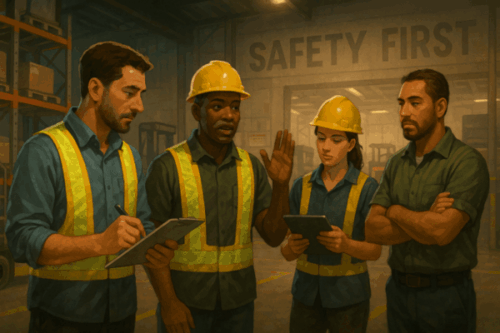
A Season of Safety: What Every Organization Should Be Thankful For

Why this Thanksgiving is the perfect moment to reflect on the systems, people, and cultures that make safety possible

Gratitude in a High-Risk World

The safety profession is built on vigilance. On watching for the gaps, the failures, the warning signs. Safety leaders are trained—almost conditioned—to look for what’s wrong. Where the next risk hides. Where a system is thin. Where someone’s attention might slip.

In this line of work, gratitude often feels like a luxury. Something you get to after the year-end audit, after the incident review, after the regulatory deadline. In busy operations, Thanksgiving can feel like just another week where the risks don’t take a holiday.

But maybe that’s exactly why this season matters.

Because in a world where so much can go wrong, it’s worth pausing to acknowledge everything—and everyone—that helps things go right.

Thanksgiving isn’t just a cultural tradition.It’s a leadership practice.

A moment to recognize the small, steady, often invisible contributions that make safety more than a policy. More than a manual. More than a system.

A moment to remember that behind every safe shift, every prevented injury, every near miss that didn’t become a life-altering phone call—there are people, practices, and structures worth being deeply thankful for.

Sammy’s Thoughts
“Safety is built on thousands of micro-moments. Most of them go unnoticed because they went right. But they went right for a reason. Let’s honor that.”

Thanksgiving offers a rare, powerful pivot:

  • Instead of asking “Where did we fail?”
  • We ask, “Where are we strong—and how do we build on it?”

And what you begin to see, when you shift into that frame, is that we have far more to be thankful for than we ever take time to say.

Be Thankful for the People Who Speak Up

If you had to name the single greatest safeguard in any organization—any industry, any operation—it wouldn’t be a system, a device, or a dashboard.

It would be a person. Someone who noticed something off. Someone who said something when it would’ve been easier not to. Someone who tapped a coworker on the shoulder before a shortcut turned into an incident.

The people who speak up are the quiet backbone of safety culture. The ones who choose responsibility over convenience. The ones who can’t look away when something isn’t right.

They’re the individual who reports the frayed harness even though the job is behind schedule.  The forklift operator who stops the line to point out a blocked aisle. The new hire who asks, “Has anyone checked this valve today?” even though everyone else walked past it.

These workers aren’t just hazard identifiers. They are culture carriers.

And in many organizations, they do it without applause, without extra pay, without recognition—often without knowing if their report ever led to action.

Thanksgiving is the time to change that.

Be thankful for the near-miss reporters.

They prevent tomorrow’s incident.

Be thankful for the informal mentors.

The seasoned worker who notices when a younger colleague’s gloves are worn down or when a crew member is rushing in a way that feels out of character. They are the frontline leaders who model the tone every company wishes their formal leaders would replicate.

Be thankful for the curious voices.

The ones who ask “why?” The ones who question procedure not to challenge authority but to deepen understanding. Curiosity is one of the most underrated safety behaviors—and one of the most powerful.

Be thankful for the supervisors who choose people over production.

Especially the ones who slow down the job when every incentive tells them to go faster. They make the cultural deposits that pay off for years.

Be thankful for the workers who admit mistakes.

The hardest behavior in any organization. And the most valuable.


Sammy’s Thoughts:
“Every time someone speaks up, reports a hazard, or flags an issue, they’re making a trust deposit. The least we can do is honor it—and follow up.”

In safety, silence is always a warning sign.  If workers stop reporting, it rarely means the environment got safer.
It means the culture got quieter. So when your people speak up—when they raise a concern, report a hazard, or challenge the way something is done—that’s not dissent.

That’s commitment. That deserves gratitude.

Be Thankful for the Data That Tells the Truth

Data is rarely loved in safety.  It’s tolerated. Feared. Debated. Interpreted through three layers of caveats and context And too often, weaponized.

But data — real, honest, unfiltered data — is one of the greatest gifts a safety leader can receive. Because data doesn’t spin. It doesn’t flatter. It doesn’t bend to emotion, politics, or convenience.

Data tells the truth.Even when we don’t want to see it.

In fact, especially then.

Be thankful for leading indicators.

Near misses. Observations. Inspection trends. Behavioral patterns.The safety world often obsesses about lagging indicators, but the things that predict tomorrow’s risk are the real treasure.

Leading indicators are acts of generosity.They are the workforce telling you: “Here’s where we’re vulnerable. Fix it before someone gets hurt.”

Be thankful for the uncomfortable metrics.

The rise in reported hazards after you launched a new reporting tool? That’s not failure. That’s truth finally coming into the light.

Many leaders panic when reports spike. But spikes don’t mean the workplace got worse — they mean the silence broke.

Silence is the real danger. Noise is progress.

Be thankful for the repeat patterns.

Not because they reflect poorly on operational control, but because patterns give leaders a gift: focus. Every repeated hazard is a blueprint for a future incident you can prevent.

Be thankful for the data that contradicts your assumptions.

This is the hardest one. It’s easy to believe the story we want to believe — that we’re improving, that our workforce is engaged, that we’ve closed our major gaps.

But when data reveals blind spots, deficiencies, or disparities? That’s grace in an unflattering package.

Data that challenges our assumptions is data that makes us smarter.

Be thankful for transparency.

The companies that win in safety aren’t the ones with the best slogans. They’re the ones who are willing to see themselves clearly.

Even when the picture is imperfect. Especially then.

Sammy’s Thoughts
“Data is a flashlight, not a spotlight. It helps you see the next step clearly, even if the whole path isn’t visible yet.”

The moment a company stops fearing its data and starts eng3aging with it — honestly, consistently, humbly — is the moment safety becomes strategic.

And that’s something worth being thankful for.

Be Thankful for the Systems That Make Safety Possible

In the safety world, systems are the unsung heroes.

Nobody brags about a well-organized lockout/tagout program at Thanksgiving dinner. Nobody toasts to the corrective action workflow that actually closes the loop. Nobody writes heartfelt tributes to the training matrix that made compliance seamless.

But here’s the truth:  Systems — when built with intention — are what keep people alive. Most days, they are invisible. They don’t shout.They don’t shine.They just work quietly in the background, like good infrastructure should.

Be thankful for the processes that make safety repeatable.

Because without repeatability, nothing scales. You don’t want 75 safety cultures across 75 job sites — you want one culture lived consistently.Systems give you that:  Consistency. Continuity. Memory. A system remembers what a human mind might forget.

Be thankful for the structures that reduce improvisation.

Improvisation is creativity.In safety, improvisation is risk.

Structured JHAs, inspection routines, LOTO procedures, confined space checklists — these aren’t bureaucratic artifacts. They’re guardrails that keep good people from entering bad situations.

Structure isn’t constriction — it’s protection.

Be thankful for workflows that make accountability normal.

When a hazard report goes into a black hole, culture erodes.When a workflow assigns ownership, deadlines, and follow-up paths, culture strengthens.

Workflows tell workers:  “You matter enough for us to follow through.”

Be thankful for the digital tools that keep systems alive.

Not because technology is the answer to everything — it’s not.
But because modern operations move too fast for paper to keep up.

Digital systems:

  • Capture in the moment
  • Route instantly
  • Document accurately
  • Escalate automatically
  • Remove ambiguity
  • Preserve institutional memory

That’s not convenience — that’s survival.

And this is where Sammy’s presence fits perfectly into the Thanksgiving frame::
“A good system isn’t one you have to think about every day. It’s one that quietly protects everyone, everywhere, all at once.”

That’s the heart of digital enablement — not replacing judgment, but amplifying it.

Be thankful for the systems you never think about.

Because the systems you notice are the ones that broke.The systems you don’t notice are the ones holding everything together.  A great safety system is like a seatbelt:
You don’t appreciate it until the moment it saves you.

Thanksgiving is the perfect time to recognize the boring, mundane, reliable systems that turn risk into routine.Because without those? Safety is just hope dressed as strategy.

Be Thankful for the Culture You’re Building Each Day

Safety culture is never built in grand gestures. It isn’t established by the annual meeting, the polished PowerPoint, or the lofty corporate values posted in the breakroom.

Safety culture is built in the microscopic moments of an ordinary Tuesday.

It’s built when a supervisor pauses work to check on someone who seems “off.”
It’s built when a team member returns to fix a guard they almost walked past.
It’s built when someone says, “Hold up—this doesn’t feel right,” and nobody rolls their eyes.

Culture is not taught. Culture is transferred. Every day. Quietly. Consistently.

And Thanksgiving is an ideal time to recognize the moments, the people, and the habits that hold that culture up.

Be thankful for the small behaviors that compound.

A worker who keeps their workspace clean.
Another who routinely checks on coworkers in high-heat environments.
A foreman who never tolerates horseplay.
The shift lead who begins every job huddle with the same four words: “Any concerns today?”

These behaviors don’t show up in dashboards. But they show up in outcomes.

Be thankful for the leaders who model the right tone.

Not all leaders are created equal. Some view safety as a checklist. Others see it as a relationship.

Real culture-builders:

  • Ask questions instead of issuing commands
  • Say “thank you” when someone reports a concern
  • Avoid blame-first language
  • Admit their own mistakes publicly
  • Take corrective action without defensiveness
  • Stay curious longer than they stay comfortable

These leaders create psychological safety — the fertile soil where real reporting and accountability grow.

Be thankful for the crews who watch out for each other.

Formal reporting systems will always matter. But peer-to-peer vigilance — the organic checking-in that happens without prompting — is irreplaceable. It’s the welder who yells “Stop!” when they see a coworker about to step into a line-of-fire hazard. The electrician who notices fatigue before someone else does.The crane operator who senses tension on a load that “just doesn’t feel right.”

These aren’t procedures. They’re instincts. Instincts shaped by culture.

Be thankful for transparency, even when it hurts.

Healthy cultures don’t sweep close calls under the rug. They don’t soften narratives. They don’t sanitize the truth. They face it.

Because clarity is the root of progress — and the enemy of complacency.

Sammy’s Thoughts:
“Strong safety cultures don’t avoid uncomfortable moments. They learn from them. My job is just to help capture them in real time so they’re never lost.”

The truth is simple: Every safe day is the result of countless cultural moments that rarely get acknowledged.Thanksgiving is the time to pause and recognize those moments — not because culture is soft, but because it is structural. Culture is the operating system of safety.
Everything else runs on top of it.

Be Thankful for the Lessons You Didn’t Want

Every safety leader has a story they wish they could forget. A near miss that should never have been that close. An incident that revealed cracks nobody wanted to acknowledge.
A close call that shook the crew, rattled leadership, or changed the way work was done.

These moments are painful — but they are also powerful.

And while nobody wants them, they often become the inflection points that elevate entire organizations. Thanksgiving is not just about gratitude for what went well. It’s about recognizing the lessons wrapped in the things we wish had gone differently.

Be thankful for the near misses that forced improvement.

Every near miss is a second chance. A warning shot. A classroom disguised as luck.

The near miss:

  • That led to a change in a process
  • That accelerated the adoption of digital inspections
  • That triggered new supervisory training
  • That sparked a meaningful conversation in a shift meeting

Near misses reveal vulnerabilities that incidents would expose brutally. A near miss is a favor — if you act on it.

Be thankful for the incidents that led to transformation.

No leader wants an injury. But the reality is that certain incidents become catalytic.

They break the illusion that “we’re fine.” They disprove the belief that “we’ve always done it this way and it’s worked.” They force the uncomfortable truth into the open.

For organizations willing to face those truths, incidents become turning points:

  • A change in PPE standards
  • A new approach to hazard reporting
  • Investments in technology that had been delayed
  • Structural changes to shift rotations or fatigue management
  • A stronger focus on mental health and well-being
  • A renewed commitment to housekeeping, visibility, or supervision

These changes didn’t come from comfort. They came from disruption.

And while nobody is thankful for the harm itself, we can be thankful for the clarity that followed.

Be thankful for the audits that revealed blind spots.

Audits can sting. Nobody loves having a gap exposed in their process or documentation.But audits expose what complacency hides. 

A tough audit often becomes the reason:

  • Departments start collaborating
  • Systems get updated
  • Workflows become more efficient
  • Documentation becomes more accurate
  • Training becomes more intentional

Audits are mirrors. Sometimes you don’t like what you see — but you’re better for it.

Be thankful for the uncomfortable conversations.

The contractor who told you your onboarding process was confusing.The operator who said your permit-to-work process was too slow. The young technician who said they didn’t feel safe stopping work around a certain supervisor.

Feedback is uncomfortable.But it’s a gift in disguise.

Sammy’s thoughts:
“Feedback — especially the kind nobody wants to hear — is a signal. My role is to make sure those signals never disappear into the noise.”

Human systems improve when human truths are spoken.

Be thankful for the lessons that came wrapped in frustration.

Sometimes it’s not the dramatic incident — it’s the accumulation of small pain points that finally pushes a company to evolve.

For example:

  • The tenth time someone can’t find the right form
  • The ongoing chaos of spreadsheet-based training tracking
  • The constant rework after failed inspections
  • The administrative churn of paper reports

These “micro frustrations” are often the seeds of major transformation.Because eventually, leaders decide: “We can do better. We must do better.”

And that’s how progress begins.

A Thanksgiving Reflection for Every Safety Leader

Thanksgiving carries a unique emotional weight.  It asks us to pause — really pause — and look at the totality of a year not only through the lens of what went wrong, but through what went right.

Safety, by nature, is a profession oriented toward prevention. Toward vigilance. Toward the future.

But once a year, the calendar invites us to slow down long enough to honor the foundation that already exists beneath our feet. As a safety leader, you don’t always have time to celebrate that foundation. Sometimes the work is relentless. Sometimes it’s lonely. Sometimes the only feedback you get is when something breaks. And sometimes the only measure of your success is that nothing catastrophic happened at all.

That’s why this moment matters.

Thanksgiving is your opportunity to step back and recognize the truth:

Safety is not an accident.

Safety is the outcome of everything — and everyone — you’ve invested in all year.**

  • It’s the frontline worker who spoke up.
  • The supervisor who intervened. 
  • The near miss that led to a new practice.
  • The system that worked quietly in the background.
  • The data that revealed a blind spot.
  • The culture you shaped one conversation at a time.
  • The lesson that changed how you think about risk.

These things didn’t happen naturally.They didn’t happen randomly.They happened because someone — maybe many someones — cared enough to do the right thing.They happened because you built an environment where doing the right thing is easier than doing the fast thing.They happened because safety is still one of the few disciplines in business where the stakes are deeply human.

Be proud of that.

Be grateful for that. And let that gratitude renew your focus for the year ahead.**

A Reset for the Road Ahead

This season is also a chance to reset expectations.To shift from reactive to proactive.To recommit to the values that drive excellent organizations forward.

Here’s what that reset can look like:

1. Renew your commitment to transparency.

Let your teams see the data, the trends, the challenges, the improvements.People lean into what they understand.

2. Strengthen your reporting culture.

Celebrate the quiet voices and the truth-tellers. They are your early-warning system — and your future leaders.

3. Invest in what scales.

Systems don’t replace people — they protect them. Digital tools don’t eliminate judgment — they support it. Structured processes don’t slow work — they make it safer, faster, and more predictable.

4. Reaffirm psychological safety.

Your people should feel as safe raising a concern as they do celebrating a win. Without psychological safety, no physical safety program can thrive.

5. Envision the next chapter.

What will you build next? Where can you reduce complexity? Where can you improve visibility? Where can you show your workforce that their voice truly matters?

Thanksgiving is the moment to ask these questions with humility — and answer them with renewed conviction.

A Note From Sammy

Throughout this article, Sammy has popped in with small reminders — subtle nudges about data, systems, and the power of capturing what matters.

This final moment is where his voice belongs most:

 “Everything you’re thankful for today — the people, the culture, the lessons, the wins — deserves a system that supports it, protects it, and strengthens it every single day. My job isn’t to replace your leadership. It’s to help your leadership reach every corner of your organization.”

Safety is human first, digital second. But when both work together — consistently, clearly, quietly — the results are extraordinary.

This Thanksgiving, be thankful not just for what’s working today,but for what you’re building for tomorrow.A safer workplace. A stronger culture. A more empowered workforce. A system designed to protect the very people you’re grateful for.

FINAL THANKSGIVING MESSAGE

To every safety leader, supervisor, technician, coordinator, director, operator, and champion:

Your work is invisible until the moment it becomes indispensable.

Your decisions shape lives you may never fully realize you’ve protected.

Your influence extends further than any dashboard can measure.

This Thanksgiving, may you find:

  • Pride in the progress
  • Gratitude in the journey
  • And renewed purpose in the mission that lies ahead 

Because safety isn’t a job. It’s a legacy. And the people you protect — the people you show up for every day — are the reason we have so much to be thankful for.


#SafetyCulture #WorkplaceSafety #EHS #OHS #SafetyLeadership #SafetyManagement #Thanksgiving2025 #SeasonOfSafety #SafetySuccess #SafetyWins #EmployeeSafety #IndustrialSafety #ConstructionSafety #ManufacturingSafety #FrontlineSafety #SafetySystems #IncidentPrevention #NearMissReporting #SafetyInnovation #DigitalSafety #OperationalExcellence #SafetyCommunity #SafetyProfessionals #RiskManagement #SafetyMindset #LeadershipMatters #SafetyFirst #HumanCenteredSafety #sambysecova #WorkToZero


The Power of Training

The Illusion of Speed — Why Companies Skip Training in the First Place

In fast-paced industries like manufacturing, logistics, construction, and energy, the pressure to produce, ship, build, or complete is constant. Margins are tight. Schedules are even tighter. And in that kind of environment, training often becomes the first thing to go—not because it isn’t valued, but because it’s perceived as a drag on output.

A new hire shows up on Monday. By Tuesday, they’re shadowing someone on the line. By Friday, they’re expected to work independently. Maybe they got a few binders to flip through. Maybe they watched a couple of safety videos or filled out a checklist. But was that training? Or was it just exposure?

The Misguided Logic of “Time is Money”

Many employers adopt a “just-in-time” approach to workforce development—believing that the sooner someone is physically working, the better. But that logic is short-sighted. It equates movement with productivity and ignores the steep, slow-burning costs of putting an untrained employee into a complex or hazardous environment.

Consider this: according to the National Safety Council, the average cost of a single workplace injury in the U.S. is more than $42,000 in direct costs alone. That doesn’t account for the time spent investigating incidents, the morale impact on teams, or the potential reputational damage. Suddenly, saving a few hours on onboarding doesn’t look like such a smart move.

What’s more, research published in the Journal of Occupational and Environmental Medicine shows that new employees are three times more likely to be injured on the job within their first month. Not because they’re reckless—but because they’re unprepared.

Culture of Expediency

This pressure to rush can stem from several sources:

  • Short-term productivity pressures: If orders are backlogged, the instinct is to get hands on deck immediately.
  • High turnover environments: “Why train them? They’re going to leave in six months anyway.” It’s a common refrain in warehouses and seasonal workforces.
  • Poorly defined onboarding: Some companies don’t skip training intentionally—they simply never built a system for it in the first place.
  • Supervisor culture: Even when policies require training, floor-level leadership often pressures new hires to skip steps to “learn by doing.”

This culture of expediency sends a subtle but powerful message to workers: Speed matters more than safety. And that message, once internalized, is hard to undo.

Training as a “Soft” Priority

Another key reason training is skipped or shortened is perception. Training is often seen as a “soft” task—less measurable, less critical than hitting a production number. Leadership talks about it in HR or compliance terms, not as a driver of business outcomes.

But that thinking misses the bigger picture. Companies that invest in structured training report better retention, higher employee engagement, and stronger safety records. According to a 2023 Gallup Workplace study, employees who receive consistent training and development opportunities are 2.9 times more likely to say they are engaged at work.

Engaged employees don’t just stay—they perform better, communicate more openly, and take safety more seriously.

False Sense of Competence

There’s also a tendency—especially among experienced workers and supervisors—to assume that “common sense” will fill the gaps. If someone has used a forklift before, they don’t need to be retrained. If they’ve worked in a warehouse, they must know what PPE is required.

But common sense isn’t a compliance strategy. It’s an assumption. And in environments where tools, materials, and hazards change frequently, assumptions get people hurt.

Without standardized, job-specific training, companies aren’t building knowledge—they’re relying on chance. On tribal wisdom. On “doing it like the last guy did.” And that’s not good enough.

The Hidden Message Behind Skipped Training

When training is treated as optional, it tells workers something deeper: You’re on your own here. That message erodes psychological safety before a single shift begins. It discourages questions. It discourages pause. And it encourages workers to fake it until they make it.

But “faking it” in a high-risk environment has consequences. It’s not just about the new employee. It’s about the ripple effects—on teammates, supervisors, production lines, and company liability.

Training isn’t a cost. It’s an investment. And skipping it doesn’t save money—it transfers risk.


The False Economy of Speed

There’s an all-too-familiar phrase uttered across factories, warehouses, and job sites: “We don’t have time for training.” It usually comes from a place of urgency, when production deadlines are looming and labor is stretched thin. The pressure to get new hires “on the floor” and “up to speed” quickly feels justified—because after all, idle hands don’t move product. But beneath this logic lies a dangerous misconception: that skipping or minimizing training somehow saves time and money.

In reality, this shortcut is anything but efficient. It’s the equivalent of flooring the gas pedal with bald tires—sooner or later, you’ll skid out, crash, or break down entirely. What appears to be a gain in speed is actually a trade-off in safety, quality, retention, and long-term productivity.

The Productivity Mirage

At first glance, dropping a new hire directly into operations may feel like the fastest way to recoup recruiting costs. You need bodies to hit targets. And in industries like logistics and manufacturing, where turnover can exceed 30% annually, getting people moving quickly feels like common sense.

But research paints a different picture. According to a study by the Association for Talent Development (ATD), organizations that invest in structured onboarding and training see 60% higher productivity among new hires and stronger retention within the first 12 months. Why? Because people perform better when they know what’s expected, how to do it safely, and why it matters.

The so-called “lost time” in training is actually recovered many times over in reduced rework, fewer accidents, and stronger performance consistency. Speed doesn’t come from skipping steps—it comes from mastering them.

The Cost of Chaos

When workers are rushed into tasks without adequate training, two things happen:

  1. They improvise based on what others are doing, often replicating bad habits.

  2. They make mistakes—some minor, some catastrophic.

A new forklift operator who doesn’t know the proper turning radius in a tight warehouse aisle could damage inventory or equipment. A line worker unsure of a lockout/tagout procedure may expose themselves—or a teammate—to fatal energy release. These aren’t hypothetical scenarios. OSHA logs and news reports are filled with real-world examples of preventable incidents that stemmed from rushed or incomplete onboarding.

One notable case occurred in a Midwestern meatpacking facility where a newly hired maintenance worker—on the job for less than a week—was tasked with repairing a piece of machinery still energized. The LOTO training had been “covered” verbally during a chaotic first-day orientation but never practiced. Within hours, he suffered a severe electrocution. OSHA later cited the company for lack of formalized training and inadequate supervision.

Was that hour saved on training worth a life-altering injury and a six-figure fine?

Short-Term Thinking, Long-Term Losses

Here’s the hidden irony: When companies under-train to save time, they often end up spending more time cleaning up the fallout.

Consider these ripple effects:

  • Supervisors spend more time correcting errors.
  • Production teams slow down to accommodate injured or inexperienced coworkers.
  • HR and Safety teams scramble to fill out incident reports, file claims, or manage disciplinary action.
  • Legal and compliance departments jump in when OSHA gets involved.

The initial “shortcut” is now a detour full of potholes. And it doesn’t end there. Workers who feel unsupported or unsafe in their roles are significantly more likely to quit. The Work Institute’s 2023 Retention Report found that lack of career development and poor onboarding were among the top reasons employees left jobs—particularly in frontline roles.

In industries where labor shortages are the norm, can you really afford that?

Training as a Strategic Investment

Smart organizations flip the script. They treat training not as a time sink but as a time multiplier—an investment in capability, stability, and resilience.

They understand that:

  • A well-trained worker completes tasks faster and more accurately.
  • Trained teams are more adaptable when conditions change or new systems are introduced.
  • Training reduces risk, which reduces cost, downtime, and liability.

Training isn’t overhead. It’s insurance. It’s infrastructure. And just like you wouldn’t skimp on welding gear, scaffolding, or truck brakes—you shouldn’t skimp on the thing that keeps your people safe and effective.

The Cultural Message

There’s also a subtler, more powerful message embedded in good training: We value you enough to prepare you.

That message builds trust. It creates a sense of professionalism and shared responsibility. And it lays the foundation for something that can’t be bought—a culture of safety.

When training is rushed or skipped, the message received is very different: “You’re on your own.”

One cultivates engagement. The other breeds detachment.

Training Delays ≠ Productivity Gains

Let’s bust a myth.

The idea that skipping safety training gets workers “productive” faster is simply false. According to a National Safety Council report, 70% of companies that experienced a serious workplace injury said it could have been prevented with better training. And yet, in environments driven by output—manufacturing lines, construction crews, warehouse teams—training is often treated as a luxury. Something to get to “when there’s time.”

But time is never there. And so the loop continues: undertrained workers make mistakes, accidents happen, experienced team members are pulled from work to patch gaps or respond to incidents, and productivity stalls. Again.

When onboarding is rushed and safety training is sidelined, the damage isn’t always immediate—but it’s cumulative. It shows up in:

  • Higher incident rates
  • Greater equipment misuse
  • Slower ramp-up time
  • Increased worker stress and turnover
  • Risk of fines or regulatory violations

It’s not that these outcomes are surprising—it’s that we see them again and again, yet continue to prioritize speed over preparation.

Real-World Ripple Effects

Let’s break it down with a familiar example.

In a mid-sized logistics facility in the Midwest, a new hire was brought in during peak season. Instead of completing the full three-hour hazard communication and equipment safety training, they were sent to shadow a seasoned forklift operator for just 30 minutes. Within a week, the new employee accidentally reversed into a pallet stack, damaging $15,000 worth of inventory and knocking a coworker off balance, leading to a workers’ comp claim.

The company didn’t just face repair and insurance costs—they lost productivity as internal safety investigations were conducted, employee morale dipped, and the entire team was pulled into retraining. Ironically, the “saved time” of skipping training cost them more than two full weeks of normal operations.

This isn’t rare—it’s representative. Undertraining creates unseen drag across operations that grows until it becomes visible through loss.

“We’ll Train Later” Is a Lie We Tell Ourselves

Let’s call it what it is.

When companies say, “We’ll get them trained later,” it’s not a strategy—it’s procrastination disguised as pragmatism.

Why? Because “later” rarely comes. Or if it does, it’s too late—after a close call, or worse, an actual injury. The reason often boils down to short-termism: leadership or line supervisors are under pressure to meet demand, and training is seen as an inconvenience.

But this mindset is not only dangerous—it’s expensive.

In 2023, the U.S. Bureau of Labor Statistics reported an average direct cost of $42,000 per medically consulted workplace injury. That number doesn’t account for indirect costs like lost time, morale erosion, or the reputational damage from OSHA citations.

Now ask: would that same company have balked at spending $300 on proactive digital training and 3 hours of structured time?

It’s not a matter of affordability—it’s a matter of mindset.

Shifting the Paradigm: Training as Enablement, Not Expense

Safety training must be reframed—not as a regulatory requirement or sunk cost, but as a performance enabler.

Here’s the truth: trained workers are confident workers. Confident workers are faster, more precise, and less likely to make dangerous mistakes.

And when people feel the company has invested in their development—not just thrown them to the wolves—they’re more likely to stick around. They’re more likely to ask questions. They’re more likely to speak up when something seems off.

This creates a cycle of shared vigilance and accountability—what safety culture should be in the first place.


The Right Way to Train: Structuring Safety Programs for Retention, Readiness, and Regulatory Compliance

If we accept that skipping safety training is costly—and that half-hearted training is equally dangerous—the next logical question is: What should good safety training look like?

The answer isn’t as simple as “more hours” or “better content.” Effective safety training is built on three pillars: retention, readiness, and regulatory alignment. These three dimensions are mutually reinforcing: training that sticks improves on-the-job readiness, which in turn reduces compliance gaps and drives a safer, more efficient workplace.

But let’s be clear: you can’t YouTube your way to safety. Nor can you drop a 50-slide PowerPoint into someone’s inbox and call it a day. Structuring safety training requires intention, relevance, and, increasingly, digital tools that support how people actually learn and apply knowledge.

1. Training for Retention: Making Safety Stick

The human brain is wired to forget. Studies show that within just one week, people forget 90% of what they learn in a traditional lecture-style setting. In high-risk workplaces, that forgetting curve isn’t just inefficient—it’s dangerous.

So how do you overcome it?

  • Repetition and Reinforcement: Learning science tells us that spaced repetition dramatically improves retention. This means safety content shouldn’t be delivered once a year—it should be revisited regularly in bite-sized, engaging formats. Think microlearning modules, weekly toolbox talks, quick video refreshers.

  • Contextual Learning: Adults learn best when they understand why the training matters to their job. A new forklift operator doesn’t need a generic “safety in the workplace” course—they need hands-on guidance for their role, in their language, on their equipment.

  • Mixed Modalities: Not every learner thrives on the same format. Some need visuals, others benefit from hands-on demos, others want checklists. Great training combines visual, auditory, and kinesthetic learning—especially in blue-collar environments.

  • Real-Time Feedback: The best way to know if someone has learned something? Ask them to do it. Quizzes, spot checks, simulations, and peer demos are far more effective than a signature on a sign-in sheet.

2. Training for Readiness: From Knowledge to Action

Too often, companies stop at knowing. But safety isn’t just about what you know—it’s about what you do in a split-second moment.

That’s why we must shift our goal from “training completion” to operational readiness.

What does readiness look like?

  • A new employee correctly donning PPE without prompting
  • A contractor identifying a hazard and stopping work before escalation
  • A line worker knowing when and how to initiate a Lockout/Tagout
  • A supervisor confidently coaching a team on confined space entry protocols

These behaviors only happen when training is integrated into real work. In practice, this means:

  • Shadowing and mentorship during the first weeks of work
  • Scenario-based exercises that mirror actual hazards
  • Daily safety huddles that revisit key themes
  • Simulations and drills for rare but high-risk situations

It also means tracking readiness—not just training hours. Does your new hire feel ready to enter the field? Can they walk through the emergency shutdown procedure without coaching? These are far better indicators than a checkbox that says “training complete.”

3. Training for Regulatory Compliance: Covering Your Bases Without Losing the Plot

Let’s not ignore the elephant in the room: OSHA, MSHA, DOT, and other regulatory bodies require certain trainings. Annual refreshers, orientation modules, site-specific briefings—they all matter, and they all carry legal weight.

But here’s the trap: when compliance is the only lens, training becomes a paperwork game. The purpose of training isn’t to protect the company from fines—it’s to protect the people doing the work.

That said, you still need to cover your bases. The best safety programs:

  • Map every role to required trainings by regulation, exposure, and task
  • Track completion in real time, with timestamps and records to prove it
  • Auto-renew and re-assign required courses at regular intervals
  • Log all attendance and completions for audits or inspections

Smart systems make this easy. But smart leadership ensures that even mandatory training doesn’t feel like a burden. By tying each module to real-world consequences—and reinforcing it on the floor—compliance becomes a byproduct of good culture, not a stand-alone box to check.

The Bottom Line: Intentionality Beats Volume

Too often, companies mistake volume for value when it comes to training. Just because someone sits through 40 hours of modules doesn’t mean they’re safer. In fact, poorly structured training can create complacency, resentment, or confusion.

The best safety training programs are:

  • Strategic
  • Adaptive
  • Human-centered
  • Tied to real tasks and risks
  • Measured by behavior change, not completion rates

You want your people to walk into a situation and know what to do. That’s the real return on training—not a certificate on a wall, but a decision in the moment that saves a life, prevents an injury, or keeps production running safely.

World Consequences of Skipping or Rushing Safety Training

When companies choose to shortcut training—whether by skipping it altogether or rushing workers through a condensed version—they’re not just taking a risk. They are rolling a loaded die. The consequences of these choices are not theoretical. They are real, measurable, and—tragically—often preventable. From catastrophic injuries to legal penalties and cultural damage, the fallout from undertraining ripples far beyond the immediate incident.

The Human Toll: Preventable Accidents and Lifelong Impact

Take the case of a 19-year-old temporary worker in a metal stamping plant in Ohio. On his first day, with only a brief safety orientation and no hands-on walkthrough, he was tasked with operating a hydraulic press. Less than two hours into his shift, he lost three fingers. The press had a known malfunction, and proper lockout/tagout (LOTO) training could have prevented the incident. But the company had prioritized keeping the line moving over taking the time to onboard new staff safely.

This is not an isolated case. According to OSHA, over 60% of workplace injuries occur within the first year of employment—and the lack of effective safety training is consistently listed as a root cause. In sectors like construction, warehousing, and manufacturing, the risks are amplified. Heavy machinery, hazardous materials, and fast-paced environments demand precision and awareness—skills that can’t be built in a 10-minute video or a forgotten PowerPoint deck.

Regulatory Exposure: When Shortcuts Backfire

Beyond the human impact, there’s the regulatory cost. In 2023, a major U.S. food processing company was fined $1.8 million by OSHA after a chemical exposure incident hospitalized multiple employees. The investigation found that several workers hadn’t been properly trained on PPE protocols or chemical handling procedures. The required HAZCOM (Hazard Communication Standard) training was outdated, and refresher sessions hadn’t been documented.

This lack of compliance opened the door not just to OSHA fines, but also to lawsuits, insurance hikes, and reputational damage. When regulators find gaps in training documentation or inconsistencies in how workers understand safety protocols, companies can quickly find themselves under scrutiny—not just for the incident, but for their entire training and compliance system.

Cultural Degradation: When the Message Doesn’t Match the Mission

The silent cost of poor training is cultural erosion. Imagine you’re a new hire at a logistics warehouse. You’re excited about the job, eager to learn, and a supervisor hands you a laminated checklist and says, “Just sign this and get started—we don’t have time for the whole orientation today.” What message does that send?

Over time, workers internalize what’s important based on what gets prioritized. If training is rushed or skipped, safety quickly becomes a side note rather than a shared value. Even the most beautifully worded safety mission statement can’t survive this type of lived contradiction.

Teams begin to see training as a formality—something you “get through” instead of something you grow from. The ripple effect? Increased shortcuts, normalization of risk, and disengaged employees who no longer feel protected or invested.

Cost of Turnover: Undertrained Workers Don’t Stay

Studies by the Bureau of Labor Statistics show that workplaces with high injury rates also tend to have high employee turnover. The connection isn’t hard to see. If workers feel unsafe, ill-prepared, or unsupported, they are less likely to stay—and when they leave, they take institutional knowledge with them.

Moreover, replacing an hourly worker in industrial roles can cost employers anywhere from $3,000 to $10,000 per employee, depending on the role and required certifications. That number doesn’t include the productivity lag that occurs while onboarding new staff, nor the morale dip that often accompanies the departure of a team member due to injury or frustration.

Undertraining isn’t just a safety issue. It’s a financial liability.

Real Examples, Real Lessons

  • In a 2022 NIOSH study, one transportation firm found that after implementing a comprehensive, interactive training program that included scenario-based learning and multilingual access, its injury rate dropped 43% over 18 months—and employee retention improved by 27%.
  • Conversely, a mid-sized construction company that skipped scaffold safety refreshers saw two workers fall from improperly assembled scaffolds within six weeks. OSHA investigations revealed neither worker had taken the required annual retraining, and documentation was incomplete. Fines, delays, and reputational loss followed.

The data is clear: skipping training or phoning it in is not a time-saver. It is a risk multiplier.

How to Build Training That Actually Sticks

By now, it’s clear: safety training isn’t a one-time task. It’s not something you check off a list and hope for the best. And yet, that’s exactly how many companies still treat it. Slide deck? Check. Sign-in sheet? Check. Everyone understands and retains what they learned? Not even close.

In this section, we shift from the “why” to the “how.” Specifically, how can organizations create safety training programs that truly stick—training that transforms behavior, builds competency, and becomes part of the culture rather than a compliance ritual?

Understand the Psychology of Learning

To build sticky training, we need to think like psychologists as much as educators. Adult learners—especially those in high-risk environments—don’t absorb information the same way as students in a classroom. They’re skeptical, experienced, and most importantly, time-starved.

According to Malcolm Knowles’ Adult Learning Theory, adults learn best when training is:

  • Relevant to their immediate work
  • Problem-centered rather than content-centered
  • Self-directed, allowing some autonomy
  • Experience-based, connecting new ideas to existing knowledge

In practice, this means safety training must be timely, contextual, and directly applicable. Workers don’t want theory—they want to know how not to get hurt today.

Make It Multi-Modal

Relying on a single format—whether that’s classroom lectures, PowerPoint decks, or eLearning videos—is a recipe for disengagement.

To boost retention, companies should adopt a multi-modal training strategy, including:

  • Hands-on simulations (lockout/tagout drills, spill response demos)
  • Microlearning modules (short, mobile-friendly refresher courses)
  • Peer-led toolbox talks (where workers discuss real-world issues)
  • Scenario-based learning (decision-making under pressure)

A construction firm in Illinois, for example, reduced musculoskeletal injuries by 43% in one year after shifting from annual slide-deck training to weekly 15-minute stretch-and-learn sessions led by field supervisors. It wasn’t just about information—it was about routine, culture, and real-world practice.

Use Spaced Repetition and Just-in-Time Learning

Research from the Ebbinghaus Forgetting Curve shows that people forget up to 90% of what they learn within a week—unless the information is reinforced.

To counter this, high-performing companies use spaced repetition: short bursts of content revisited regularly over time. This is especially powerful when paired with just-in-time learning—providing the right training right before it’s needed.

Example: Before entering a confined space, workers might be required to complete a quick 3-minute refresher via tablet or mobile device—reinforcing the key hazards and controls. It’s short, it’s relevant, and it’s contextual.

This approach not only increases retention but also boosts compliance because workers understand why it matters in the moment they need it.

Make Training Social and Self-Directed

The most effective safety cultures are those where people feel like they own safety—not that it’s being done to them.

Encourage peer-led training, mentorships, or cross-department safety huddles. When workers teach each other, they reinforce their own understanding—and trust builds between teams.

Also, empower workers to track their own progress. Many digital systems allow for individual learning dashboards where employees can see their completed modules, upcoming certifications, and skill gaps. This creates accountability and pride—not just obligation.

Close the Loop: Assess, Certify, and Follow Up

Training that isn’t assessed isn’t retained. But assessment doesn’t mean a generic multiple-choice test. High-quality programs include:

  • Knowledge checks embedded into the material
  • Performance assessments in the field
  • Supervisor observations post-training

Follow-up is equally critical. Did the worker apply the training? Were they coached when they made a mistake? Was the feedback loop closed?

In one manufacturing company, a near miss involving improper use of a hoist prompted a review of lifting safety training. The solution wasn’t just retraining—it was adding a field verification step where supervisors observed and signed off on the proper procedure weekly for a month. Incident rates dropped, but more importantly, trust in the system increased.

Build Safety Habits, Not Just Knowledge

In the end, knowledge without action is useless. The goal of any safety training should be to create habits—automatic, reflexive behaviors that prevent incidents even when people are tired, distracted, or under pressure.

This is why consistency and frequency matter more than volume. A five-minute daily safety moment might have more lasting impact than an hour-long quarterly seminar.

To build those habits:

  • Integrate training into daily workflows
  • Reinforce behaviors with recognition (not just penalties)
  • Create visible cues in the environment (like checklist stations, signage, and peer reminders)

When workers see safety not as an interruption but as part of how the job gets done—it sticks.

Training Isn’t Overhead, It’s Infrastructure

Let’s end where we began: safety training isn’t optional, and it isn’t overhead. It’s infrastructure—every bit as critical to your operation as a conveyor belt, a forklift, or a functioning emergency shut-off valve. Without it, everything else in your system is at risk.

And yet, so many organizations still treat training as a burden. A line item. A once-a-year checkbox.

This mindset is not only dangerous—it’s expensive.

Training is the only investment that protects every other investment. It reduces accidents, safeguards lives, improves morale, and boosts retention. It makes your people smarter, your operations smoother, and your liability lower.

But only if it’s done right.

Let’s recap what that means.

First, you need to shift the mindset. Safety training isn’t a bureaucratic obligation. It’s a cultural commitment. You’re not training to pass an audit. You’re training to save someone’s hand, someone’s back, someone’s life.

Second, recognize that bad training costs more than no training. Confusing procedures, outdated materials, and inconsistent delivery create a false sense of preparedness. The only thing worse than an untrained worker is one who thinks they’re trained—but isn’t.

Third, embrace systems that scale. Whether that’s a digital LMS like sam® by secova or a structured peer-led onboarding process, what matters most is consistency, accessibility, and real-world applicability.

Fourth, listen to your people. Not just in exit interviews or post-incident reviews—but every day. Your workers know where the gaps are. They know which trainings feel real and which ones feel like boxes. They know who needs help and who’s quietly struggling. Training that doesn’t reflect their voice will never stick.

Finally, keep it human. Training is not content—it’s care. Every time you take the time to train someone well, you’re saying: “You matter. Your life matters. Your safety matters.”

That’s not overhead. That’s leadership.

So here’s your call to action:

  • Audit your current training program—not just on paper, but in the field.
  • Ask your frontline employees what works and what doesn’t.
  • Reinforce safety habits daily, not quarterly.
  • Make training part of your culture—not just your compliance.

And remember: The job of a safety leader isn’t just to create a safe environment.

It’s to create a place where everyone knows how to stay safe—and believes it’s worth doing.

That belief is built through training. Real training. The kind that sticks.

And that’s how the job gets done—safely, smartly, and together.

From Gates to Highways: The 360-Degree Roadway-Safety Playbook for EHS & OHS

Why the Last 50 Feet Matter

Picture the final approach to a busy warehouse dock at 07:58 on a Monday. A line-haul tractor backs into Bay 12 while two forklifts race to clear weekend backlog. A pedestrian steps outside the break-room door—phone in hand—to answer a supervisor’s call. She rounds the corner just as a pallet jack swings wide. No one is hurt, yet the “near miss” evaporates; two hours later nobody remembers the almost-collision.

Occupational roadway safety is often framed as long-haul truck crashes on public highways, but Bureau of Labor Statistics injury census data show nearly one-third of transportation-related worker deaths now occur on private or semi-private property such as yards, quarry haul roads, and distribution centers. (bls.gov) These spaces are deceptively familiar; complacency grows while visibility shrinks. The National Institute for Occupational Safety and Health (NIOSH) calls it the “Last Fifty Feet” problem—hazards spike exactly where operators believe they’ve left the high-risk world of open traffic.

Why the shift?

  • E-commerce velocity has doubled average dock turns in a decade, squeezing margins for error.
  • Multi-modal hubs mix yard tractors, vendor box trucks, forklifts, pedestrians, and robotics—collision-avoidance rules written for single-mode operations collapse.
  • Decentralized responsibility: Fleet managers own the highway, facilities own the yard, and EHS owns audits—hazards fall between silos.

National Safety Month’s Week-3 theme invites EHS/OHS professionals to confront this messy interface and treat every paved surface—from guard shack to public road—as a single, integrated risk environment.

The Risk Landscape—Facts, Figures & Trend Lines

Key takeaway: Transportation remains the No. 1 killer at work, but the distribution of fatalities is shifting inward toward employer-controlled space.

Macro Numbers (U.S.)

Metric

2023 Count

Five-Year Trend

Source

Total occupational fatalities 5,283 –3.7 % vs 2022 BLS CFOI 2023 (bls.gov)
Transportation incidents (all settings) 1 989 Flat since 2018 BLS CFOI tables
Share occurring off public roadways 28% +4 pp since 2014 CFOI micro-analysis (bls.gov)
Forklift injuries (all severities) ≈34 900 / yr Stable McCue Safety Stats (mccue.com)
Percent forklift incidents OSHA deems preventable via standard training ≈70% OSHA Technical Memo (osha.com, osha.gov)
Workers killed inside work zones (pedestrians) 176 Slight ↓ (−7 %) vs 2021 FHWA 2023 update (ops.fhwa.dot.gov)
Fatally injured drivers/passengers not wearing seat belts 62% No significant change NIOSH motor-vehicle alert (cdc.gov)

Costs That Hide in Plain Sight

  • Direct claim cost per serious vehicle incident: USD 73,000 median (National Council on Compensation Insurance 2024).
  • Indirect cost multiplier: 2.7–4.5 × direct cost once downtime, retraining, equipment damage, and brand impact are included (Liberty Mutual 2023).
  • Insurance impact: Auto liability premiums rose 11% YoY in 2024 for companies with >1 DOT-reportable crash per million miles (Marsh Commercial Auto Benchmark).

Back-of-napkin math: A warehouse experiencing one injury-producing forklift collision per quarter can bleed USD 1 M+ annually once hidden costs surface.

Global Snapshots

  • European Union: Road transport causes 39% of workplace fatalities; EU Directive 2022/2380 pushes employer duty of care beyond public roads to “logistical premises.”
    Australia: Heavy-vehicle crashes represent 46% of worker deaths in transport, postal & warehousing; SafeWork NSW launched a Yard Management Guideline in 2023.
  • Latin America: Chilean mines report haul-truck vs. light-vehicle collisions as the second-largest contributor to fatality risk; ISO 21815 proximity-detection compliance emerges as a procurement requirement.

The message is universal: on-site roadway risk is no longer a “nice to have” topic for boardrooms—it is an ESG, continuity, and brand imperative.

Anatomy of Risk: Four High-Exposure Scenarios

Blind-Corner Crossings (Warehousing/Manufacturing)

Physics meets psychology: At 5 mph, a laden forklift needs ~10 feet to stop, but operators often drive with the forks raised, obscuring 25% of the forward view. Add pallet stacks blocking line-of-sight, and a pedestrian has <0.7 seconds to react.

Mitigations:

  • “STOP • LOOK • POINT” pedestrian mirrors at every cross-aisle.
  • Fork-down alarms are audible.
  • Traffic-light projectors cast a 2-foot red bar onto the floor to indicate when forklifts are approaching.

Yard-Shuttle Interface (Distribution & Retail)

Semi-trailers, vendors’ box trucks, and personal vehicles share a cramped lot. Hostlers are familiar with the process, while visiting drivers are not. After-hours deliveries eliminate human spotters, which increases the risk of forklifts striking pedestrians while transporting pallets across the lanes.

Mitigations:

  • One-way circulation with zebra-striped walkways.
  • Hands-free intercom kiosks will replace the need for paperwork runs.
  • 10-lux minimum yard lighting, verified quarterly.

Temporary Traffic Patterns (Construction & Utilities)

Pop-up work zones move daily; line markings lag realities; flaggers double as equipment operators. Pedestrians (inspectors, subcontractors) walk unpredictable routes.

Mitigations:

  • Intelligent cone or beacon systems that geo-fence the zone and broadcast speed limits to vehicle dash units.
  • End-of-shift mobile audit checklist: signage, sight distance, and lighting.

Mixed-Fleet Micro-Routes (Mining & Aggregates)

The ton-class differential between haul trucks and pickups amplifies kinetic energy: a 200-ton truck at 25 mph carries the kinetic punch of a 4,000-lb car at 350 mph. Visibility gaps exceed 30 ft in the front blind zone.

Mitigations:

  • There are dedicated lanes for light-vehicle escape.
  • Proximity alarms, which are set to 50 meters, trigger automatic logging of events for trend review.
  • “Stand clear” radio channels with scripted interaction.

Regulatory & Consensus-Standard Cheat-Sheet

Standard/Reg

Scope

2025 Watch-List Point

OSHA  Operator training, eval. every 3 years Region IV Local Emphasis Program adds random forklift blitzes—$16 million in fines in FY 2024.
OSH Act §5(a)(1) (General Duty) “Free29 CFR 1910.178 (PIT)

 from recognized hazards.”

This regulation has been cited in 42% of pedestrian-vehicle death cases since 2019.
FMCSA 49 CFR Part 380 (Entry-Level Driver Training) CDL operators crossing public roads Yard-to-street transitions count as “public highway operations.”
ANSI Z15.1-2022 Safety standard for employer-controlled motor-vehicle operations New Section 8.3 mandates near-miss data review in quarterly safety meetings.
ISO 45001:2018 OH&S management systems; risk elimination at source Surveillance audits increasingly demand leading indicators (walk-around compliance, near-miss capture).
EU Road Safety Directive 2022/2380 Heavy-vehicle direct-vision requirements 2028 compliance triggers retrofit of blind-spot camera

s on many U.S. imports.

CSA Z1000-2024 (Canada) OH&S includes the Fleet Ops appendix Requires a fatigue-risk-management system for >20-vehicle fleets.

Action step: Map each line item above to your current risk inventory—gaps feed directly into your improvement roadmap.

Building a Data-Driven Improvement Loop

The classic Plan-Do-Check-Act (PDCA) cycle still works, but roadway risk demands granularity and speed. Below, each phase is unpacked with modern tactics.

PLAN—Hazard Intelligence & Prioritization

  1. Map the Flow: Physically walk every vehicle path with color-coded chalk (red = bidirectional, yellow = one-way, blue = pedestrian). Photograph blind spots from driver and walker perspectives.
  2. Mine Lagging Data: Pull three years of OSHA 300 logs, incident claims, and first-aid entries. Classify by “Vehicle Type × Victim Role × Location.”
  3. Add Informal Voices: Operators, spotters, and shipping clerks—solicit stories of “close calls.” Research shows storytelling uncovers 3–5 × more hazards than forms alone.
  4. Prioritize with a risk matrix: Likelihood × Severity ranks hazards, but weight exposure heavily—the forklift cross-aisle happens 600 times a shift, the tank truck entry twice a month.

DO—Control Implementation

Engineering controls trump administrative controls.

  •   or bollards at high-frequency pedestrian cut-throughs.
  • Convex mirrors and LED floor arrows where line-of-sight <50 ft.
  • Deadman speed governors on forklifts (8 mph inside, 12 mph outside).

Administrative & Behavioral:

  • One-way traffic re-lays—pilot for a single week; track cycle-time impact.
  • Seatbelt enforcement blitz with peer observers (non-supervisory).
  • Dedicated yard traffic coordinator during shift change (15-minute overlap).

CHECKMetrics that Matter

Indicator Type

Example KPI

Collection Method

Frequency

Leading % vehicle walk-arounds completed Digital checklist timestamp Daily
Lagging Vehicle-pedestrian recordables per 200k hours OSHA log Monthly
Learning % workforce who passed “Safe Pedestrian” quiz LMS export Weekly
System CAPA closure days (D-date → verified) Task tracker Weekly

Metrics that Move Visualization tip: The heat map shows near misses by hour of the day, with shift changes and lunch periods often highlighted.

ACT—Continuous Improvement

  • Kaizen Events (1-day rapid workshops) empower frontline crews to co-design fixes.
  • The Quarterly Steering Group adds Finance & HR and ties safety data to cost and well-being metrics.
  • Annual “Moon-Shot” Goal: e.g., reduce off-public-road strikes by 50% in three years—aligns vendors, logistics, and capital planners.

Technology Enablers (and Cautions)

Digital Inspection & Near-Miss Apps

QR code entry, photo proof, and auto-routing CAPA. Upside: frictionless. Downside: data avalanche—without triage algorithms, safety teams drown.

Success keys:

  1. A mandatory drop-down taxonomy for “Vehicle Type” is necessary to enable trend slicing.
  2. CAPA workflow that integrates with CMMS—parts orders auto-populate work orders.

Telematics & On-board Cameras

The system provides alerts for speed, hard-brake, lane-departure, and in-cab distraction. Upside: objective behavior data. Downside: privacy backlash.

Mitigation:

  • Write a transparent data charter—who sees data, retention period.
  • Reward “clean shift” streaks to balance enforcement with positive feedback.

Vision-AI Pedestrian Detection

Camera-based systems identify hi-vis vests and trigger audible alarms. The system is effective in open yards, but it can generate false positives in cluttered warehouses, leading to “alarm fatigue.”

Proximity Wearables (UWB, BLE, LIDAR tags)

Early adopters note a 40% incident reduction in mines but struggle with battery management and PPE integration. Evaluate total cost: tags + readers + maintenance.

Simulation & Digital Twins

Logistics firms now build micro-simulation models of yard traffic, testing new routing virtually. The entry cost has fallen to less than USD 10,000 per site, compared to USD 250,000 five years ago.

Watch-Outs

Risk

Example

Mitigation

Tech Silos Inspection app ≠ Training LMS API-first procurement language
Data Poverty Fancy dashboards, no inputs Frontline UX testing pre-rollout
Human Displacement Fear “Robot replacing me” Link automation to upskilling budget

Case Studies & Micro-Lessons

Warehousing—The Red-Aisle Project

Company: Fortune-100 retailer, 1.2 M ft² DC.
Hazard: 31 pedestrian near-misses per month.
Action: Deployed AI-vision cameras + LED floor “stop lines.”
Outcome: 74% reduction in near misses; forklift productivity neutral (cycle time +0.8%). Lesson: Visual aids work best when operator and pedestrian cues match.

Construction—Pop-Up Work-Zone Control

Company: Regional highway contractor.
Hazard: One back-over fatality last season.
Action: Introduced a daily 5-point Speak-Up for Safety brief delivered by rotating crew crewmembers; added proximity vest buzzers.
Outcome: Zero struck-by incidents in 210k hours. Lesson: Peer-led messaging beats top-down lectures.

Utilities—Bucket-Truck Blind-Spot Drill

Company: Electric cooperative.
Hazard: Two vehicle × lineman collisions in three years.
Action: Drone footage of actual blind spots shown in VR headsets during refresher.
Outcome: Seatbelt compliance rose from 72% to 97%; live-line repair productivity was unchanged. Lesson: Immersive visuals create “aha!” moments conventional slides miss.

Mining—Haul-Truck/Light-Vehicle Separation

Company: Copper mine, Andes.
Hazard: High-energy collisions at ramp merge.
Action: Dedicated light-vehicle corridor, geofence speed governors, monthly fatigue screening.
Outcome: Lost-time injury frequency cut 46%; insurance premium saved USD 1.7 M over two years. Lesson: Infrastructure + policy + bio-risk management yields compounding gains.

Public Safety—Fire-Rescue Apparatus on Highways

Agency: Mid-Atlantic city fire department.
Hazard: Secondary collisions at incident scenes.
Action: Adopted Traffic Incident Management Systems (TIMS) playbook; used rear chevron lighting and autonomous arrow boards.
Outcome: Zero secondary struck-bys in the first winter season. Lesson: Interagency protocols multiply protection.

Eight Tactical Plays You Can Run Immediately

  1. 72-Hour Near-Miss Blitz
    Goal: Capture 60+ near misses to seed the heat map.
    Metric: Reports per 100 employees.
  2. Seat-Belt “Listen & Clip” Challenge
    Supervisors carry clipboards; each audible buckle click earns a tally. Share compliance percentages publicly.
  3. Night-Shift Visibility Audit
    Use a smartphone lux meter; flag zones <10 lux. Missing bulbs become a work order for the next day.
  4. One-Way Aisle Pilot:
    Convert the highest-traffic cross-aisle to one-direction; measure travel-time delta with RFID.
  5. Phone-Free Perimeter Zone
    Paint a 6-in. orange stripe; phones prohibited inside. Patrol with positive reinforcement tokens.
  6. Storm-Ready Drill
    Trigger the audible alert to indicate that it is time to shelter and muster. Debrief gaps.
  7. Photo Friday—Load-Securement Edition
    Operators submit their best load photo; the top five are shown at all-hands, driving pride.
  8. The Leadership Ride-Along
    Director spends one hour as a spotter or hitching a trailer; empathy unlocks the budget.

Each play includes setup (<1 hr), execution (<1 day), and a measure and reflect step—a mini-PDCA you can rinse & repeat.

The Long Game—Culture, Contracts & Continuous Learning

Culture: Story > Statistic

Cognitive-psychology research finds narrative memories stick 22× × better than numbers. Host monthly “Near-Miss Story Circles” where employees recount what almost happened and how a safe act prevented catastrophe.

Contracts & Procurement

Insert “Safety Data Interface” clauses requiring 3PLs and yard-hostler vendors to share near-miss and telematics feeds in real time. Without shared data, you inherit blind spots.

Continuous Learning Ecosystem

  • Micro-modules: 3–7 min.; spaced learning quadruples retention.
  • Knowledge Graphs: Link each CAPA to relevant SOP, training, and inspection item—searchable on mobile.
  • Competence Currency: Operators accrue digital “safety credits” redeemable for professional upskilling courses—ties safety to career trajectory.

Resource Shelf & Toolkit

Category

Resource

Access

Regulatory OSHA Powered Industrial Trucks e-Tool osha.gov/etools/pit
Guidance ANSI Z15.1-2022 free summary ansi.org
Data BLS CFOI public microdata bls.gov/iif
Training NIOSH CMVS Library—driver health modules niosh.org/mv
Checklists FHWA Work-Zone Inspection template ops.fhwa.dot.gov
Calculators NSC Incident Cost Estimator injuryfacts.nsc.org
Research “Last Fifty Feet” white paper niosh.gov (search phrase)
Community Campbell Institute Road to Zero Coalition thecampbellinstitute.org

Closing Thought—From Awareness to Mastery

The focus on road safety during National Safety Month can feel daunting: thousands of moving parts, regulatory overlap, and cultural inertia. Yet the data show most on-site vehicle injuries are preventable when organizations treat the yard, dock, and haul road with the same rigor they apply to high-hazard process safety.

Whether you start with a 72-hour near-miss blitz, a seat-belt observation drive, or a full digital twin of your yard, the critical step is to close the loop—collect, analyze, act, and learn in a rhythm the workforce can feel.

Roadway safety mastery isn’t a milepost on the highway; it’s the habit of walking the last fifty feet with eyes wide open and data in hand.

Maintain safety and steer towards the correct path.

#NationalSafetyMonth #RoadwaySafety #WorkplaceSafety #SafetyFirst #EHS #OHS #SafetyCulture #ContinuousImprovement #IncidentPrevention #NearMissReporting #ForkliftSafety #PITSafety #YardSafety #FleetSafety #PedestrianSafety #TransportationSafety #WarehouseSafety #ConstructionSafety #UtilitySafety #MiningSafety #RiskManagement #ISO45001 #OSHACompliance #ANSIStandards #VisionZero #ZeroHarm #SafetyLeadership #SafetyManagement #Kaizen #sam

More Than a Moment: How to Make Safety Culture Part of Everyday Work

Week 2 of National Safety Month – Small Actions. Big Impact.

We’re now into the second week of National Safety Month, and there’s something important we need to talk about.

Sure, many of us have banners up. Some companies have issued challenge coins or done a “Safety Week” giveaway. There are probably a few posters near the lunchroom with stats about slips, trips, and falls. Maybe you’ve even done a big training day or brought in donuts and safety trivia.

All of that is great. But here’s the hard truth:

Culture doesn’t grow in a week. And it doesn’t show up because a poster says it should.

It grows because safety becomes something people do—not something they’re reminded of.

This week, let’s dive deep into how small, daily behaviors—when supported by simple tools and clear expectations—build lasting safety cultures.

Let’s explore how technology, like sam® by secova, plays a role. And let’s acknowledge the reality: embedding safety in everyday work isn’t always easy… but it is always worth it.


Where Culture Lives (and Dies)

Culture doesn’t exist in a binder. It doesn’t live in a PowerPoint deck. It lives in the thousands of tiny decisions people make every day:

  • Do I report that near miss?
  • Do I stop the line because of a guard that looks loose?
  • Do I walk past a wet floor sign… or make sure it’s been properly cleaned up?


What separates strong safety cultures from reactive ones isn’t compliance. It’s consistency.

It’s the repeated, visible, reinforced behaviors that create norms—and it’s those norms that eventually create belief systems.

So how do we get there?

Why the Poster Falls Flat: Common Mistakes in Safety Messaging

Let’s take a moment to look inward. How often does this happen?

  • Safety is treated as an event—not a daily rhythm
  • Teams hear “safety is everyone’s job” without being told what that actually means
  • Trainings are pushed out on timelines, not tied to actual risk exposure
  • Frontline workers don’t get real-time feedback or reinforcement

This creates what we call the “safety drop-off.”

It starts strong with enthusiasm and effort… but within weeks or months, things taper off. Posters fade. Messages blur. Behavior returns to “normal.”

Real culture change can’t rely on enthusiasm alone.

It has to be tied to the work. Tied to behavior. Tied to systems that support and reward consistency.

The Kaizen Connection: Small Actions Build Big Shift

Kaizen, a concept born in Japanese manufacturing, means “continuous improvement.”

Not giant leaps. Not major overhauls.

Tiny, repeatable steps.

In safety culture, Kaizen might look like this:

  • Five-minute daily safety debriefs at the end of shift
  • One worker trained each week in a new safety observation skill
  • Frontline team members empowered to lead toolbox talks, rotating weekly

These micro-interventions work because they do three things well:

  1. They reinforce behavior
  2. They spread ownership
  3. They normalize safety conversations

And they do it without slowing down productivity—or overwhelming managers.

This is what we mean when we say “infusing safety into everyday work.”

It’s not about more rules. It’s about making safety an expectation, not an exception.


Why Simple Tools Drive Deeper Culture

There’s a myth in safety management that in order to be compliant, you have to be complex.

But complexity kills consistency.

If workers can’t report a hazard in under a minute, they won’t do it. If a training platform crashes or requires three logins, people will avoid it. If corrective action requires six signatures and a PDF form, it’s already too late.

What culture needs is clarity—and what clarity needs is simplicity.

Digital tools, when done right, don’t replace human interaction. They amplify it. They reinforce culture by:

  • Making safety visible to leaders and workers alike
  • Providing real-time feedback loops
  • Encouraging reporting without punishment
  • Creating trend data that drives action

When people see that what they report actually gets tracked

—and resolved—

they believe in the process.

That’s culture reinforcement.

How sam® Makes Safety Culture a Daily Practice

At sam® by secova, we didn’t build a safety platform for safety people only. We built it for real-world users—from welders to warehouse managers, forklift drivers to first-year apprentices.

Here’s how sam® supports real cultural integration:

  • Microlearning at the Moment of Need
    • Instead of hour-long sessions, sam® delivers 2-5 minute refreshers tied to actual tasks and hazards. This makes safety part of the job—not a break from it.
  • Easy, Mobile Hazard Reporting
    • See something? Snap it. Tag it. Submit it. Done. Your team doesn’t need a degree to use sam®. They need a phone and a minute.
  • Corrective Actions That Don’t Disappear
    • Every action logged has an owner, a due date, and a follow-up. Nothing gets buried in paper logs or forgotten in inboxes.
  • Engagement Dashboards That Show Progress
    • Want to know which team leads follow through? Which shifts log near misses? Which sites are trending safer? It’s all right there.

This is what “infused” looks like. 

Not one more system. Not one more burden.

Just smart, simple tools that reinforce what your culture is already trying to do.

What You Can Do This Week

If you want to move from participation to integration—this is your playbook:

  1. Identify one routine task that could include a safety behavior. Maybe it’s tagging a worn cord, inspecting a fall harness, or logging a temperature check.
  2. Build a small ritual around it. Can you tie it to a pre-shift meeting? Can a different employee lead it each week?
  3. Remove one barrier to reporting. Digitize your form. Add a QR code. Give someone 15 minutes a week to gather insights.
  4. Recognize one behavior this week publicly. Did someone speak up? Log a near miss? Fix a hazard? Celebrate it—out loud.
  5. Use your system to reinforce, not just record. If you use sam®, lean on dashboards, notifications, and training flows to prompt—not punish.


You don’t need to change everything to change something.

And something small today can shift everything tomorrow.

This Isn’t a Month—It’s a Mindset

Safety Month reminds us to stop and focus. But if all we do is focus and forget—we’ve missed the point.  The goal isn’t participation. It’s permanence.

It’s a workplace where:

  • Safety conversations aren’t scheduled—they’re second nature
  • Reporting isn’t feared—it’s expected
  • Training isn’t a task—it’s a tool

And the truth is, you don’t get there by chance.  You get there by effort. By structure.  And by tools that make it easier to stay the course. That’s what we’re building with sam® by secova.

Because safety culture isn’t a poster.

It’s a practice.

And it’s something we all have the power to shape—one task, one tool, one day at a time.


#SafetyCulture #WorkplaceSafety #EHS #SafetyIntegration #NationalSafetyMonth #ContinuousImprovement #KaizenSafety #FrontlineSafety #SafetyMindset #NearMissReporting #SafetyLeadership #SmartSafety #EmployeeEngagemen,# SafetyTraining #RealTimeReporting #HazardPrevention #DigitalSafetyTools #OperationalSafety #SafetySimplicity #SafetyEveryday #ProactiveSafety #CultureOfCare #RiskReduction #SafetyInManufacturing #WarehouseSafety #ForkliftSafety #SafetySuccess #SimpleSafety #SafetyOwnership #samBysecova