In today’s complex and high-speed work environments, ensuring employee safety is more than a legal requirement—it’s a moral obligation and an operational necessity. Organizations in sectors like manufacturing, construction, logistics, and warehousing often operate in high-risk environments. Yet despite the availability of modern learning systems and safety platforms, compliance with OSHA’s required trainings remains inconsistent. Why? Not because companies don’t care—but because tracking, maintaining, and auditing training records across departments, shifts, and sites is hard. The cracks in compliance aren’t always visible—until they lead to injury, fines, or worse.
This week, we dig into the top 10 OSHA-required trainings every organization should be delivering—without exception. We’ll explore the real risks of non-compliance, the hidden burdens of manual tracking, and how digital systems like sam® by secova are redefining what it means to keep your team both trained and safe.
The Top 10 OSHA-Required Trainings (And Why They Matter)
1. Hazard Communication (HazCom)
Every workplace using chemicals must train employees on the risks and labeling associated with hazardous materials. Workers must understand Safety Data Sheets (SDS), labeling systems, and emergency response protocols. Failure to properly train can result in chemical exposures, health effects, and significant OSHA penalties—this remains one of the most frequently cited violations every year.
2. Bloodborne Pathogens
For any worker at risk of exposure to blood or infectious materials—healthcare, janitorial, first responders—annual training is not optional. OSHA mandates initial and recurring training to minimize disease transmission risk. Yet, many employers fail to retrain consistently or assume exposure is too rare to prioritize.
3. Personal Protective Equipment (PPE)
Training on PPE isn’t just about what to wear—it’s about when, why, and how to use it properly. Employees must be able to demonstrate understanding of limitations, care, and proper disposal. Improper PPE use can transform an avoidable hazard into a severe incident.
4. Lockout/Tagout (LOTO)
Energy control procedures are vital during equipment maintenance or repair. LOTO training ensures employees can isolate machinery and prevent accidental startups. Without it, even a routine maintenance task can become lethal.
5. Respiratory Protection
Where workers are exposed to airborne hazards—dust, fumes, pathogens—OSHA requires a written respiratory program and annual training. Fit-testing, cartridge replacement, and proper wear must be taught, tested, and reinforced.
6. Fall Protection
Any time an employee could fall more than six feet, fall protection training is mandatory. This includes proper use of harnesses, ladders, scaffolds, and anchorage systems. Falls remain a leading cause of workplace fatalities.
7. Forklift / Powered Industrial Truck Operation
Every forklift operator must be certified before operating machinery, and re-evaluated every three years. This includes hands-on demonstration and hazard awareness. OSHA penalties for forklift training failures can reach into six figures when paired with incidents.
8. Confined Spaces
Employees entering confined spaces must be trained to recognize the unique hazards—oxygen deficiency, toxic gases, engulfment—and emergency procedures. Permit-required confined spaces are one of the most overlooked but dangerous working conditions.
9. Electrical Safety / NFPA 70E
Employees working on or near energized electrical equipment must be trained in arc flash prevention, lockout procedures, PPE use, and voltage testing. Electrical incidents are low in frequency but high in severity, and training gaps often result in serious injury or death.
10. Emergency Action Plans (EAP)
Workplaces must have a clear, practiced plan for fire, severe weather, chemical spills, and active shooter scenarios. Training must be site-specific and include evacuation routes, alarms, and roles in an emergency.
The Hidden Risks of Non-Compliance: Real-World Consequences
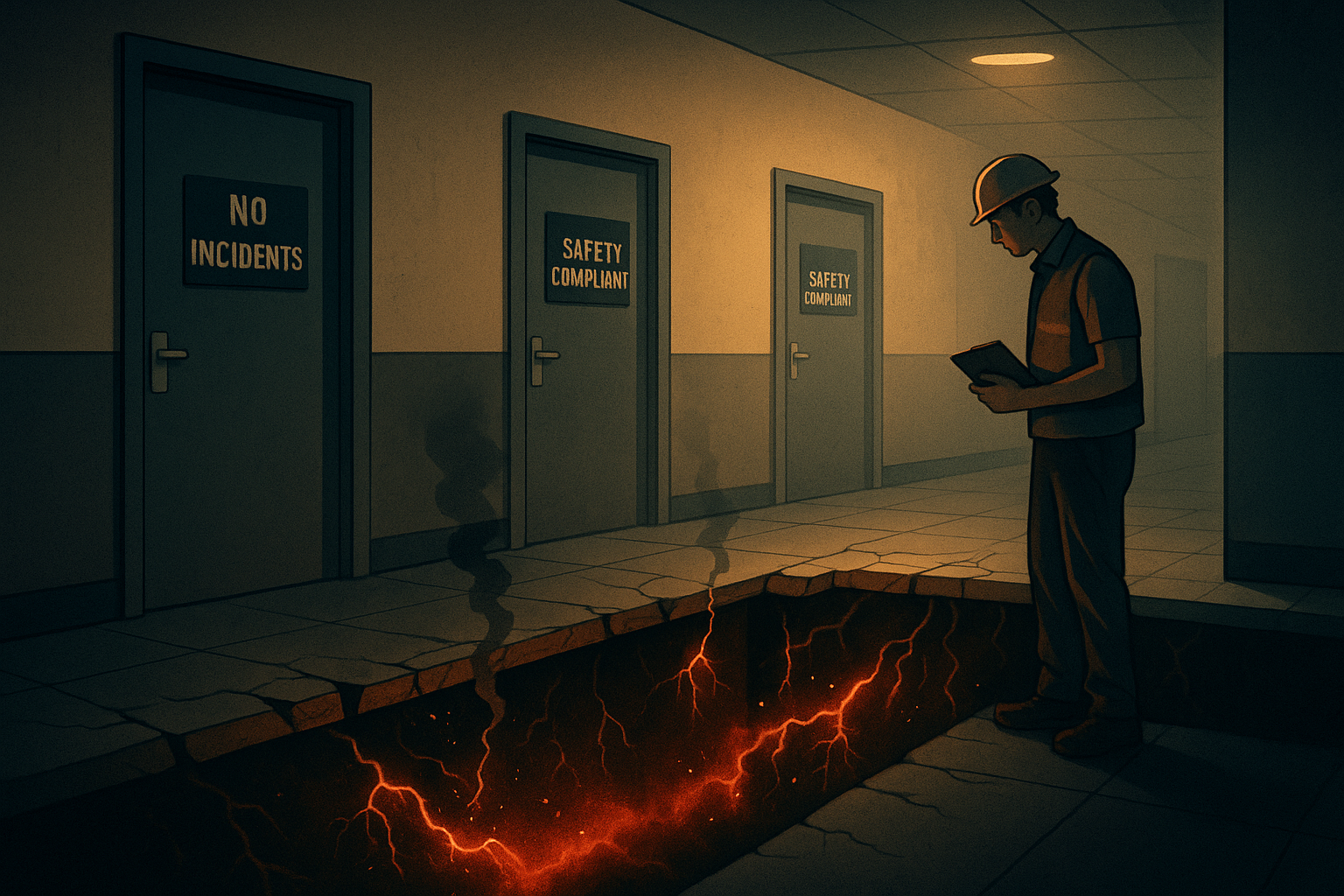
The absence of training isn’t just a missing checkbox. It’s a loaded liability.
In recent years, OSHA investigations have repeatedly shown how gaps in training—especially in areas like Lockout/Tagout and hazardous materials handling—lead directly to catastrophic outcomes. For example, one incident involved a worker whose arm was caught in a roller conveyor because energy isolation procedures had not been followed. The injury was severe, and the investigation revealed not only training lapses but also previous violations that had not been adequately addressed.
In another case, a young worker sustained crushing injuries after reaching into an energized belt system during routine cleaning—because Lockout/Tagout procedures were not clearly understood or followed. This was not the first incident at that site involving powered belts and highlighted a pattern of incomplete safety communication.
Tragically, some training failures are fatal. One case involved an employee attempting to adjust a pipe-bending machine and being crushed. Investigators found that the worker had never received adequate Lockout/Tagout training, and temporary workers at the site were operating without full orientation.
Even training around confined space and hazardous cleaning procedures has had fatal consequences. In one situation, a sanitation worker entered a spiral conveyor system for routine cleaning and was killed because the machine had not been properly shut down. The worker had not been trained—or authorized—to perform the task, and no lockout was performed.
These aren’t abstract warnings. They are lived consequences, backed by OSHA investigations and public records.
Financially, the cost of OSHA citations has increased in recent years. As of 2024, a serious violation can result in a fine up to $16,550, while willful or repeated violations can hit $165,514 per incident. Repeat citations for the same training lapse compound over time and can draw federal scrutiny, legal action, and public backlash.
Companies that fall short also face:
- Increased insurance premiums
- Loss of customer trust or certifications
- Operational shutdowns following a serious incident
And perhaps most importantly—the long-term impact on morale and safety culture when an employee is injured or killed because of a training gap.
Why It’s So Hard to Stay Compliant
Even organizations with good intentions struggle with training management.
Large teams, rotating shifts, language barriers, multiple facilities, and evolving regulations make training a logistical puzzle. Paper-based tracking systems break down fast. Excel sheets are only as good as their last update—and are rarely audit-ready.
Supervisors often juggle multiple roles, and retraining can fall to the bottom of the priority list. By the time a regulator shows up—or worse, an accident occurs—it’s too late to fix.
How Digital Systems Like sam® by secova Make It Easier
This is where technology steps in—not to replace responsibility, but to reduce the friction.
sam® by secova is a digital compliance platform built to take the pain out of safety training:
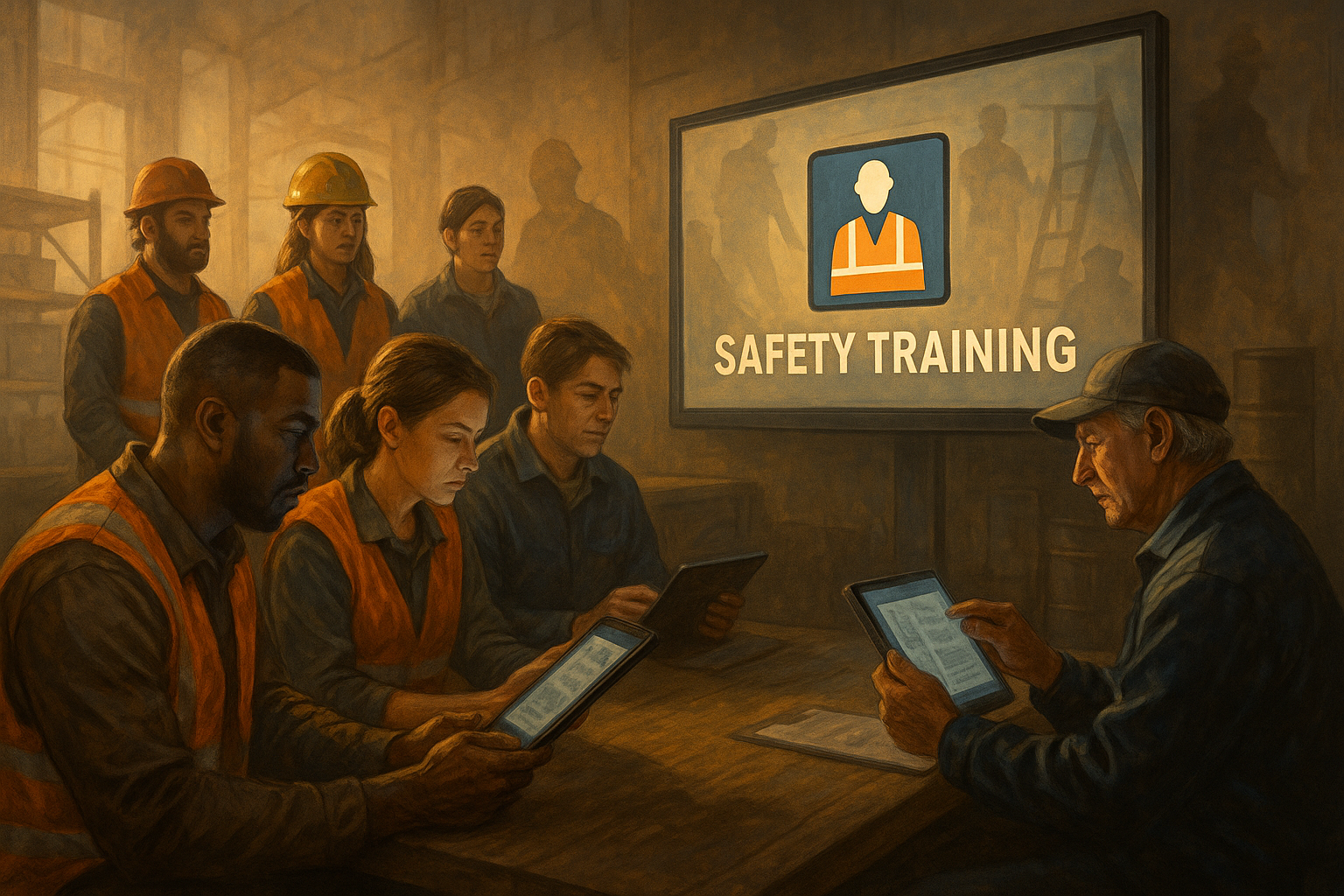
Training modules are built directly into the system, including all ten of OSHA’s most required areas. Each module is accessible across devices, letting workers complete trainings during downtimes or right on the floor.
Assignments are role-based. So if you have warehouse workers, forklift operators, and administrative staff—each gets only what they need. No more blanket trainings, no more gaps.
Automatic reminders ensure retraining doesn’t get missed. Dashboards give real-time visibility into who’s compliant and who’s overdue.
And when the auditor shows up? You’re ready. Every signature, every module, every certificate—organized, timestamped, and stored.
But more importantly, your workforce is trained, protected, and empowered.
You Can’t Build Safety on Assumptions
Not knowing if your team is trained is not a neutral state. It’s a liability.
OSHA doesn’t accept “I thought we covered that.” And neither should you.
At sam® by secova, we believe the best safety cultures are the ones where compliance is baked in—not bolted on.
We’ve built our system to make managing training easier, tracking easier, and most importantly—doing the right thing easier.
Because keeping people safe shouldn’t be complicated.
And if it’s time to rethink how you manage your OSHA-required trainings—we’re here to help you simplify it.